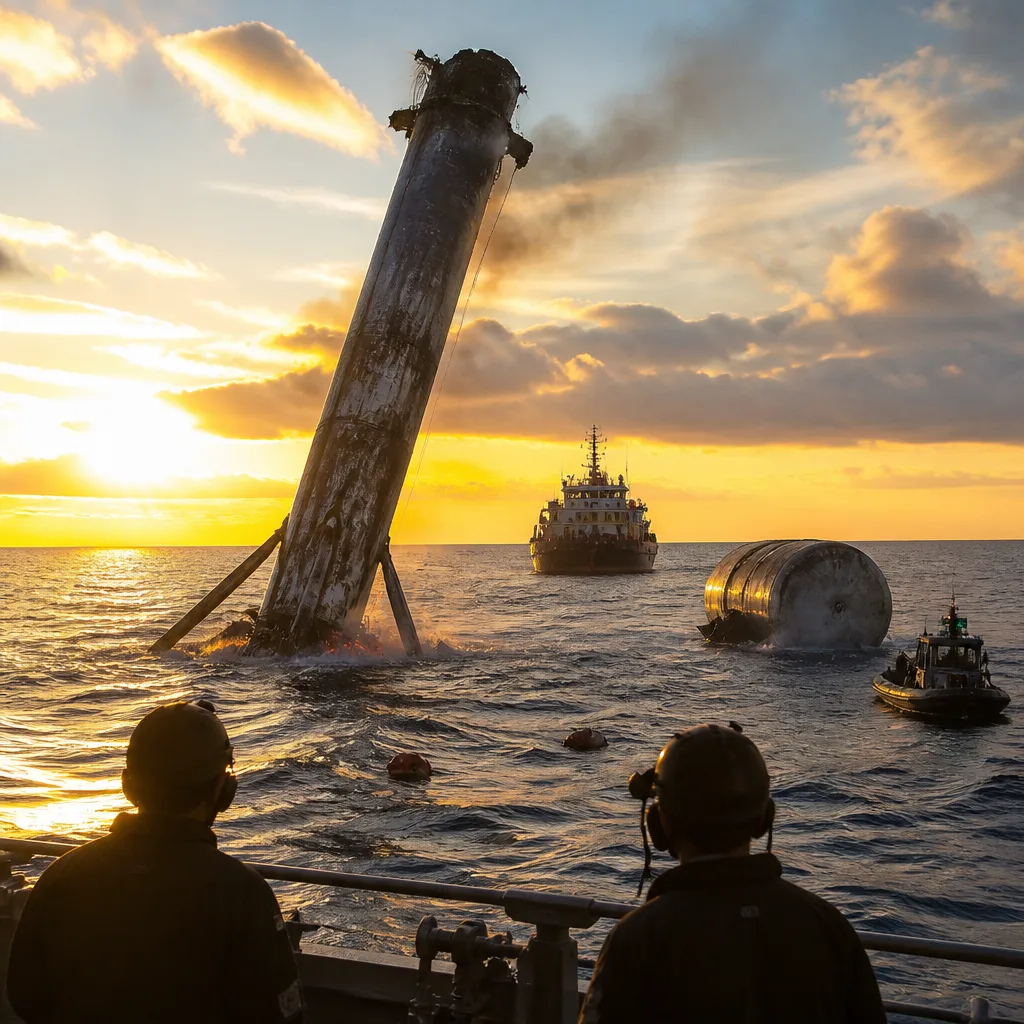
SpaceX has reported a largely successful test of its Starship system after the 13th flight programme completed a controlled ocean splashdown for the upper stage, while the Super Heavy booster ended the mission with a hard splashdown in the Gulf.
What happened on flight 13
The launch, delayed by last-minute engine swaps, lifted off at 5:51pm local time in Texas. Starship separated from its Super Heavy booster and continued on to reach the intended speed and trajectory using its six Raptor engines. Approximately one hour, five minutes and 21 seconds after liftoff, the Starship vehicle executed a controlled splashdown in the Indian Ocean and remained afloat following impact.
During the flight the vehicle deployed 20 Starlink V3 satellites. SpaceX confirmed the payloads were operational; however, these particular satellites were not intended to be integrated into the operational Starlink constellation and re‑entered the atmosphere roughly 20 minutes after deployment.
"The booster successfully completed the high thrust portion of the boostback burn with all 33 engines, the first time with a Super Heavy V3, before ending the burn early," SpaceX said.
Reusability tests and heatshield data
A principal aim of the flight was to gather information on Starship’s heatshield — crucial data for future reuse. SpaceX said the craft performed a "dynamic banking move" designed to replicate trajectories that would be used for vehicles returning to its Starbase facility in Texas. Such manoeuvres are intended to support the ambition of launching and landing at the same site to shorten turnaround times for reusable hardware.
SpaceX described the heatshield observations as critical to ensuring Starship can be recovered and refurbished for subsequent missions. The company also said some of the deployed satellites had the chance to photograph the heatshield as they passed nearby.
Booster performance and failure mode
The Super Heavy booster tested a new de-orbit routine and completed the high-thrust portion of a boostback burn using all 33 engines, a milestone for Super Heavy V3. The burn was ended earlier than planned. The booster then attempted to relight its engines for the final landing burn; a subset of engines did ignite but the vehicle ultimately suffered a hard splashdown in the Gulf rather than a soft touchdown.
SpaceX characterised that part of the mission as not meeting its softer-landing objective, noting fewer engines lit during the landing attempt than required for a gentler recovery. Despite the hard impact, the company indicated the exercise yielded valuable telemetry that will inform fixes and future tests.
- Launch time: 17:51 local (Texas)
- Flight duration to Starship splashdown: 1 hour, 5 minutes and 21 seconds
- Satellites deployed: 20 Starlink V3 (not intended for constellation integration)
- Booster engines: 33 Raptor engines on the Super Heavy V3
Implications and next steps
The mission demonstrates incremental progress in several elements of SpaceX’s Starship architecture: high‑thrust boostback capability, upper‑stage control and heatshield endurance under re-entry conditions. The controlled splashdown and flotation of the upper stage provided the firm evidence the heatshield and re-entry profile produced measurable data for engineers.
However, the booster’s hard splashdown underlines the technical challenges that remain before routine recovery and rapid reuse can be achieved. Engine relight reliability and final‑burn control are especially critical to enable propulsive landings at sea or back at land‑based pads. The company will analyse the telemetry and imagery from this mission to refine flight software, engine performance parameters and recovery procedures.
| Item | Outcome |
|---|---|
| Super Heavy boostback burn | High-thrust portion completed with all 33 engines, burn ended early |
| Booster landing | Partial engine relight, hard splashdown in Gulf |
| Starship re-entry | Controlled splashdown in Indian Ocean; vehicle floated |
| Satellite deployment | 20 Starlink V3 deployed and functional; re-entered ~20 minutes later |
For SpaceX, each test flight builds operational knowledge toward a reusable heavy‑lift system capable of rapid turnaround. The mixed results from flight 13 — successes in some mission phases and failure in others — are typical of iterative development at this scale. Engineers and mission planners will now work through the post‑flight review to determine corrective actions ahead of the next test campaign.