Tidal marsh plant communities offer a clearer signal of methane emissions than the salinity measures scientists have relied on for decades, according to new research led by a Boston University doctoral candidate. The finding could change how policymakers, conservationists and carbon markets account for the climate contributions of coastal wetlands.
Plants as practical proxies for methane
Tidal marshes are widely recognised for their capacity to draw down carbon dioxide and sequester it in soils, making them important natural climate solutions. However, they also produce methane, a far more potent greenhouse gas over short timescales, meaning accurate assessment of both gases is essential to judge a marsh’s net climate impact.
The new study, published in the Proceedings of the National Academy of Sciences, reports that the identity of plant species within tidal marshes is a stronger predictor of methane fluxes than salinity — a variable researchers have traditionally used as a proxy. The lead author, a doctoral candidate in Earth & Environment at Boston University, and colleagues analysed patterns across marshes and found plant composition consistently correlated with methane output.
"We found that plant species are a robust proxy for methane fluxes, outperforming all previously described proxies," the researcher said, noting that plants are easier to identify and are often already mapped.
Why this matters
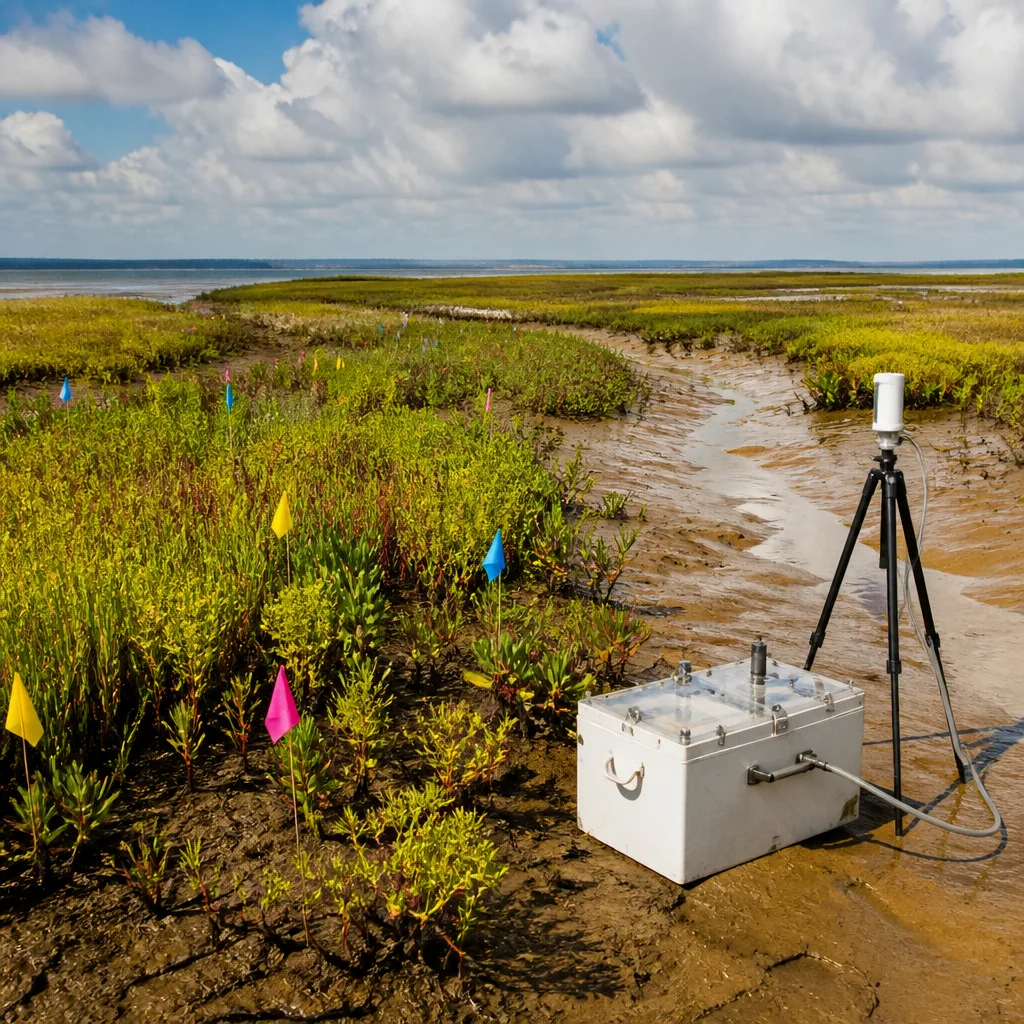
Using plant species as a predictive tool has several practical advantages. Field teams can identify vegetation visually or from existing vegetation maps, avoiding the need for time-consuming direct methane measurements at every site. That makes it easier to estimate emissions across large areas and to incorporate methane into assessments of the climate benefits of protecting or restoring wetlands.
Robinson "Wally" Fulweiler, a Boston University professor whose lab provided the research context for the work, said earlier investigations in the group examined many environmental factors assumed to influence greenhouse gas emissions but found most were not linked. Plants, however, emerged as the distinguishing factor because they embody long-term environmental conditions and biological processes that affect methane production and transport.
Implications for policy and restoration
Accurate greenhouse gas accounting underpins conservation decisions and carbon finance mechanisms. If plant composition can reliably indicate methane emissions, it provides a more accessible route to include this powerful gas in assessments. That could affect:
- How sites are prioritised for protection or restoration;
- Estimations used by carbon markets and offset programmes;
- National greenhouse gas inventories and coastal management planning.
Because plants both reflect and influence marsh biogeochemistry, the approach links ecological monitoring with greenhouse gas science. Managers who already possess vegetation maps can potentially estimate methane emissions without deploying expensive gas-measurement campaigns at every location.
Next steps and caveats
While the study highlights plant species as a superior predictor, it does not remove the need for targeted measurements. Direct flux measurements remain essential for validating models and for sites with unusual conditions. The researchers emphasise that plants act as a practical proxy — not a perfect substitute — and should be integrated into broader monitoring frameworks.
The research builds on more than a decade of work in the laboratory that investigated multiple environmental variables. That work suggested most commonly considered factors were weakly related to methane emissions, strengthening the case for a vegetation-focused approach. Using mapped plant distributions offers a pragmatic route for scaling up methane estimates across coastal wetlands in a way that is both scientifically defensible and operationally feasible.
| Predictor | Relative usefulness for methane estimation |
|---|---|
| Plant species | High — robust proxy, often already mapped |
| Salinity | Lower — historically used but outperformed by vegetation |
As coastal regions face sea-level rise and changing salinity regimes, understanding how vegetation shifts will affect methane emissions becomes increasingly important. Incorporating plant-based proxies into monitoring and valuation frameworks can help ensure that decisions about wetland protection and restoration reflect the best available evidence on both carbon sequestration and methane production.
The study offers a tangible example of how ecological knowledge can improve greenhouse gas accounting — making it easier to weigh the full climate implications of conserving or altering tidal marshes.