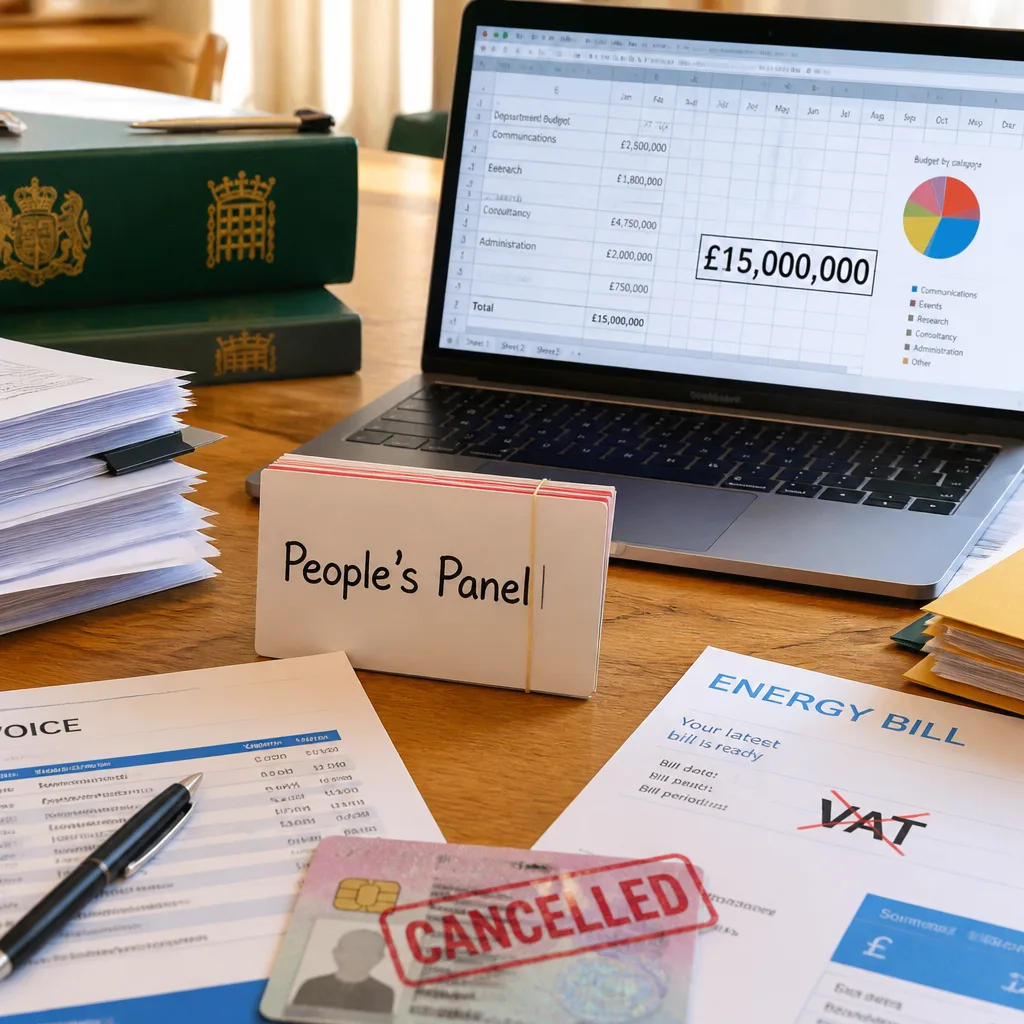
The government spent roughly £15 million on developing a national digital identity programme before the policy was abandoned by the new Prime Minister, who has said the money will instead be used to support a cut in VAT on energy bills.
What was spent and why it matters
Internal documents obtained by PoliticsHome show that of the estimated £15m cost, about £800,000 was allocated to a so‑called “People’s Panel” — a randomly selected group of 100 members of the public intended to inform consultation on the policy. The remainder was used on staff, external consultants, design work, research and legal advice.
| Item | Approximate cost |
|---|---|
| People’s Panel | £800,000 |
| Staff, consultants, design, research, legal | ~£14.2m |
| Total | £15m |
The policy was a flagship initiative of the previous administration under Keir Starmer, promoted as a way to modernise public services and reduce frictions for users. It struggled, however, to secure public backing when first announced in September. Ministers acknowledged early communications missteps and altered the policy’s compulsory elements after polling and internal advice suggested voters were unlikely to support a mandatory scheme.
Political fallout and scrutiny
The decision to scrap the programme was taken by the incoming Prime Minister, Andy Burnham, who has said the cancelled scheme frees funds to pay for the removal of VAT from energy bills — a central cost‑of‑living measure. Independent think tanks have questioned that contention.
“It was not clear how the government was going to fund digital ID: the policy was not yet fully finalised, there was no clear idea what online services would be included in the join‑up, and the OBR had said no specific funding had been allocated for digital ID in the spending review,”
The Institute for Government and the Institute for Fiscal Studies have both cast doubt on the claimed financial offset. The Institute for Government’s Heloise Dunlop highlighted uncertainties over the scheme’s final scope and the lack of a identified funding stream in the official spending review.
There has also been criticism from within the governing party. Darren Jones, a Labour MP who was removed from the Cabinet after Burnham took office, described the digital ID policy as unfunded when it was debated earlier in the year.
Policy development and public engagement
Officials had argued that a digital identity system could simplify interactions with government and private online services. Early messaging from ministers emphasised its potential role in tackling illegal migration, before subsequently shifting to everyday convenience as a prime benefit.
According to the internal material, the People’s Panel was intended to rebuild public confidence after the policy’s difficult public reception. The Starmer administration later removed the proposed mandatory element of the scheme in response to concerns about public acceptability.
Next steps and unanswered questions
- Ministers have declined to comment on the specific spending figures released to the press.
- Think tanks say the accounting for redirecting funds to the VAT measure remains unclear.
- It is not publicly settled which components of the digital ID workstream will be retained, reused or decommissioned.
The episode highlights the fiscal and reputational risks when high‑profile digital reforms are reversed shortly after substantial development work. It also raises procedural questions about how spending on policy development is authorised and reported when an incoming administration overturns the decisions of its predecessor.