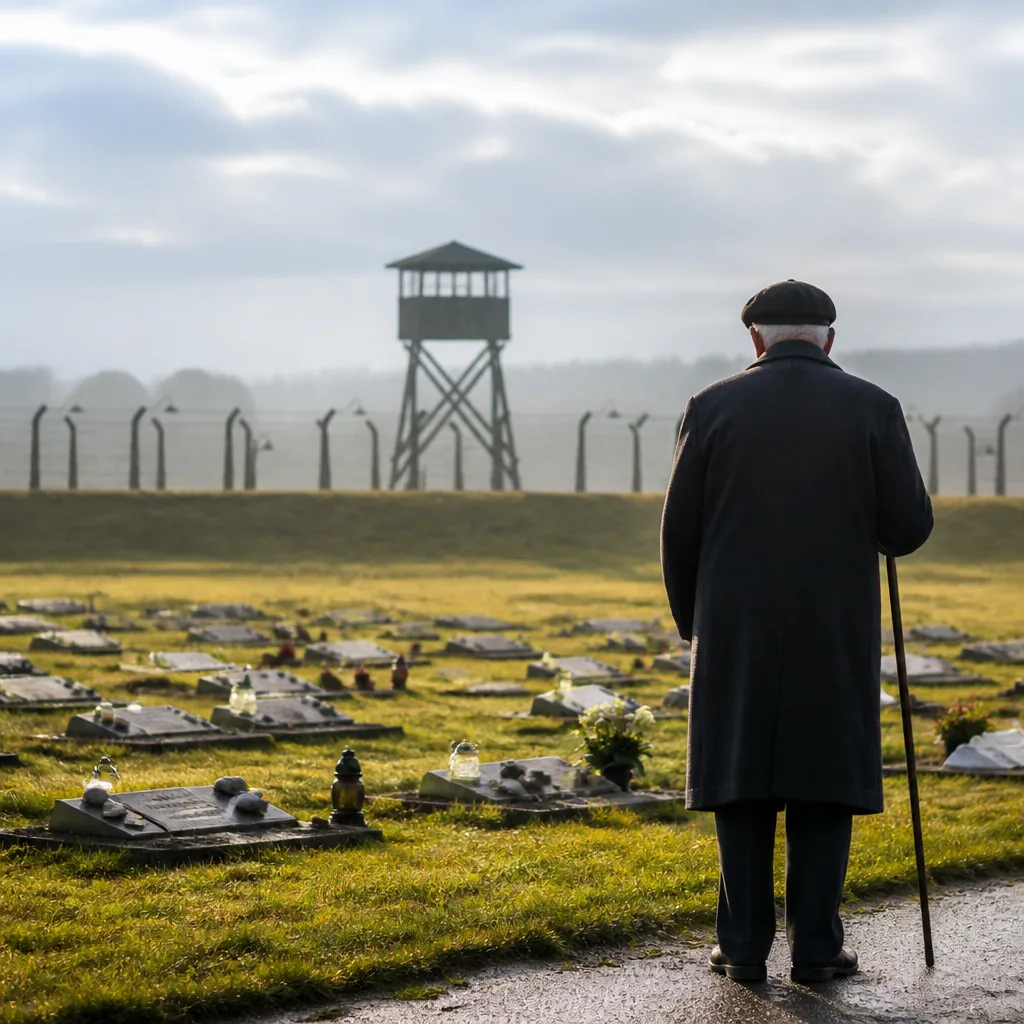
German public prosecutors have begun an investigation into a 105-year-old man on suspicion of having been an accessory to numerous murders while serving at the Nazi prisoner-of-war complex known as Stalag 326 VI K in the Senne region of north‑western Germany during the Second World War.
Scope of the inquiry and parallel case
The Dortmund public prosecutor's office confirmed the probe, saying the suspect is alleged to have acted as a camp guard at the facility. Officials gave few personal details about the accused. Prosecutor Sonja Frodermann said a separate investigation had been under way into another former guard from the same camp, who died earlier this year aged 99.
The cases underline the practical and legal difficulties that face investigators pursuing crimes committed more than eight decades ago: most potential witnesses and defendants are now very elderly or deceased, documentary records may be sparse and memories faded.
Stalag Senne: scale and conditions
Stalag 326 VI K, often referred to by the site where it was located, was among the largest prisoner-of-war complexes established by Nazi Germany. Estimates indicate that between 180,000 and 200,000 Soviet soldiers were registered at the site during the conflict, with many tens of thousands dying in captivity and buried in the area.
According to information published by the memorial that documents the site's history, roughly one in three Soviet prisoners who entered German captivity between 1941 and 1945 passed through the Senne complex. Prisoners from other nations, including France, Poland, Serbia and Belgium, were also detained there. Many held at the camp were deployed to forced labour across the wider region.
Accounts of the camp describe severe malnutrition, appalling living conditions and harsh treatment by guards. Of the millions of Soviet servicemen captured during the war—more than 5.3 million—about half are believed to have died in captivity, reflecting the catastrophic mortality among those held by Nazi forces.
Legal and moral challenges for prosecutions
Prosecutors pursuing Nazi-era crimes have increasingly relied on the legal principle that service at exterminatory or highly lethal institutions may amount to accessory liability if it can be shown that an individual knowingly contributed to criminal systems. Nonetheless, securing convictions is often hindered by the passage of time.
Investigations like the one now under way at Dortmund typically involve careful archival work, witness testimony where available, and forensic study of burial sites and camp records. Authorities must also weigh questions of individual culpability for acts that often formed part of broader systemic policies carried out by many personnel.
- 105 — age of the man currently under investigation.
- 99 — age of the other former guard whose case ended with his death.
- 180,000–200,000 — estimated Soviet POWs registered at Stalag Senne.
- 5.3 million — total Soviet soldiers captured in German custody during the war; around half are thought to have died.
Because the two recent cases concern guards rather than commanders or planners, prosecutors must establish that the individuals' roles went beyond mere presence and that they made a knowing contribution to killings or fatal conditions. The death of one suspect before proceedings could progress illustrates a recurring obstacle: time is running out for legal reckoning with many wartime perpetrators.
For surviving victims and families, such investigations carry symbolic weight. They can provide an official record acknowledging responsibility and may contribute to public memory and commemoration at sites such as Senne, where thousands are interred.
German authorities have periodically reopened or renewed investigations into Second World War atrocities in recent decades. Each case re‑raises debates about the limits of criminal law, the obligations of states to investigate historic mass crimes and the practicalities of doing so many decades after the events.
As the Dortmund office pursues its inquiry, further details about the suspects and any potential charges are likely to be limited as the investigation continues.