Stirling team part of international effort studying major Greenland calving
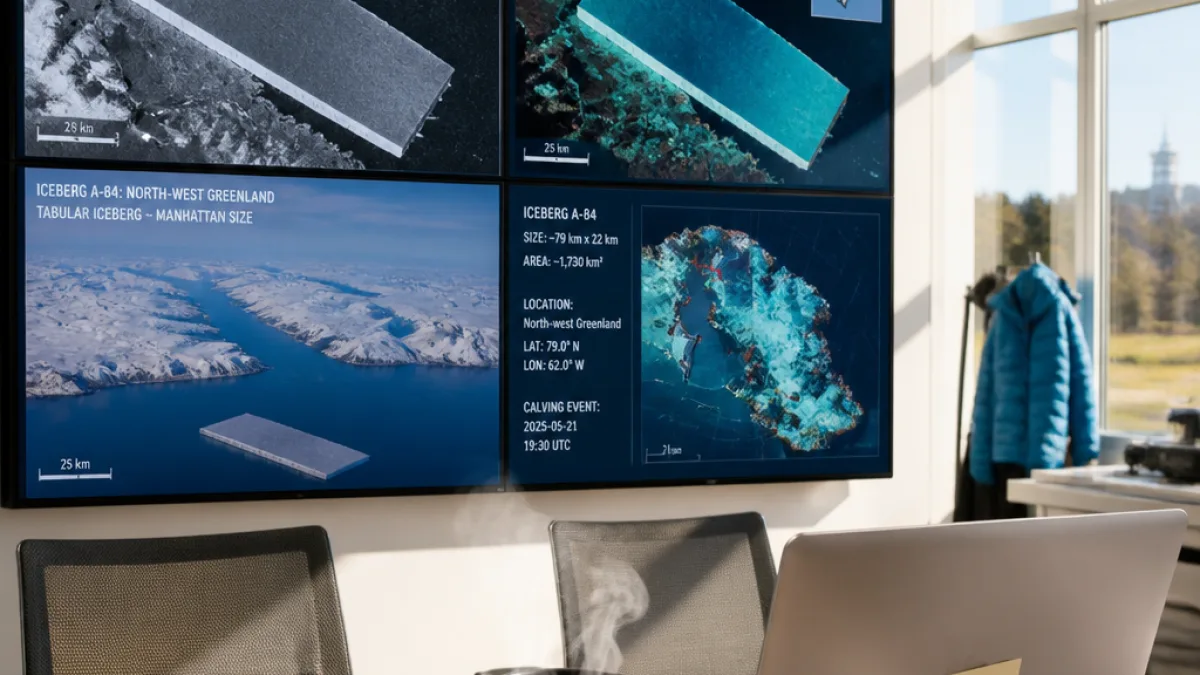
Researchers from the University of Stirling are among an international group monitoring a significant calving event on Petermann Glacier in north‑west Greenland that produced a Manhattan‑sized ice island on 4 August 2026. The newly formed tabular iceberg has been estimated at 76.4 sq km in area and up to 150 metres thick.
The event, described as the glacier’s largest loss of floating ice since 2012 and the largest Arctic calving incident since 2020, was detected through long‑term satellite surveillance. Scientists involved say it offers a rare opportunity to examine how large Arctic ice masses form, drift and fragment.
- Calving date: 4 August 2026
- Ice island area: 76.4 sq km
- Estimated thickness: up to 150 m
The research team includes Stirling’s Dr Anna Crawford and Dr Iain Wheel, along with colleagues from the University of Ottawa, Environment and Climate Change Canada, Lancaster University and the University of Leeds. The break was first spotted by PhD researcher Adam Garbo of the University of Ottawa, who had been monitoring the glacier with collaborators.
“By studying Arctic ice islands, we will gain knowledge that can be transferred across Polar regions.”
The North Atlantic ice feature is described as a tabular iceberg — a broad, flat‑topped block of ice. While tabular bergs are relatively common around Antarctica, they are much rarer in the Arctic, making this calving episode particularly valuable to polar scientists.
How the break was tracked and why it matters
Scientists say the calving was anticipated after years of observation of Petermann’s floating ice tongue. Satellite imagery, including data from the European Space Agency’s Sentinel‑1 mission, reportedly showed progressive deterioration along the glacier’s centreline in the days before the event.
Research teams use multi‑year satellite records to document fracture growth and signs of instability. Those records enabled the early detection of the fracture progression ahead of the 4 August separation. The international collaboration has been monitoring the glacier since at least 2019, building a longer‑term picture of its behaviour.
Scientists emphasise that studying such events improves understanding of how large ice masses evolve and behave once afloat. That knowledge can inform models of ice dynamics across both Arctic and Antarctic regions and help refine projections of iceberg drift and potential downstream consequences.
What comes next for Petermann and the research effort
Members of the team warn that the recent calving may not be the end of the story. According to reporting from the research group, two even larger ice islands are expected to break away in the near future, based on observed fracture patterns and ongoing satellite monitoring.
The newly separated block will now be tracked as it drifts, fragments or melts. Observations collected in the coming weeks and months will provide data on the iceberg’s stability, melt rates and interactions with ocean currents and sea ice.
| Item | Detail |
|---|---|
| Calving date | 4 August 2026 |
| Area | 76.4 sq km |
| Thickness | Up to 150 m |
| Monitoring partners | University of Stirling; University of Ottawa; Environment and Climate Change Canada; Lancaster University; University of Leeds |
For Stirling, the involvement of University of Stirling researchers underscores the city’s role in global climate science. Local academics will continue to contribute to analysis of satellite data and field‑based interpretation where possible, feeding results into wider international research programmes focused on polar change.
As the Greenland ice landscape continues to evolve, the Stirling team’s work will form part of a growing evidence base used by scientists and policymakers to understand the implications of large calving events for sea level, ocean circulation and polar ecosystems.