Science faces a growing workforce challenge that cannot be solved by recruitment alone. Research institutions, clinical laboratories and biotechnology firms rely on highly skilled staff, yet many skilled people leave the pipeline early — a problem worsened for those who are neurodivergent.
Why retention matters
Conversations about strengthening the STEM pipeline have traditionally emphasised how to attract talent. But recruitment without retention is a leaky pipeline. Neurodivergent scientists — including people with autism spectrum disorder (ASD), attention-deficit/hyperactivity disorder (ADHD), dyslexia and dyscalculia — often encounter workplace systems that impede advancement, belonging and long-term career sustainability. The result is the loss of experienced researchers at a time when institutions are already grappling with skills shortages.
Research indicates that people who are neurodivergent pursue STEM education and careers at higher rates than the general population. Many are drawn to science because its structured tasks, analytical problems and opportunities for focused work align with their cognitive strengths. Traits commonly associated with neurodivergence — such as curiosity, persistence, creativity, critical thinking and attention to detail — are precisely the attributes valued across laboratory and research settings.
Barriers within the workplace
Despite these strengths, the experience of one long-term researcher illustrates how workplace environments can erode careers. Over more than 15 years, periods of short-term contracts and intermittent unemployment led them to question whether a sustained career in science was possible. Their account emphasises that the obstacles were not a lack of ability or commitment, but workplace systems that failed to support neurodivergent staff.
- Short-term contracts and precarious employment disrupt continuity and development.
- Workplace cultures and processes may not accommodate different communication and processing styles.
- Lack of reasonable adjustments or tailored support reduces retention and progression opportunities.
Addressing workforce shortages therefore requires deliberate action beyond recruitment: creating environments in which neurodivergent scientists can succeed and choose to remain. That means re-examining hiring practices, contract models, mentoring, assessment of performance and the physical and social design of workplaces.
Practical implications for institutions
Institutions wishing to strengthen the national STEM workforce should consider the following priorities drawn from the lived experience and research findings:
- Review contract practices that produce instability and interrupt career progression.
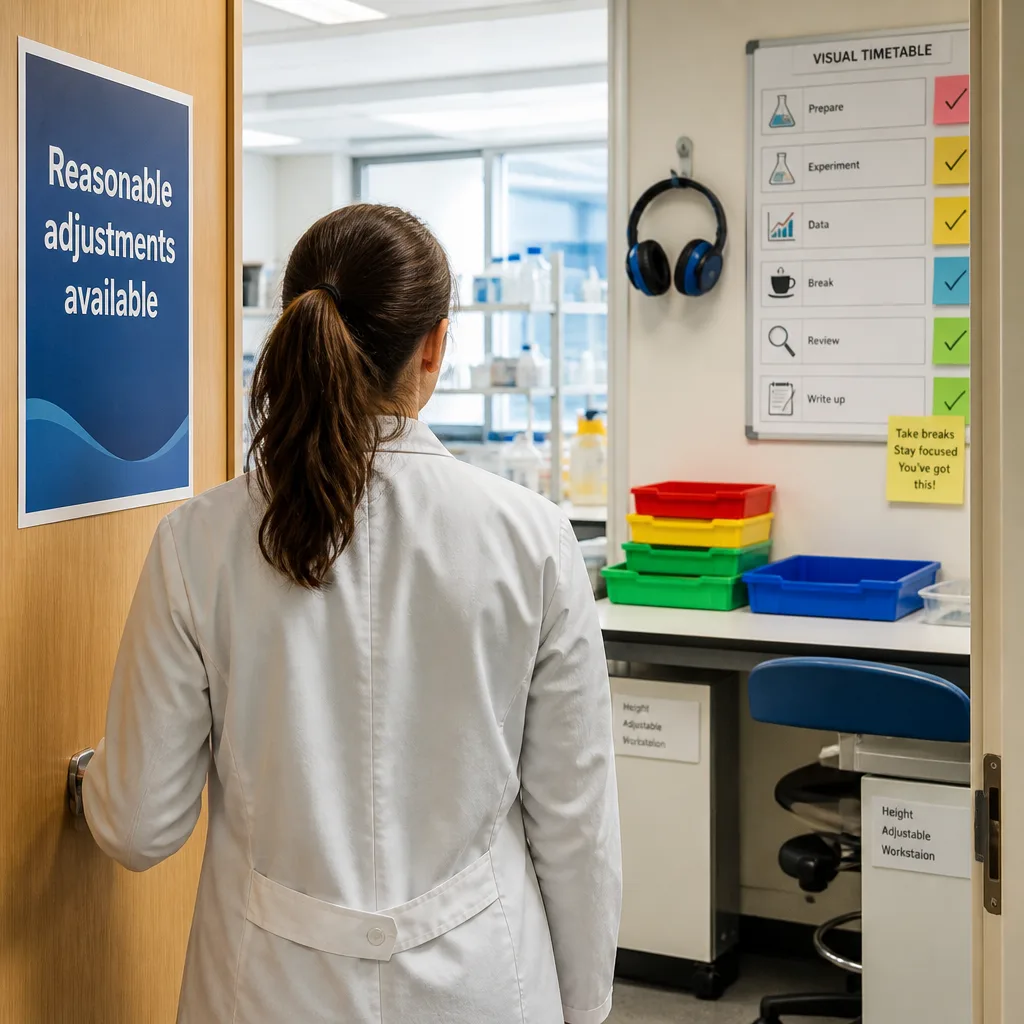
- Offer adjustments tailored to different cognitive and sensory needs.
- Develop inclusive management and mentoring that recognise diverse working styles.
These changes are not merely ethical. Retaining neurodivergent staff preserves institutional knowledge, reduces recruitment costs and strengthens teams with a broader range of cognitive approaches to problem solving. In fields that prize meticulousness and innovation, the loss of such talent has a direct impact on productivity and discovery.
| Neurodivergent condition | Common workplace strengths |
|---|---|
| Autism spectrum disorder | Attention to detail, pattern recognition, sustained focus |
| ADHD | Creativity, rapid idea generation, energetic problem-solving |
| Dyslexia / Dyscalculia | Big-picture thinking, conceptual reasoning, spatial problem-solving |
Institutions should also collect better evidence on where and why neurodivergent researchers leave, so policy and practice can be targeted. Data on retention, promotion and the use of reasonable adjustments will help distinguish between individual setbacks and system-wide failures.
Strengthening the STEM pipeline therefore demands a dual focus: continue to attract neurodivergent talent, and crucially, redesign workplaces so those talents can flourish. Without both, the promise of a diverse scientific workforce will remain unfulfilled — and the national research base will be poorer for it.