Researchers at the University of Vermont say they have identified a contagious form of melanoma sweeping through brown bullhead catfish in Lake Memphremagog, marking the fourth transmissible cancer ever documented and the first discovered in a fish and in fresh water.
From a lone angler’s find to a clonal epidemic
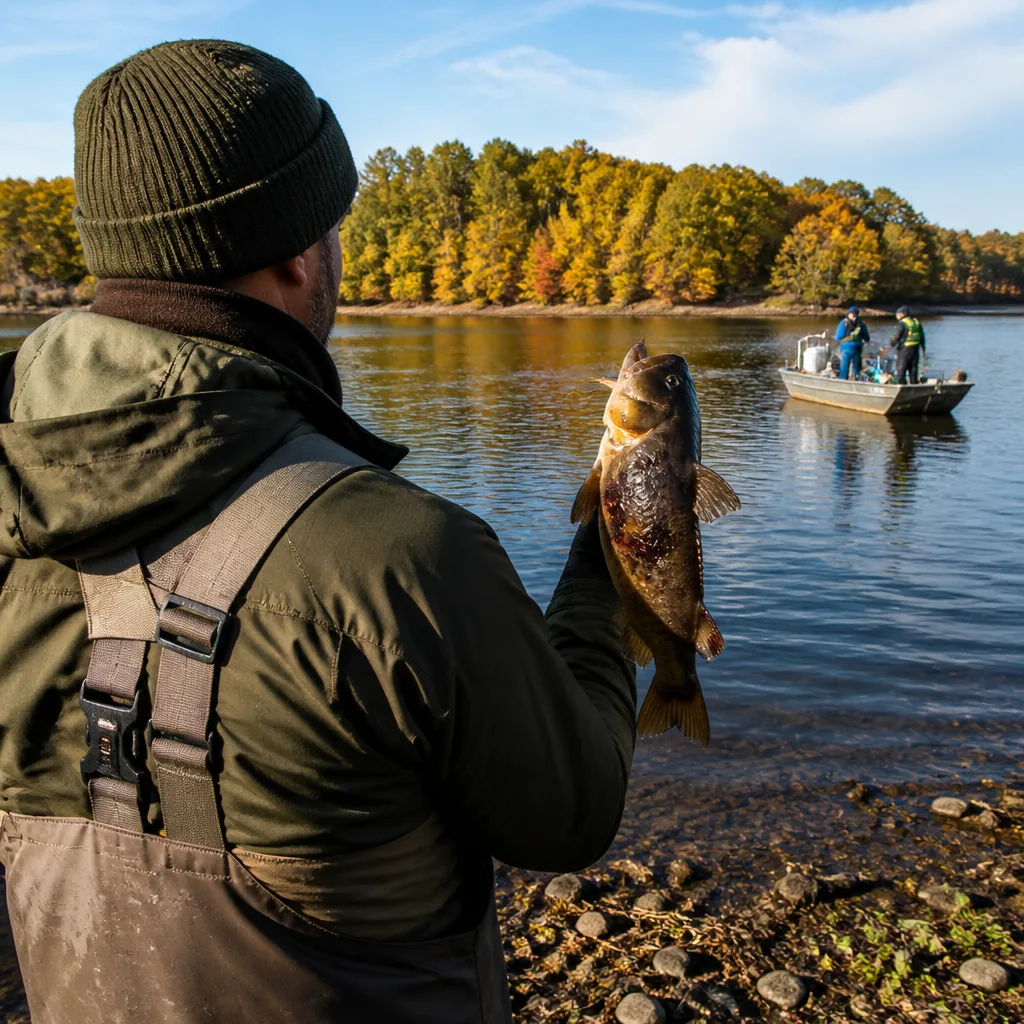
The unusual lesions were first noticed in 2012 when an angler brought a brown bullhead with large black growths to Peter Emerson of the Vermont Fish & Wildlife Department. Emerson, who has surveyed the lake since 2009, had not seen anything similar. Within about three years the lesions were visible on an estimated 25–40% of the lake’s bullhead population.
Samples were sent to the University of Vermont’s bioinformatics core from roughly 2014 onwards. After years of sequencing and testing for environmental carcinogens and infectious agents, researchers concluded the tumours are not the result of a virus, bacterium or chemical contaminant commonly associated with fish tumours, but are instead a transmissible cancer made up of living cancer cells spreading between animals.
"It's a clonal cancer," Julie Dragon, associate professor of microbiology and molecular genetics, told the reporter. "It's not driven by a bacteria or a virus."
How the team reached that conclusion
The research, published in Nature, centred on genomic comparisons. In ordinary cancers, a tumour’s DNA closely matches the host animal; in this outbreak, the opposite pattern emerged. Tumours from different fish shared hundreds of thousands of mutations that were absent from the non-cancerous tissues of the fish carrying them, indicating the tumours derive from a single expanding lineage of cancer cells.
The researchers examined and excluded several plausible causes before settling on a transmissible cancer hypothesis. Brown bullhead are a sentinel species for pollution because they can develop liver tumours when exposed to polycyclic aromatic hydrocarbons; other fish species are known to carry viruses that induce tumours. Yet waters with higher measured levels of contaminants did not show the same lesions, and sequencing did not reveal viral or microbial agents responsible for the malignancy.
- 2011 — Tropical Storm Irene prompts initial pollution testing in the watershed.
- 2012 — Angler reports the first visibly affected brown bullhead in Lake Memphremagog.
- ~2014 — Tissue samples sent to the University of Vermont for genomic sequencing.
- Within three years — Lesions observed in roughly a quarter to 40% of the lake’s bullhead population.
| Year | Event |
|---|---|
| 2009 | Vermont Fish & Wildlife begins lake surveys |
| 2011 | Flooding from Tropical Storm Irene prompts contamination checks |
| 2012 | First angler-reported melanotic lesions |
| ~2014 | Samples sent for sequencing |
Implications and unanswered questions
The finding raises several ecological and conservation questions. Transmissible cancers are extremely rare: until now only three other naturally occurring transmissible cancers had been confirmed, in dogs and in two marine bivalve species. A transmissible tumour in a freshwater fish broadens the known contexts in which this phenomenon can arise and persist.
Key uncertainties remain. The mechanism by which living tumour cells pass between bullhead is not yet established; whether direct contact, environmental shedding or another route is responsible needs clarification. The origins of the cancer lineage — where and when the initiating tumour arose — are also unresolved. Finally, the potential for spread beyond Lake Memphremagog and effects on wider fish communities and fisheries require monitoring.
Experts will now weigh management and surveillance options. Immediate steps typically include expanded sampling to define geographic extent, laboratory studies to characterise transmissibility and host range, and ecological assessments to understand impacts on population dynamics.
Although transmissible cancers are exceptionally unusual, their presence can have profound ecosystem consequences. Detecting and characterising them early offers the best chance to limit their ecological footprint and to learn about the biological vulnerabilities that allow one animal’s cancerous cells to colonise another.
This investigation underscores how sustained field observation, persistent laboratory inquiry and modern genomic tools can converge to reveal unexpected threats to wildlife health.