Rising temperatures are making droughts across Europe far worse, according to a study published this week, with extreme heat increasing evaporation from soils and rivers and turning routine dry periods into damaging water shortages. The analysis, carried out by World Weather Attribution (WWA), links this summer’s low water levels to climate change amplifying heat rather than to a simple lack of spring rainfall.
Heat, not only rainfall, is driving shortages
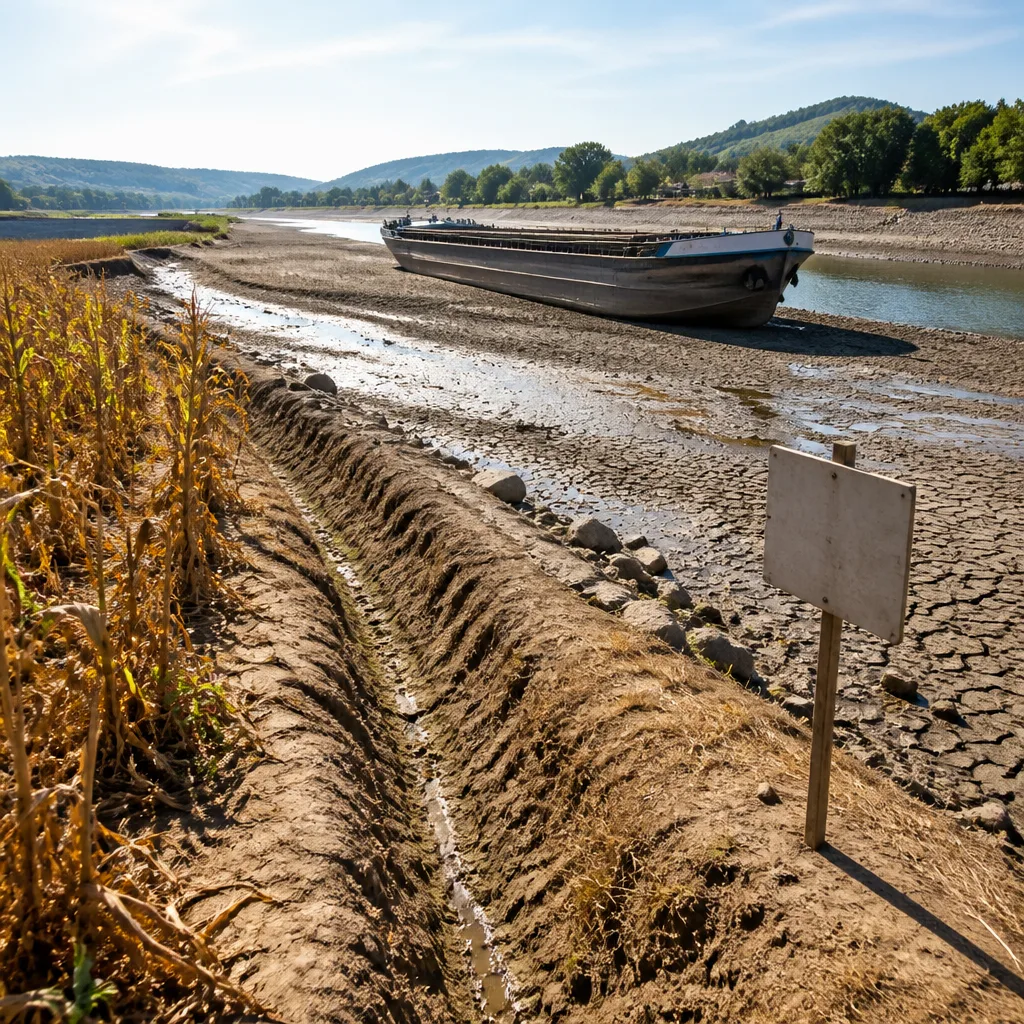
Several countries are already feeling the strain. French authorities fear the country may produce its smallest maize harvest in 50 years, Romania has limited farmers’ use of irrigation, the Netherlands has declared a national water shortage and seven Greek islands have issued drought emergencies to protect dwindling supplies. Low river levels are also hampering shipping and industrial water use in affected regions.
WWA’s analysis finds that while the absence of rain between April and June was not directly caused by climate change this year, the warming climate has increased the “evaporative potential” of the atmosphere — essentially the power of heat to pull moisture out of soils and waterways. That intensification of evaporation, the researchers say, is what has converted otherwise manageable dry spells into more severe droughts.
"Extreme heat is taking over as the primary driver of drought on our continent," said Sarah Kew, a climate scientist at the Royal Netherlands Meteorological Service.
How much has the risk increased?
WWA quantified the change in likelihood of high-evaporation conditions and agricultural soil droughts compared with a pre‑industrial climate. Key findings include:
- Evaporation-potential conditions in January to June were about 80 times more likely in western Europe and 40 times more likely in eastern Europe than in pre-industrial times.
- Agricultural soil droughts have become roughly five times more probable in western Europe and 11 times more probable in eastern Europe due to climate change.
Those multipliers illustrate how heat amplifies drought risk even when precipitation declines are modest. Regions that would previously have endured a short dry period without major disruption are now more prone to sustained soil moisture deficits and low river flows.
| Metric | Western Europe | Eastern Europe |
|---|---|---|
| Evaporation-potential likelihood (Jan–Jun) | ~80× greater than pre-industrial | ~40× greater than pre-industrial |
| Agricultural soil drought probability | ~5× increase | ~11× increase |
Practical impacts and policy implications
The study underlines that drought policy can no longer treat rainfall as the only determinant of water stress. Rapid evaporation affects soil moisture, reservoir replenishment and river navigability, with knock-on effects for food production, energy generation and transport logistics.
Countries are already responding with measures such as irrigation restrictions and emergency declarations on islands and in river basins. The WWA findings suggest adaptation planning must increasingly account for heat-driven moisture loss — for example by managing river flows, protecting groundwater stocks and revising agricultural practices to cope with faster rates of soil drying.
Scientists emphasise the distinction between the meteorological cause of a particular dry spell and the role of long-term warming in making its impacts worse. By making high-evaporation conditions markedly more common, climate change is changing the baseline against which water managers and farmers must plan.
As Europe faces what some forecasters suggest could be a continued run of hot summers, the WWA analysis offers a quantitative alarm: even if rainfall patterns fluctuate year to year, warmer air will keep increasing the pressure on limited freshwater supplies unless greenhouse gas emissions and local water-management policies are addressed.