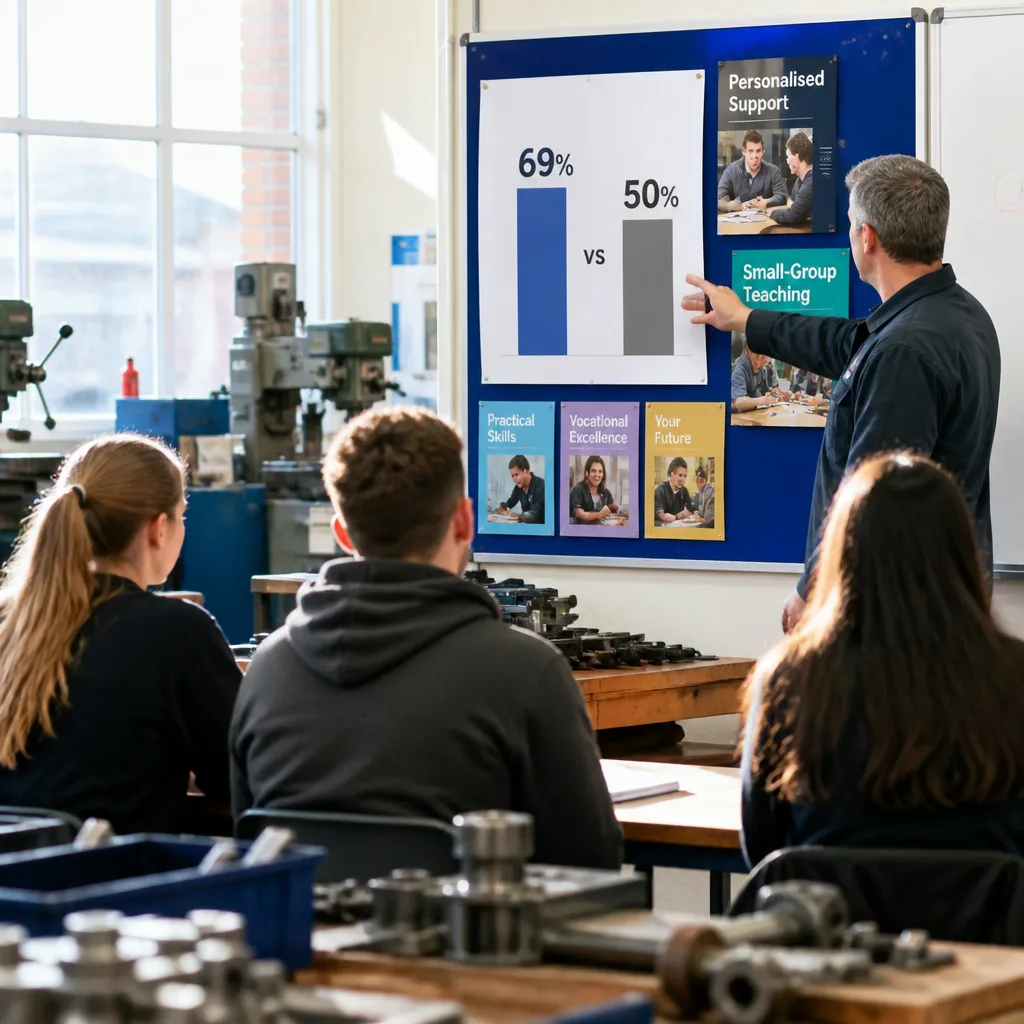
The Office for Students has found that graduates who studied higher education at further education colleges were more likely to say they felt ready for life after graduating than those who completed degrees at universities, a result that adds fuel to the debate over the relative value of different routes into higher education.
Regulator’s figures: colleges edge universities on graduate confidence
In research published late March, the regulator reported that 69% of higher‑education college graduates said they felt prepared for what came next, compared with 50% of university graduates. The headline figures do not explain the causes, but the lived experience of students attending colleges can offer possible explanations.
Students interviewed who studied at East Sussex College described learning environments they say are characterised by close personal support, hands‑on teaching and clear vocational pathways. Those elements, they say, built confidence as much as academic knowledge.
"The support I got during my music degree shaped me into a better person," said one graduate who remained at the college as a staff member.
How students explain the gap
Former students at East Sussex College gave a consistent account of why they felt better prepared. Their experiences suggest several recurring themes:
- Personalised support from tutors who know students individually;
- Accessible pastoral and careers advice alongside course teaching;
- Strong vocational and practical elements within courses that link directly to workplaces;
- Smaller teaching groups that students say helped build confidence.
One graduate who completed a music degree and later worked as a touring sound engineer said lecturers were invested in both academic progress and personal development. Another, who combined business studies with running multiple enterprises and family responsibilities, chose a college‑based degree validated by the University of East Anglia.
Wider context: a familiar national conversation
The findings arrive against a backdrop of continuing public and political discussion about higher education. Reports of university financial pressures, concerns about tuition fees, debate over graduate debt and employment prospects have regularly shaped public perceptions of higher education in recent years. The Office for Students' research does not settle those wider questions, but it highlights a dimension — perceived preparedness for life beyond study — where college provision currently appears to outperform universities.
Policy makers, parents and prospective students may read the regulator's figures as a prompt to consider how different institutions prepare learners for work and adult life. For colleges, the results underline the importance of sustaining close student support and vocational links. For universities, they represent a signal to examine how curricula, support services and employability activities translate into graduate confidence.
Numbers at a glance
| Provider type | Proportion feeling prepared |
|---|---|
| Further education colleges (higher education) | 69% |
| Universities | 50% |
While the percentages are stark, the Office for Students' data do not unpack every contributing factor. Differences in student background, course mix, local labour markets and the types of support offered are all likely to play a role. The college students whose accounts appear here emphasised tangible, day‑to‑day features of their experience — approachable staff, practical learning and clear links to jobs — as central to feeling ready for what followed.
The regulator's finding will be referenced in debates about parity of esteem between vocational and academic routes, and in discussions about how best to allocate resources to enhance graduate outcomes across the sector. For pupils and parents weighing post‑16 choices, the research offers fresh evidence that college‑based higher education can deliver strong preparation for the next stage of life.