Two external academics who sat on the panel that unanimously selected Jason Arday for a Cambridge professorship have previously published research sharply critical of what they describe as ‘whiteness’ in education, according to material disclosed by The Telegraph. The revelations come after Mr Arday resigned from his role as professor of sociology of education amid intense public scrutiny over alleged overlap between passages of his PhD thesis and another student’s work.
Panel composition and contested scholarship
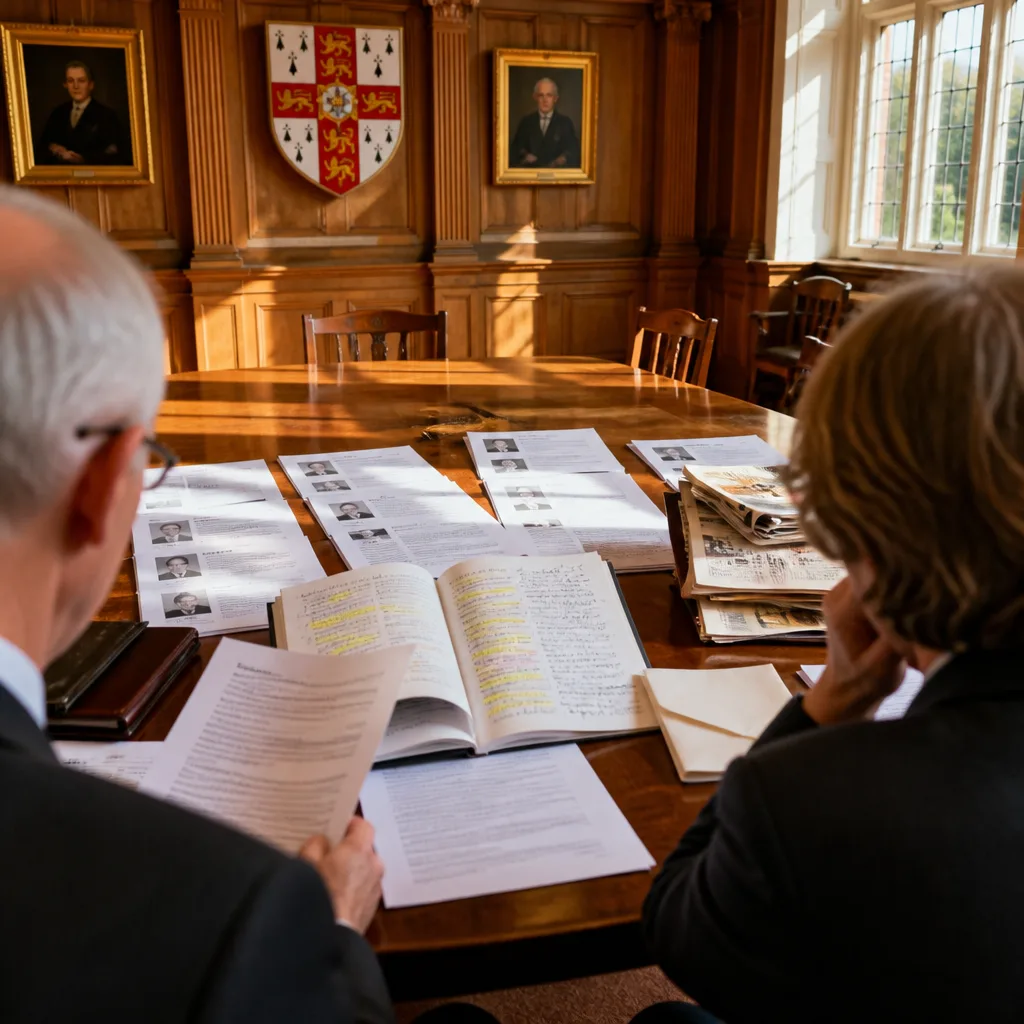
A nine-member selection panel appointed Mr Arday to one of the University of Cambridge’s most senior academic posts in 2022. Four external academics were asked to sit on the panel; among them were Prof Michalinos Zembylas, professor of educational theory at the Open University of Cyprus, and Prof Anoop Nayak of Newcastle University.
Academic articles reviewed alongside reporting show that the two scholars have produced work that frames whiteness as an ideological structure within education rather than a simple description of white people. Critics of those works argue that the language used may be contentious in public debate about race and higher education.
“Contrary to the impression that this move promotes self-loathing, a politics of anti-whiteness is precisely the re-education of Whites for a world shared with the other.”
The words above appear in a paper co-authored by Prof Zembylas and a colleague, who described persistent, pernicious features of whiteness in teacher education and called for it to be held to account. In related scholarship, Prof Zembylas and others urged that white people become critically conscious of the ideology of whiteness to help produce greater equality — a stance the authors said should not be conflated with promoting self-hatred.
Resignation and wider fallout
Mr Arday, who was appointed at the age of 37, stepped down from his Cambridge professorship on Wednesday, citing “an unrelenting level of public scrutiny” as the reason for his resignation. The immediate controversy followed reporting that more than 180 passages in his doctoral thesis were identical or near-identical to material produced by another student.
Questions over the backgrounds and published positions of external electors are likely to intensify debate over the university’s appointment practices and the transparency of selection processes. The involvement of scholars who have written critically about systemic features of race in education may be viewed through differing lenses: as a legitimate part of rigorous academic assessment, or as a factor that could polarise public perceptions of an appointment.
What this means for universities and public confidence
The episode intersects two separate, high-stakes issues for British higher education: the integrity of academic work and the governance of senior appointments. Both issues matter to parents, pupils and taxpayers because they relate to standards of scholarship and the way universities present themselves to the public.
- Academic integrity: Allegations about overlapping doctoral material have prompted scrutiny of research standards and internal checks in doctoral supervision and examination.
- Appointment transparency: The composition and public disclosure of selection panels are under renewed attention, especially when external assessors have published strong views on contested matters.
- Public trust: Universities face a challenge in explaining decisions clearly to maintain confidence among students, donors and policymakers.
At the time of writing, the university has not published a detailed public account explaining how the selection panel’s deliberations were conducted or how external assessors were chosen. The broader debate over how to balance robust academic judgement with openness in high-profile appointments is likely to continue as further details emerge.
| Fact | Detail |
|---|---|
| Appointed | Jason Arday, 2022 |
| Panel size | Nine members (including four external academics) |
| External electors named | Prof Michalinos Zembylas; Prof Anoop Nayak |
| Resignation | Mr Arday resigned citing public scrutiny |
For parents and pupils, the immediate concern is whether institutions are upholding rigorous and impartial standards in teaching and assessment. For academic colleagues and students, the episode raises questions about the role of intellectual critique — including critical race theory and related approaches — in hiring and evaluation decisions within elite universities.
As inquiries proceed, education leaders will need to weigh how to strengthen procedures so that appointments rest on clearly evidenced academic merit while also ensuring selection panels and processes are described in ways that defend public confidence.