President Joe Biden’s education record combined sweeping federal spending with a cautious approach to some reform agendas and a high-profile, ultimately unsuccessful attempt to cancel large swathes of student debt, according to a historian’s account published this summer.
Major moves and mixed results
In a chapter of the new collection The Presidency of Joseph R. Biden, New School historian Natalia Mehlman Petrzela traces Mr Biden’s approach to schooling back to his lengthy political career, noting contrasts between his early scepticism about court-ordered busing and direct school funding and his actions in the White House.
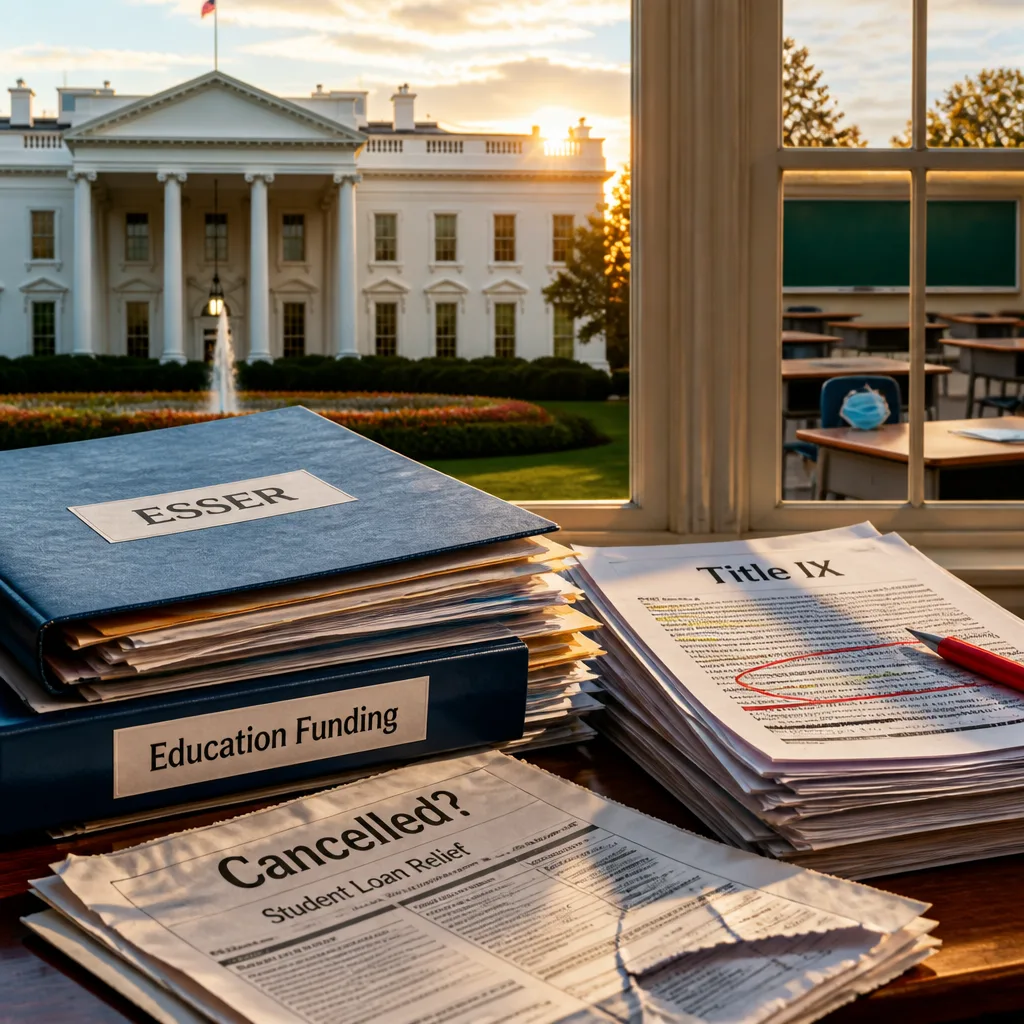
Early in his presidency Mr Biden backed the American Rescue Plan, a large-scale spending package that channelled billions into schools through ESSER funds, while steering away from some of the education reform priorities associated with earlier Democratic administrations. The administration also revised Title IX policy around LGBT rights in schools, a move Petrzela identifies as one of the bolder regulatory initiatives of the period.
Pandemic-era decisions and school autonomy
Petrzela highlights that the Biden White House did not insist that districts abandon remote learning as the pandemic receded. The federal stance allowed local authorities significant discretion over reopening strategies — a choice that reflected the administration’s caution about overstepping into local education control but also produced widely varying experiences for pupils and families across jurisdictions.
Student loans and the politics of cancellation
Perhaps the most politically charged effort was the administration’s bid to cancel a substantial portion of student loan debt for borrowers. That initiative failed to deliver its intended nationwide relief, and Petrzela characterises the outcome as unresolved. The attempt nevertheless crystallised debates about higher education finance, fairness and the role of executive action in delivering social policy.
“After four years, the result was a muddle,”
That judgement underlines Petrzela’s central contention: the administration pursued ambitious priorities in K–12 and higher education but left a legacy that is uneven in both design and impact.
Policy map: actions and consequences
| Policy / Action | What happened |
|---|---|
| American Rescue Plan (ESSER funding) | Large federal sums sent to districts for pandemic recovery; significant local discretion on use. |
| Title IX revision | Regulatory changes addressed LGBT students’ rights in schools, marking a notable federal intervention. |
| Student loan cancellation effort | High-profile executive attempt that ultimately did not realise the cancellation at the scale proposed. |
| Pandemic-era schooling guidance | Federal stance favoured local control; varied reopening strategies across states and districts. |
What this means for families and schools
The account offers lessons for parents and practitioners watching how national leadership shapes schooling. Large federal funds provided critical support for schools recovering from the pandemic, but the decentralized choices that followed meant that outcomes depended heavily on local priorities and capacity. Revisions to Title IX placed student rights at the centre of federal regulatory attention, while the failed student loan cancellation episode exposed the limits of executive power in reshaping higher education finance.
- Federal funding can produce rapid resource shifts, but local implementation determines day-to-day impact for pupils.
- Regulatory change on civil rights in schools can be impactful, yet contentious and subject to legal and political challenge.
- Ambitious national proposals — like large-scale loan cancellation — may reshape debate even if they do not succeed.
Petrzela situates Biden’s actions within decades of political experience, emphasising that the President’s long career complicated a straightforward reading of his record. The portrait that emerges is of an administration that sought to deploy federal power in significant ways while often deferring to local decision-makers, producing both notable policy shifts and unresolved outcomes.
For parents and school leaders watching from the UK, the analysis is a reminder that national choices on money, regulation and the balance of local versus central control have direct, sometimes unpredictable, effects in classrooms and on family experience.