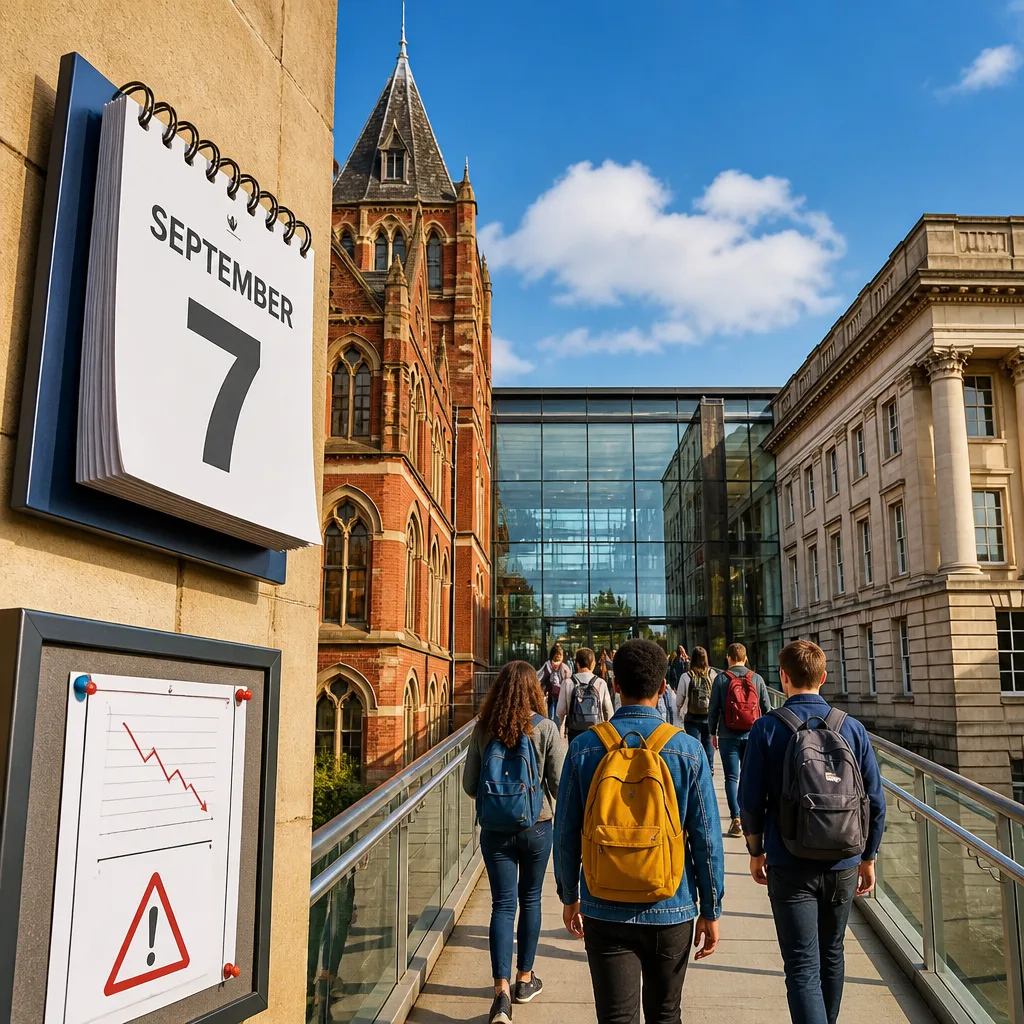
The UK’s first so‑called “super‑university” will formally begin operating on 7 September after plans to combine the University of Greenwich and the University of Kent were approved by the Department for Education. The newly constituted London and South East University Group (LASEUG) will serve more than 50,000 students across four campuses in London, Medway and Kent, making it the third largest higher education provider in the country.
What the merger will mean for students and staff
Under the new arrangement, the two institutions will continue to teach and confer degrees under their existing names and academic structures. Students will remain enrolled at their chosen university and graduate from that institution. However, employment of academic and professional staff will move to the new central university group.
The University of Greenwich’s vice‑chancellor, who will take up the role of chief executive of the LASEUG, said the past year had involved intensive work to create a model not previously used in the sector and that planning had prioritised a smooth transition and a robust senior executive team.
“There has been tireless work over the last year working to an ambitious timetable and developing a new university model that has never been done before,” the vice‑chancellor said.
Financial pressures and sector context
The merger is being presented by both universities as a way to secure a stronger financial footing while building on more than two decades of collaboration between them. It comes amid wider turbulence in higher education finance. The Office for Students has warned that 24 providers were at risk of insolvency in the 12 months after last November, and that around 45% of providers could face a budget deficit for 2025–26.
Members of Parliament on the education select committee have previously described the sector as facing a “financial crisis”, warning of the possibility of institutional closures. Other high‑profile merger plans have also been announced this year, including a proposed union between King’s College London and Cranfield University slated for 2027.
Operational details and implications
Although the two universities will retain their names and distinct academic divisions, centralising employment and governance is intended to deliver economies of scale and long‑term stability. The arrangement aims to preserve students’ campus experience and institutional identity while consolidating administrative and strategic functions.
- Launch date: 7 September
- New entity: London and South East University Group (LASEUG)
- Students: more than 50,000 across four campuses
- Geography: campuses in London, Medway and Kent
For pupils considering progression to higher education and for parents monitoring value for money and course continuity, the merger highlights both potential benefits—greater institutional resilience and broader programme offerings—and practical questions about how services and staffing will settle under a group employer.
| Metric | Detail |
|---|---|
| Combined student population | 50,000+ |
| Campuses | 4 (London, Medway, Kent) |
| Relative size | Third largest higher education institution in the UK |
Senior leaders have described the merger as a potential blueprint for other institutions facing similar financial constraints. Yet mergers raise complex operational and cultural challenges: aligning pay and terms for staff now employed by the group, integrating back‑office systems, and ensuring the student experience is not disrupted during the transition will all be scrutinised in the months ahead.
As universities across the country manage tight budgets, watchful students, parents and staff will expect clarity on course provision, campus facilities and the protections in place for academic standards and student support. The next academic year will be the first test of how a single employer model works in practice while maintaining separate institutional identities.