From St John's Square to the wider world
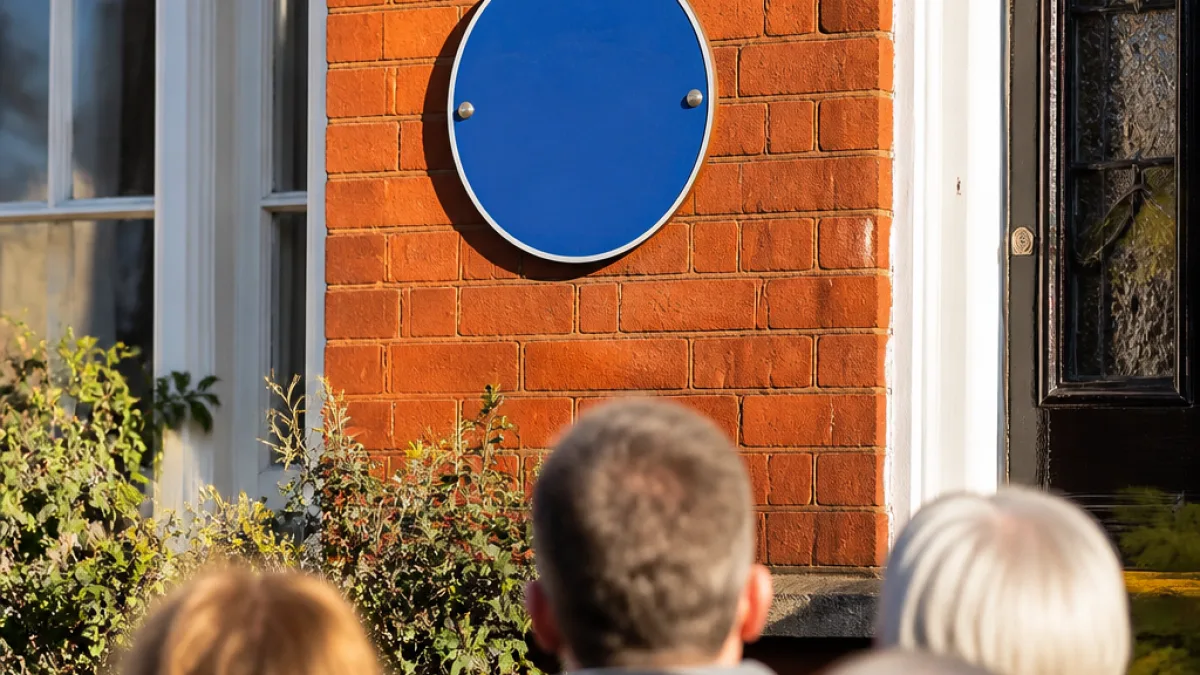
Wakefield is set to add another name to its civic memory this autumn when a blue plaque is unveiled to honour Gertrude McPherson (née Briggs), a local woman whose life spanned art, teaching, missionary work and writing. Born in Wakefield in 1882, she is being recognised more than 75 years after her death for a career that began in the city and later took her to colonial Hong Kong.
Briggs grew up at 5 St John’s Square as the ninth of ten children of John Shaw Briggs, a worsted manufacturer and merchant, and Emily Midwood of Hollingworth, who taught at the Independent Chapel Sunday school. Her upbringing came at a time when increasing numbers of women were pressing for education and public roles, and she took full advantage of the opportunities on offer in Wakefield and beyond.
Early promise at local schools and art college
She attended Wakefield Girls’ High School under the headship of Gertrude McCroben, who would later describe her in a reference written in 1904 as:
“Well read and interested in many things outside the range of her own special work (which was) drawing and literature.”
Her talents were soon evident at Wakefield Technical and Art School. In 1900 she earned a second-class award for painting from still life and a first-class award for freehand drawing. The following year she took first class in perspective and second class in geometrical drawing and light and shade work.
Those results won her a Free Studentship from Wakefield Girls’ High School, enabling further study at Liverpool University School of Art. She became a member of the Royal Drawing Society and later gained a teaching certificate in art.
Teaching and life beyond Wakefield
In 1904 Briggs accepted a post as drawing mistress at Langton House, Bury Saint Edmunds — an early professional appointment that cemented her role as an educator. The public record associates her with missionary work and with writing, and notes that her life took her from Victorian Wakefield to colonial Hong Kong, reflecting the far-reaching lives some women of her generation built.
- Born: 1882, Wakefield
- Address: 5 St John’s Square, Wakefield
- Recognition: Blue plaque to be unveiled in September
She developed in the company of a notable network of women activists and influencers, including Florence and Gwendoline Beaumont, Millicent Fawcett, Edith Mackie and Lady Catherine Milnes Gaskell — a reminder that Wakefield was home to an active civic and cultural scene that encouraged women’s ambitions at the turn of the 20th century.
| Year | Award / Post |
|---|---|
| 1900 | Second-class painting (still life); First-class freehand drawing |
| 1901 | First-class perspective; Second-class geometrical drawing and light & shade |
| 1904 | Teaching post at Langton House; reference by Gertrude McCroben |
The blue plaque adds to a growing effort to restore visibility to women who made significant contributions locally but who have often been overlooked in public memorials. For Wakefield, it’s a chance to celebrate someone who combined artistic skill with professional teaching and public service — a combination that would have been striking for a woman coming of age in the Edwardian era.
There’s a practical side to this remembrance too. The plaque will be a focal point for local schools and history groups keen to anchor lessons in tangible local stories, and it gives Wakefield another marker on the map for visitors interested in the city’s cultural past. It also prompts a proper look at the places and networks that helped shape her — from the technical school in the city to the wider women’s movement of which she was evidently a part.
In short, it’s no small thing to have your name fixed to a wall. It’s a tidy bit of civic justice — and a reminder that Wakefield’s past still has the capacity to surprise, and to put straight the record on who did what, and where.