Vietnam is undertaking a major restructuring of its state school system that will reduce the number of public education administrative units by at least 30%, with better-resourced areas aiming for reductions of about 50%. The Ministry of Education and Training estimates the process will affect more than 11,000 schools and reassign in excess of 20,000 education managers, with the reform scheduled to be finished by 30 August 2026.
What is changing and why
Officials say the plan is not primarily about closing classrooms but about merging management structures. Schools formed from mergers may operate across several campuses, while pupils often remain at their familiar sites and teachers keep their existing classrooms. The central aim is to reduce duplicated administrative layers so that limited resources — particularly human resources — can be redirected to where learning happens: the classroom.
For decades many Vietnamese schools have existed as independent units, each with their own principal, deputies and administrative staff. That model reflected earlier phases of local development, but changing transport networks, socio-economic patterns and local government structures have altered the context in which schools operate. Maintaining many separate management teams is judged to scatter funding and personnel too thinly.
People and roles
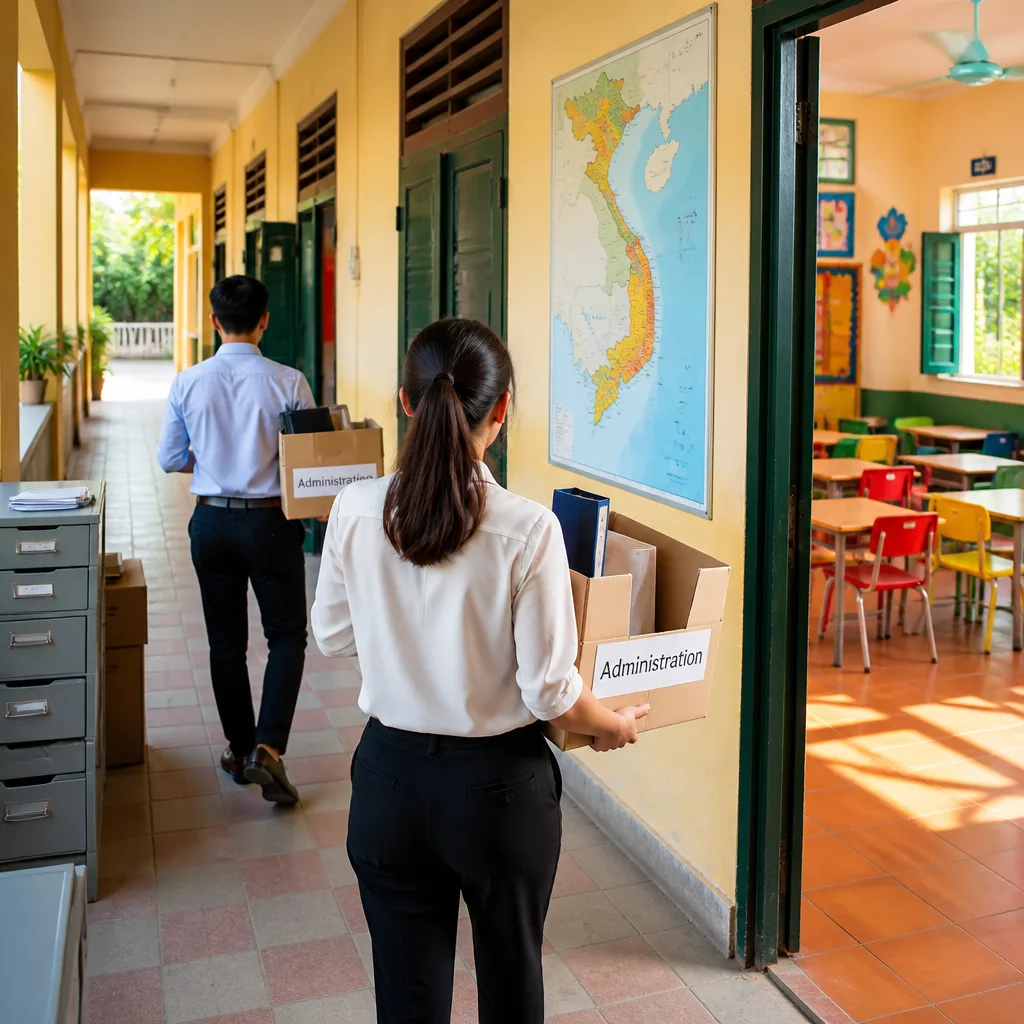
A key feature of the reform is the reassignment of senior staff. Authorities expect around 11,000 of the reassigned managers to return to classroom teaching. Reallocating these professionals away from administration and back into teaching is presented as a deliberate move to prioritise instructional quality over bureaucratic overhead.
| Measure | Figure |
|---|---|
| Minimum reduction in administrative units | 30% |
| Target in better-resourced areas | ~50% |
| Public schools to be affected | More than 11,000 |
| Education managers to be reassigned | More than 20,000 |
| Expected to return to teaching | Around 11,000 |
| Completion deadline | 30 August 2026 |
Implications for pupils and teachers
According to the Ministry’s calculations, pupils will often continue at their existing campuses and most teachers will remain in their classrooms. The change is therefore administrative in nature — consolidating leadership and support functions at a higher, unified level. In practice this could mean larger school management teams overseeing several sites, with local campus leaders focused on daily teaching and learning.
Education analysts and policymakers have framed the move as part of a broader push to concentrate investment on pedagogy and school-level learning outcomes, rather than on maintaining bureaucratic structures. The reassignment of experienced principals and deputies back into teaching roles is being cast as a positive redeployment of expertise to strengthen classroom practice.
Risks and questions ahead
Large-scale organisational change raises operational and human-resource questions. Reassigning senior leaders into classroom roles requires appropriate professional support and role adjustment; being a principal or vice-principal is not directly interchangeable with front-line teaching. There will also be practical challenges in coordinating multi-campus schools, ensuring consistent quality across sites, and managing the transitions without disrupting learning.
- Parents and communities will want clarity about how local campuses are governed within merged structures.
- Teachers who take on additional responsibilities will need training and workload safeguards.
- Local authorities must ensure funding follows classrooms, not management, to effect tangible gains in pupil outcomes.
The reform marks a significant change in how Vietnam organises public education. By cutting administrative duplication and returning experienced educators to teaching, central planners hope to redirect effort and resources to classroom learning — but the success of that ambition will depend on the details of implementation over the months ahead.