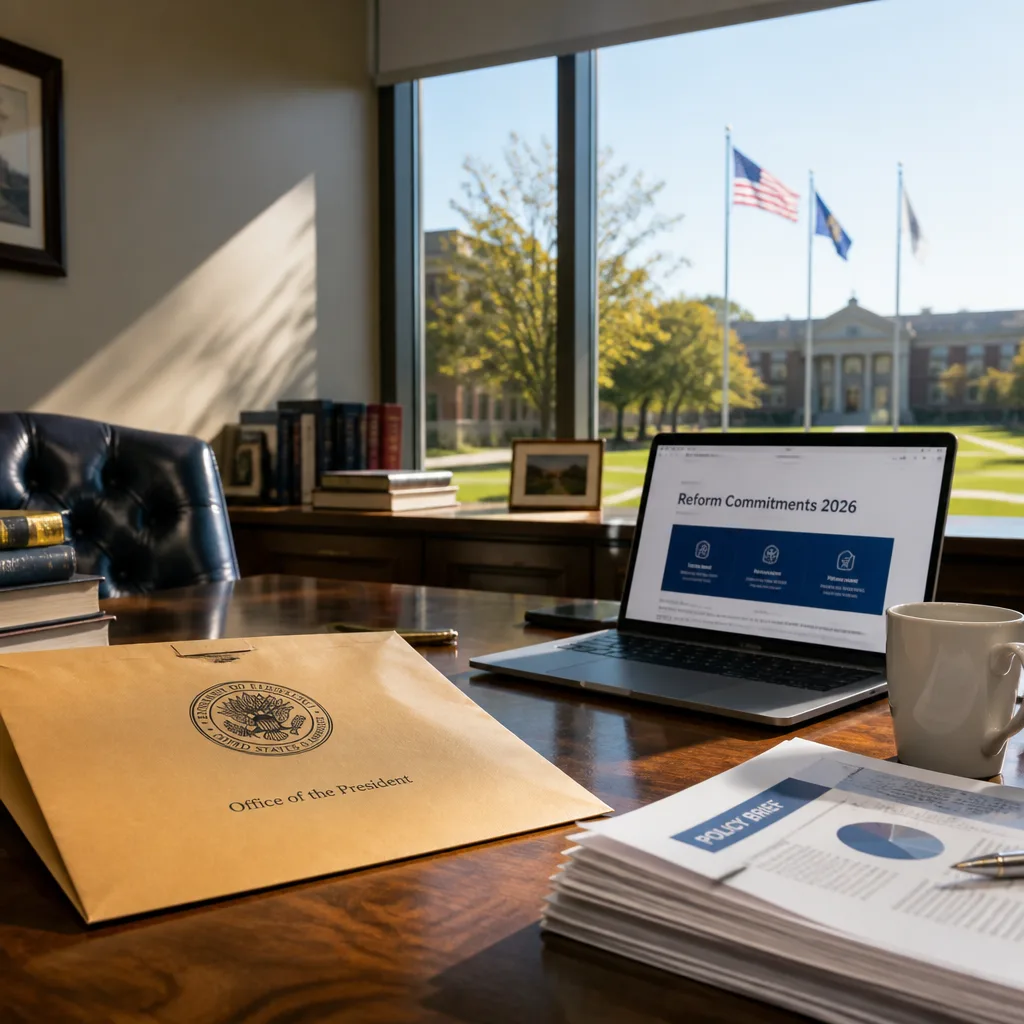
US Secretary of Education Linda McMahon has issued a nationwide call to university presidents and governing boards, urging them to publish clear commitments to reform by the end of 2026 in an effort to restore public confidence in higher education.
A direct appeal for transparency and reform
In a letter circulated to postsecondary leaders, McMahon framed the appeal as a response to what she described as an erosion of public trust in American higher education. She asked institutions to set out publicly how they will pursue reforms in key areas including admissions practices, campus speech, intellectual diversity and governance.
The Education Secretary argued that higher education — which she said has for centuries contributed to civic life, scientific progress and economic opportunity — must renew its commitments to “academic excellence, pathbreaking research, and national service.” She asked institutions to begin what she called a
"forthright conversation with the American people"and to answer seven central questions guiding prospective reform.
Seven themes for institutional responses
McMahon framed the request around seven core themes. She wants each institution to explain how it will address:
- Admissions transparency and merit — the clarity of criteria and reliance on achievement and institutional purpose;
- Free speech and open inquiry — protecting expression, debate and campus operations from disruptive behaviour;
- Intellectual pluralism and academic vitality — encouraging a range of viewpoints across departments and recruitment practices;
- Faculty hiring and evaluation — how practices support intellectual diversity and academic standards;
- Academic standards and student outcomes — ensuring programmes deliver on educational promises;
- Oversight and governance — clarity on how boards, leaders and stakeholders will hold institutions to account;
- Public engagement and service — the role of universities in serving national priorities.
The request sets a firm deadline: every postsecondary institution should publish a public statement outlining its commitments before the end of 2026.
Context and potential consequences
In her letter, McMahon said polling shows public confidence in higher education at historic lows across political parties and demographic groups. She conveyed confidence that university leadership can spearhead a renewal, promising that renewed commitments could help restore faith in the sector and advance scientific, economic and civic aims.
The Secretary’s initiative places pressure on governing boards and university leaders to make rapid, visible changes or at least to present clear plans. For institutions, the request is likely to require co‑ordinated work across admissions offices, faculty committees and governance bodies to produce statements that are both substantive and defensible.
| Deadline | Expected output |
|---|---|
| End of 2026 | Public statement outlining commitments on the seven themes |
How universities respond could shape national discussions about the purpose of higher education, the balance between free expression and campus safety, and admissions practices. The Secretary emphasised that renewed leadership could usher in a new era of academic excellence and national service.
The letter does not prescribe specific policies or regulatory measures; rather, it asks institutions to set out their chosen approaches and make those commitments public. That leaves considerable scope for variation in how universities answer the seven questions and what concrete reforms they propose.
For students, parents and employers, the coming months may reveal whether institutions choose incremental compliance, ambitious reform, or primarily rhetorical responses. The Secretary's appeal makes clear that transparency and accountability will be central to judging those responses.
As institutions consider their published commitments, stakeholders will be watching for demonstrable changes in admissions clarity, protections for open inquiry, and steps to broaden intellectual perspectives within faculties — all areas McMahon highlighted as essential to rebuilding public trust.