London’s most vulnerable people are facing mounting danger as the capital endures its third heatwave of the year, outreach workers and charities warn. With prolonged high temperatures, limited shade and finite relief options, rough sleepers in particular are being left exposed to heat-related risk.
Immediate risks for people sleeping rough
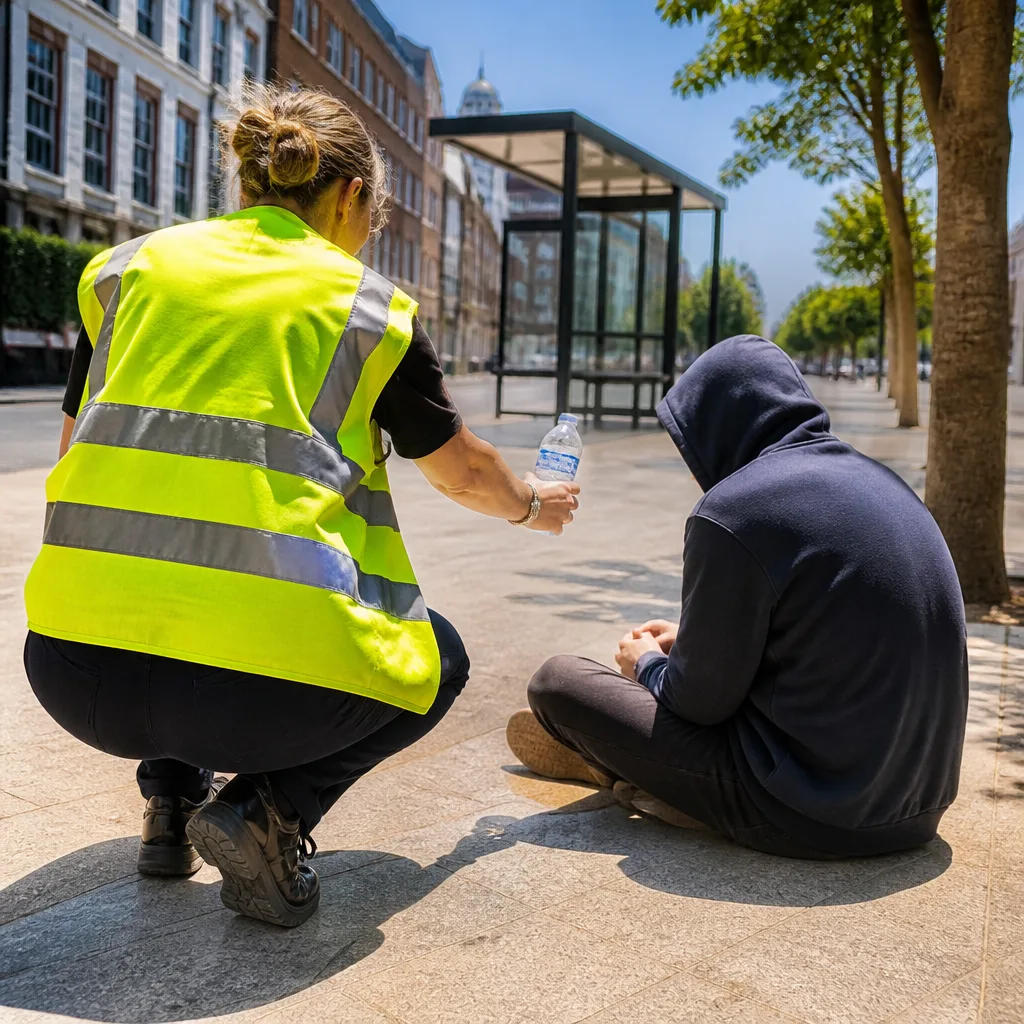
Workers supporting people living on the streets say the urban environment compounds the health threat. Concrete and tarmac absorb and re-release heat, tree cover is sparse in many central areas, and access to safe, cool indoor spaces is often limited. Outreach teams are reporting heavy demand for basic supplies, with water distribution, welfare checks and directions to cool refuges now a daily priority.
“You’ve just got to bear it. It’s like being in a hot country. It drains you,”
The comment above, from a man in his 60s who has been homeless for several years, reflects the lived experience described to outreach staff — exhaustion, difficulty finding rest and a constant search for shade or cool places to sit.
Support efforts and strain on services
Homelessness charities and outreach teams report intensified activity as they attempt to respond to repeated extremes. Typical measures include handing out bottled water, conducting regular welfare checks and signposting people to air-conditioned or cooler indoor spaces when available. Staff describe many tents and informal sleeping sites being abandoned during the heat as occupants move in search of water, work or relief from the sun.
Charity managers point to the challenge of providing sustained help during consecutive heat events. While immediate outreach can bring temporary respite, long-term solutions — such as additional indoor cooling facilities or accommodation options — are constrained by resources and availability.
- Heatwave status: London is experiencing its third heatwave of the year.
- Primary response actions: water distribution, welfare checks and guidance to cool spaces.
- Key vulnerability factors: lack of shade, urban heat retention and barriers to accessing indoor cooling.
Public-health context
Scientists and public-health experts have highlighted the severe consequences of recent extremes. Official estimates cited by outreach workers and charities link the May and June heatwaves in England and Wales to an additional 2,700 deaths. That figure underlines the broader mortality risk during prolonged high temperatures, particularly for people who are exposed outdoors or who have limited access to healthcare.
| Item | Detail |
|---|---|
| Heatwave count | Third heatwave of the year in London |
| Estimated excess deaths | 2,700 (May and June heatwaves in England and Wales) |
| Main responses | Water distribution, welfare checks, signposting to cool spaces |
Researchers emphasise that people sleeping rough are physiologically and socially more vulnerable to heat: pre-existing health conditions, limited ability to store or access fluids, and difficulties reaching services all increase risk. Outreach teams are therefore prioritising contact with individuals known to be sleeping outdoors and escalating support where possible.
Practical advice and immediate measures
For those concerned about friends, family or people they see on the streets, outreach workers advise a few practical steps: offer bottled water if safe to do so, alert local outreach or council services if someone appears unwell, and encourage those affected to use any available cool spaces such as libraries, shopping centres or designated cooling hubs.
Longer-term, the pattern of repeated heat events has renewed calls for planning and provision that account for rising temperatures — from more public cooling facilities to improved access to housing and respite for those sleeping rough. In the short term, frontline staff continue to work extended hours to provide immediate relief as the city copes with record warmth.
As these exceptional conditions return with greater frequency, the intersection of weather, health and social vulnerability remains a pressing national concern.