Chester Zoo has played a central role in a cross-border conservation operation that has seen hundreds of near-extinct snails bred in captivity returned to the wild on a remote Madeiran island.
From crisis to release: the rescue of tiny molluscs
Conservation teams from Chester Zoo in the UK and ZooParc de Beauval in France were asked by the Madeiran government to intervene after only a handful of the snails remained in the wild. Experts say a combination of historical habitat destruction and introduced animals left the species perilously close to extinction.
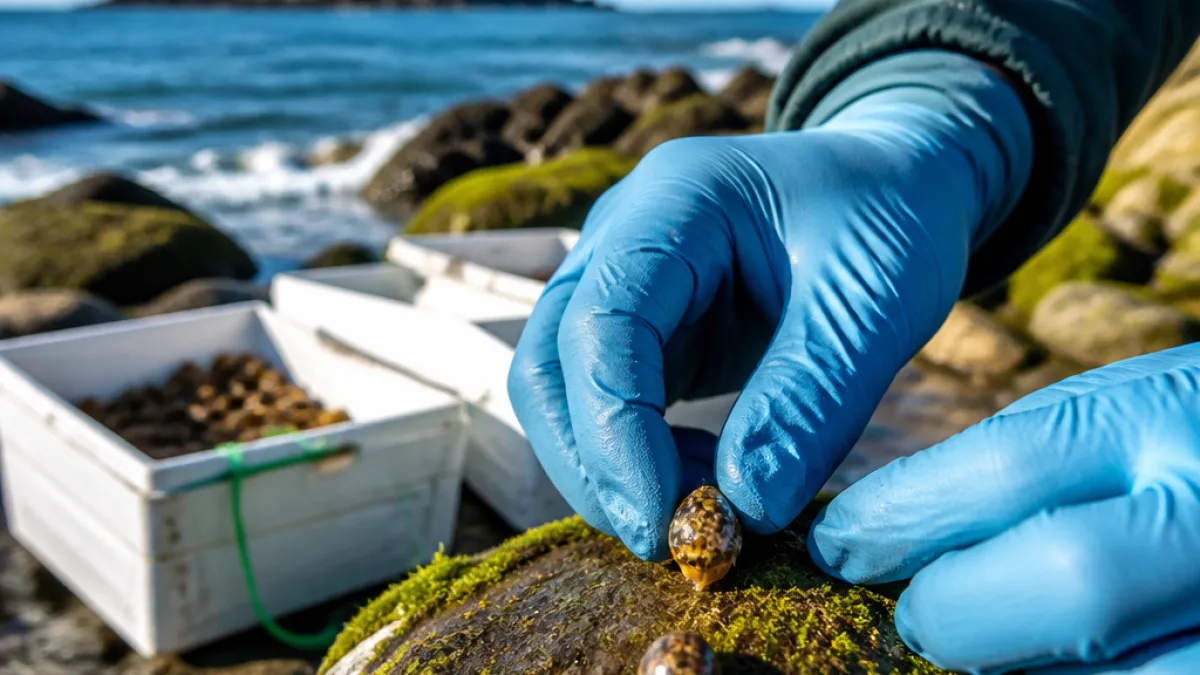
Among the dramatic accounts was that of Geomitra coronula, a species reported to have been reduced to 21 individuals clinging to life beneath a single rock. Chester Zoo helped breed more than 300 descendants of that tiny founding group, which have now been returned to Bugio island alongside 270 specimens of Discula lyelliana bred by French specialists.
Why Bugio needed help
Bugio and neighbouring islets once supported woodland habitats now grazed bare by feral goats, rabbits and mice introduced over the centuries. Those pressures prevented native vegetation from regenerating and exposed the remaining invertebrate populations to predation and dehydration—mice, with no other water sources, turned to snails as a high-water food source.
“It had to be a rapid rescue mission for all four species of snail,” said Tamas Papp, assistant team manager for invertebrates at Chester Zoo. “By the time the Madeira government contacted us for help, one of the species, Geomitra coronula, was so close to extinction that its entire global population could fit inside a single petri dish.”
The zoo’s team described the project as a one-shot opportunity: if the captive breeding had failed, those species might have been lost forever.
What was released — and what it means
The return to Bugio is intended both to restore the species themselves and to aid broader habitat recovery. Reintroductions like this can help re-establish ecological interactions and bolster the resilience of the island’s remaining flora and fauna.
- Species highlighted: Geomitra coronula and Discula lyelliana.
- Chester Zoo contribution: more than 300 Geomitra coronula descendants bred and reintroduced.
- French contribution: 270 Discula lyelliana specimens bred at ZooParc de Beauval and returned.
Conservation officials working with the Madeiran government carried out the reintroduction, returning the zoo‑bred snails to habitats where, in recent centuries, grazing and introduced predators had driven many native species to the brink.
Local significance and ongoing work
For Chester residents, the project underscores the zoo’s role beyond tourism and education: it is an active participant in international species recovery and island restoration efforts. The work also highlights how small, specialist teams can make decisive differences for obscure but ecologically important species.
Chester Zoo’s involvement is part of a growing trend among zoological institutions to use captive breeding as a conservation tool for invertebrates, plants and other taxa that are often overlooked despite their ecological importance. The success on Bugio will be monitored to assess survival, reproduction and any wider benefits to the island’s ecosystem.
| Contribution | Number of snails |
|---|---|
| Chester Zoo — Geomitra coronula descendants | more than 300 |
| ZooParc de Beauval — Discula lyelliana | 270 |
Officials and zoo staff have characterised the effort as an urgent and necessary conservation rescue. While the numbers involved are small compared with charismatic mammals or birds, for the species concerned the intervention may be decisive for their continued existence.
As the reintroduced snails settle back into their rocky island home, conservationists will continue habitat management and monitoring to ensure these tiny survivors can thrive without the intense pressures that brought them to the point of extinction.