Lease paves way for reuse of local infrastructure in carbon capture plan
The Crown Estate has taken a major step towards delivering carbon capture and storage (CCS) capacity serving the North West by granting a seabed lease to Liverpool Bay CCS (LBCCS), part of the Eni CCUS Holding group. The agreement enables the project to access and repurpose existing offshore infrastructure to carry and store CO2 captured from industry within the HyNet cluster.
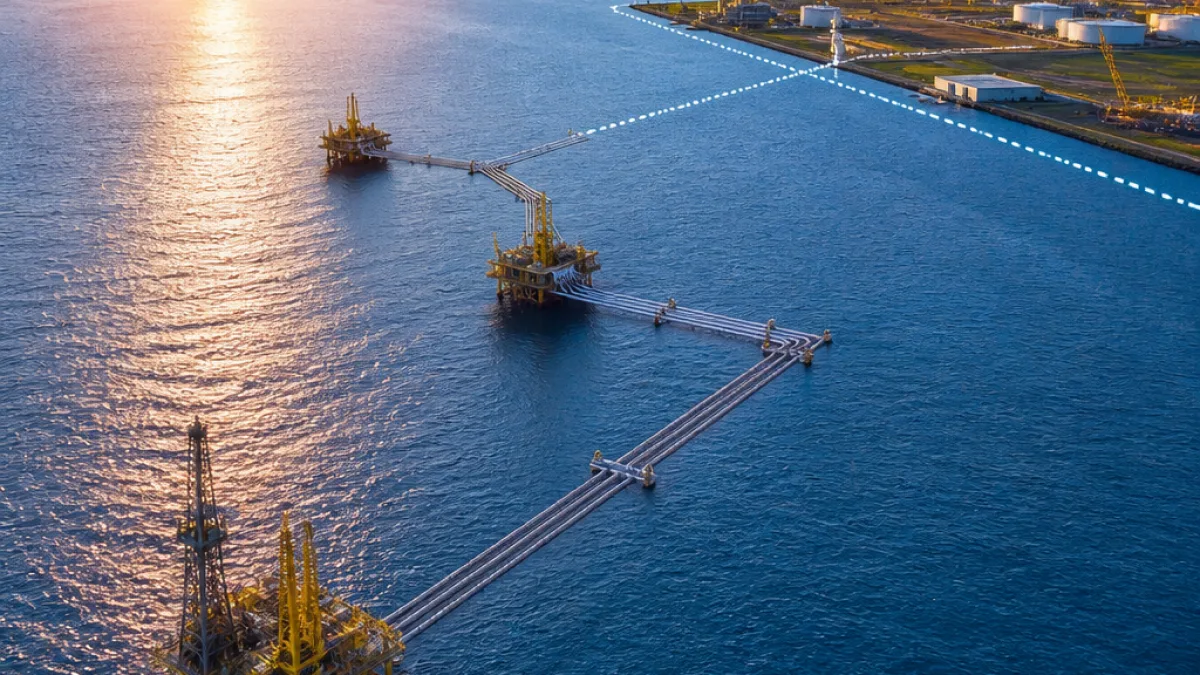
Under the lease, LBCCS will re-deploy more than 75 miles of existing pipelines along with three offshore installations and an onshore treatment plant. The development will also involve the construction of around 21 miles of new pipeline to connect emitters in North West England and north Wales into the Liverpool Bay transport and storage network.
- Initial feedstocks: CO2 is expected first from cement, low-carbon hydrogen and energy-from-waste operations.
- Storage design: Phase 1 designed to store 109 million metric tonnes (MMmt) of CO2 over the project’s operating life.
- Annual capacity: Phase 1 aims for 4.5 MMt per year, with potential to grow to 10 MMt/yr after 2030.
Local significance and timetable
The lease follows an earlier Agreement for Lease awarded in August 2024 and comes within the wider Government-backed HyNet North West cluster, which was designated a Track-1 CCUS cluster in October 2021. According to published project material, the first injection of captured CO2 into Liverpool Bay is expected to take place in 2028.
For the Liverpool City Region and surrounding areas, the scheme represents a practical reuse of nearby offshore assets rather than creating a wholly new development footprint. Re-deploying pipelines and installations could reduce costs and construction time compared with building entirely new infrastructure, while the links to local industries aim to retain and decarbonise established economic activity.
What will be reused and built
The project will reutilise:
- Existing pipelines totalling more than 75 miles;
- Three offshore installations;
- An onshore treatment plant linked to the offshore transport network.
In addition, the scheme requires approximately 21 miles of new pipeline to tie industrial emitters into the transport and storage system.
| Metric | Figure |
|---|---|
| Phase 1 lifetime storage | 109 MMmt |
| Annual storage capacity (Phase 1) | 4.5 MMt/yr |
| Potential annual capacity after 2030 | 10 MMt/yr |
| Target for first injection | 2028 |
Regional context and wider offshore activity
The Liverpool Bay lease is part of a broader push to establish CCS and low-carbon energy infrastructure in the Irish Sea region. The Crown Estate has also relaunched a tender for the up to 1.5GW Morgan offshore wind project, located in the Irish Sea roughly 22.22 km from the Isle of Man and 37.13 km from the northwest England coast, after previous developers withdrew earlier this year.
Officials say rights for the Morgan wind site could be awarded to a successful bidder by the end of this year following the competitive auction process. Together, the CCS lease and the wind tender underline the Crown Estate’s drive to balance reusing existing assets with new offshore development across the region.
For communities in and around Liverpool, the progress of LBCCS will be watched closely. The project ties directly into local industry decarbonisation ambitions under HyNet North West, and the reuse of existing structures could influence project timelines, local supply chain demand and employment opportunities in ports, fabrication, and operations as the scheme moves towards first injection.
As the project advances towards operational milestones, residents and businesses will want clarity on planning, environmental monitoring and the skills needed to support long-term operations. The next stages of regulatory and developer activity will determine how quickly promises translate into local economic and environmental benefits.