The Prime Minister has pledged to reduce the number of young people who are neither in education, employment nor training (NEET), saying he is "on a mission" to halt a rise that has already pushed the figure above one million. At the same time he outlined a plan to introduce new technical education routes for 14-year-olds that will sit alongside traditional academic pathways.
Commitment without a deadline
Speaking during a visit to Derby, the Prime Minister said he would commit, during his time in office, to getting NEET numbers down but would not provide a firm timetable for when that would be achieved. He said the immediate priority was to stop the current upward trend.
"I will commit, in my time in office, to get the number of young people who are not in education, employment, and training down," he told reporters. "When precisely I can get there will is a hard thing to say right now."
He added that it was "just not right" that the system left young people who are not following the university route feeling like "some kind of second-class citizens" and said the reforms would offer hope to those he described as not well served by the present system.
Technical education from Year 10
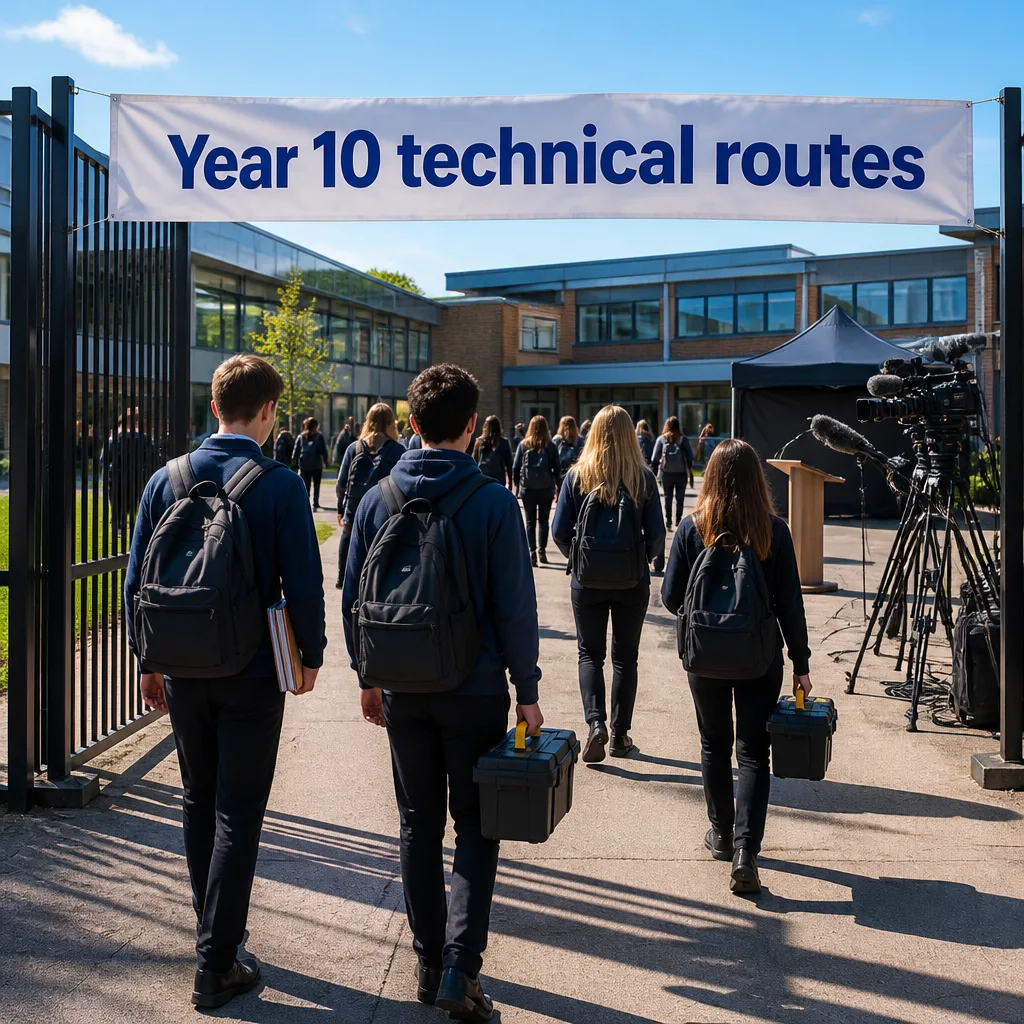
The policy will allow pupils from Year 10 (typically age 14) to combine core academic subjects such as English and maths with technical qualifications that are closely linked to local job markets. The Prime Minister framed the move as putting technical routes on an equal footing with academic ones and said the changes were "long overdue."
Officials said the approach draws on local models which tailor curricula to the needs of regional employers. The reforms are intended to give pupils the option of pursuing practical skills earlier, while maintaining a core academic baseline.
Data and warnings
Official figures published in May show the number of 16-24-year-olds who were not working or learning rose to 1.01 million in the three months to March — the first time the total has exceeded one million since 2013. The Prime Minister referred to those statistics as part of his rationale for action.
An interim report from former Labour minister Alan Milburn, also published in May, warned that the NEET proportion could reach one in six young people by 2031 if current trends continue, and cautioned that Britain risks producing a "lost generation" poorly prepared for the labour market.
| Measure | Figure |
|---|---|
| NEETs aged 16-24 (Jan–Mar) | 1.01 million |
| Projected NEET rate by 2031 (Milburn interim report) | One in six |
What this means for pupils and schools
- From Year 10, some pupils will be able to follow a combined academic and technical pathway aligned to local employment opportunities.
- Policy aims to reduce the stigma attached to non-university routes by elevating technical qualifications.
- No timescale has been set for when NEET numbers will begin to fall, leaving local education leaders without a clear target to measure progress.
The Prime Minister said his immediate task was to stop the rise in NEETs before setting out longer-term reductions. He acknowledged the challenge of committing to a precise date when the current trend is upward.
Education leaders, employers and local authorities will be watching closely for further detail on how the new technical routes will be funded, accredited and implemented at school and college level, and how they will be linked to local labour market needs. Without firm timetables or implementation plans, the policy currently offers an ambition rather than a fully formed programme.
For pupils and parents, the announcement signals an expansion of choices earlier in secondary education and an attempt to make vocational pathways more attractive. How quickly that change will translate into fewer young people out of work or learning, however, remains to be seen.