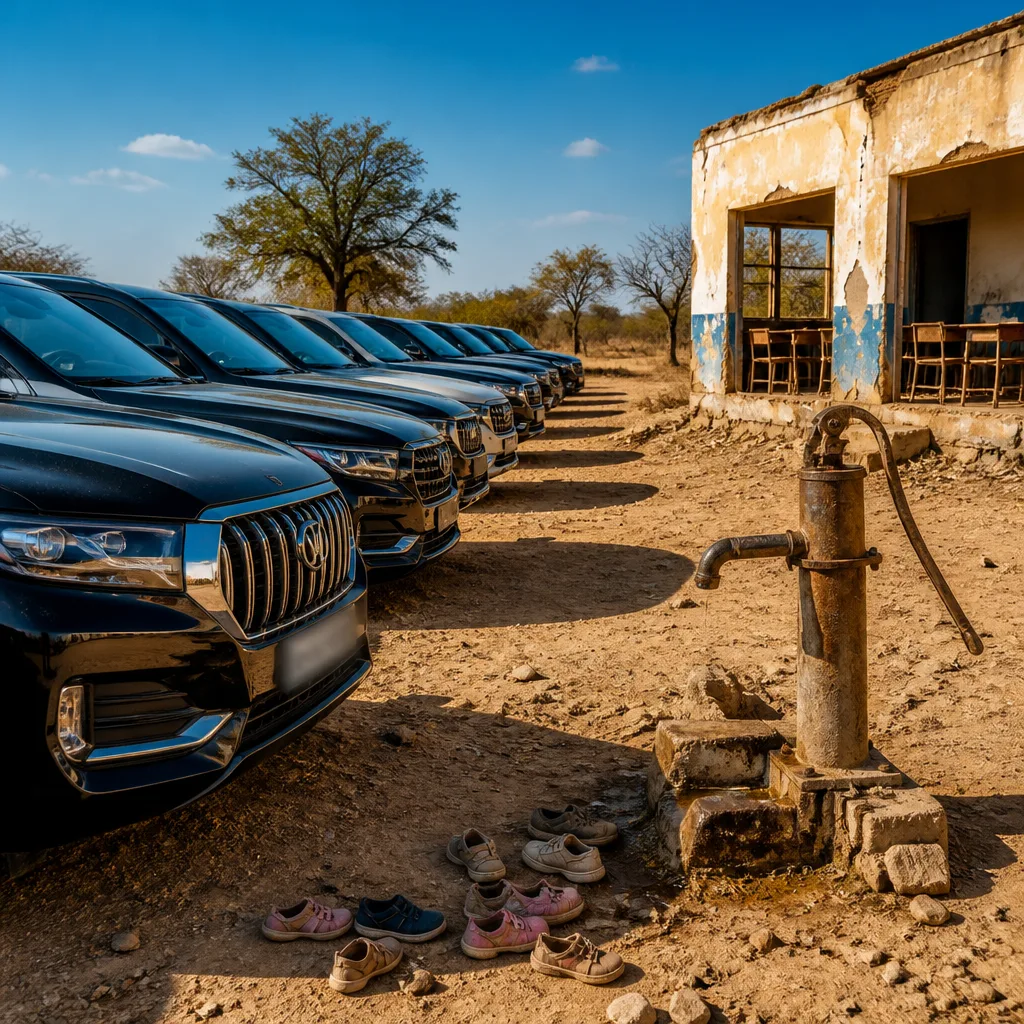
Allegations that millions of naira have been spent on a fleet of luxury vehicles for state officials in Ebonyi are fuelling concern about misplaced priorities in a region already struggling to provide basic education and public services.
Spending choices amid school shortages
Civic critics and commentators say short-term, high-profile purchases by political leaders are crowding out investment in school infrastructure and essentials. Reports state that over N8.2 billion was expended on roughly 20 premium vehicles for the governor’s convoy and other officials in Ebonyi State.
The reported purchases include a range of high-value models, with individual valuations cited in coverage of the procurement. Those figures, as set out in public reporting, include:
- Two Cadillac Escalades
- Two bombproof vehicles valued collectively at N1.3 billion
- One Rolls-Royce Cullinan valued at N900 million
- One Mercedes G63 SUV valued at N429 million
- Three Toyota Land Cruiser 2024 models costing N640 million
Those items are reported alongside a broader total of more than N8.2 billion on a convoy for the governor, Francis Nwifuru.
| Item | Reported value |
|---|---|
| Bombproof vehicles (2) | N1.3 billion |
| Rolls‑Royce Cullinan | N900 million |
| Mercedes G63 | N429 million |
| Toyota Land Cruiser 2024 (3) | N640 million |
Communities left without basic amenities
Local examples cited alongside the vehicle purchases illustrate the stakes: in Nduochigbo Nkaleke, Izzi, a primary school built with rafters and bamboo has been described as makeshift, assembled through the efforts of local residents rather than by government provision. In another part of the state, residents of Aguabata village in Ikwo local government area have reportedly been without access to clean drinking water.
Those conditions carry direct consequences for children’s schooling and wider public health. Lack of proper classrooms and safe water can reduce attendance, hinder learning and increase the risk of disease — factors that undermine the development of human capital the education sector should support.
Criticism over priorities and previous allocations
Critics have also pointed to earlier expenditures, including a reported N500 million spent to send 46 people on pilgrimage to Hajj under a previous administration. Observers argue such allocations demonstrate a persistent pattern of spending that favours visible, politically rewarding projects or personal travel over long-term investments in infrastructure and services.
Commentators contend that when public funds are diverted to high-cost items that chiefly benefit a narrow group, the result is diminished capacity to deliver essential services such as education, clean water and sanitation — all of which are vital to children’s learning and community wellbeing.
National implications
At a national level, the situation in Ebonyi underscores recurring governance questions: how states prioritise capital and recurrent spending, and the mechanisms by which citizens and oversight bodies hold leaders to account. For the education sector, the issue is especially acute because investment in schools, teachers and basic facilities determines whether children can access quality learning opportunities.
The reporting raises a fundamental policy question: how to ensure public expenditure advances long-term development goals rather than short-term political signalling. For parents and pupils in affected communities, the immediate concern remains the same — securing safe classrooms, access to clean water and the stable learning environment necessary for education to flourish.