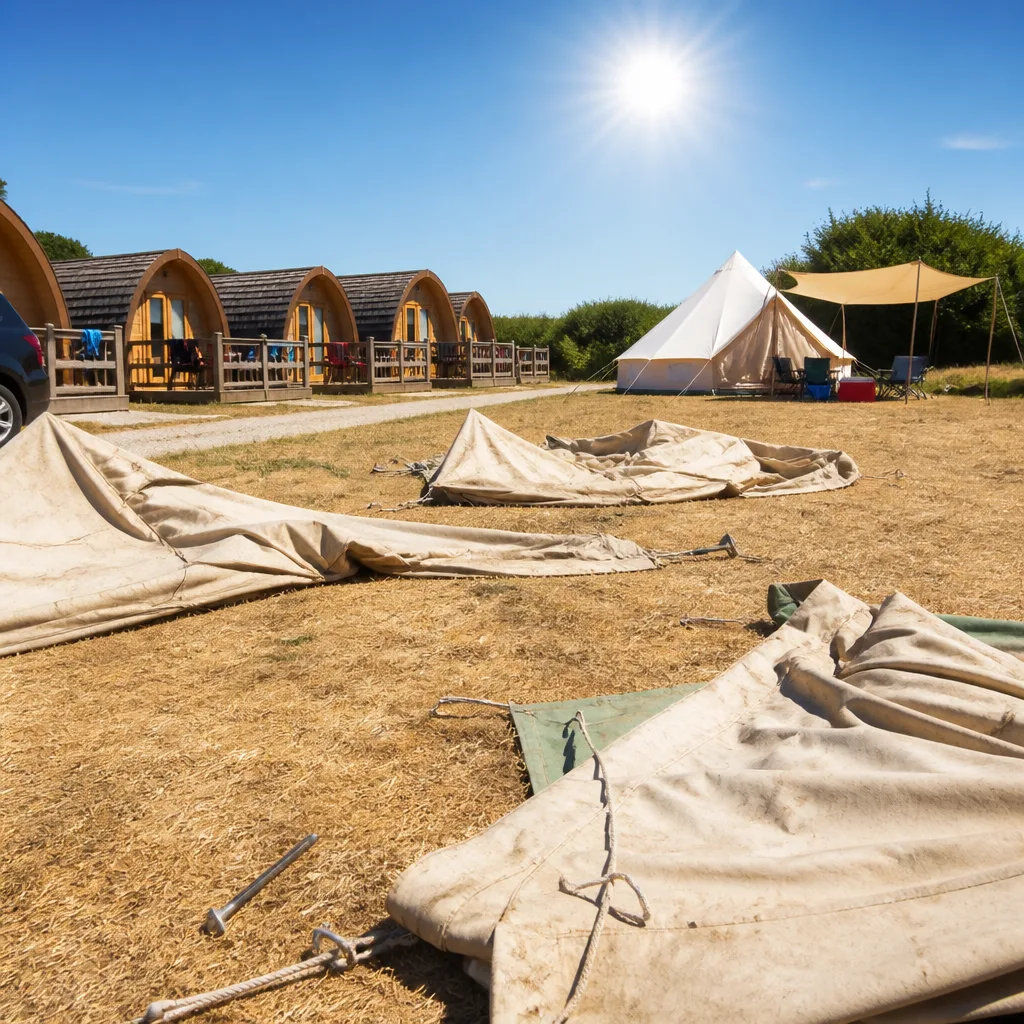
Hotter conditions this summer are changing the way people holiday in the UK, with campsite operators reporting a shift away from traditional tent camping towards more comfortable, ready-made options. Businesses and regional tourism bodies say the trend is already affecting visitor numbers and incomes in areas reliant on outdoor stays.
Comfort over canvas: why campers are changing plans
Campsite owners in Somerset describe a clear pattern: some families, older holidaymakers and guests with pets are cancelling or altering tent bookings during spells of high temperatures, instead choosing covered or serviced accommodation on site. While dry weather has brought a boost in demand from some quarters, the overall balance is tilting towards alternatives to pitching a tent.
One operator noted a sharp fall in traditional camping and motorhome bookings alongside growth in glamping options such as bell tents and pods. The reported changes include:
- c. 25% reduction in camping and motorhome bookings at one Somerset site;
- c. 7% rise in glamping unit bookings at the same location;
- £55m annual contribution from camping and caravanning to Somerset's economy, underlining the sector's local importance;
- 66% reported fall in visits to some county attractions compared with the previous year.
| Measure | Reported change |
|---|---|
| Camping & motorhome bookings | ~25% down |
| Glamping bookings | ~7% up |
| Economic contribution (Somerset) | £55m |
| Visits to some attractions | 66% down |
Health, comfort and practicalities driving choices
Operators say health concerns are a major factor behind changes to reservations. Families with young children, people caring for elderly relatives and pet owners are reportedly wary of camping through intense heat. The practical burden of assembling and staying in a tent during hot spells — and the desire for shade, cooling and facilities — is nudging some customers towards glamping pods, pre-pitched bell tents and other serviced options.
"People would be ringing to cancel at the peak of the heatwave because they had dogs, or children or elderly relatives and just didn't want to put a tent up," a site manager said.
At the same time, other campsites are seeing more visitors eager to take advantage of settled, dry weather and affordable domestic breaks. That split outcome shows how regional and site-specific factors — layout, availability of shaded pitches, and the range of accommodation on offer — influence whether hot weather helps or hinders bookings.
Wider implications for businesses and tourists
The shift has practical consequences for campsite operators. A move towards glamping can mean higher income per unit but also requires investment in infrastructure, management and marketing. Sites relying heavily on tent pitches may see reduced turnover unless they diversify. For local economies, camping and caravanning remain important: Visit Somerset’s figure of £55 million demonstrates the sector’s role in supporting jobs and businesses.
For holidaymakers, the emerging pattern suggests a few practical steps to consider:
- Plan for heat: choose pitches with shade or book serviced accommodation where possible.
- Check cancellation and transfer policies at peak heat times.
- Pack sun-safety items and consider shorter, cooler parts of the day for outdoor activities.
As the climate continues to influence travel choices, campsites that adapt by offering a broader range of options — from shaded tent pitches to insulated glamping units — are likely to be best placed to meet changing demand. Clear information for guests about facilities and how a site copes with heat will also be increasingly important.
Weather patterns this summer are not just a backdrop to holidays: they are reshaping how people choose to spend their breaks and how rural tourism businesses plan for the seasons ahead.