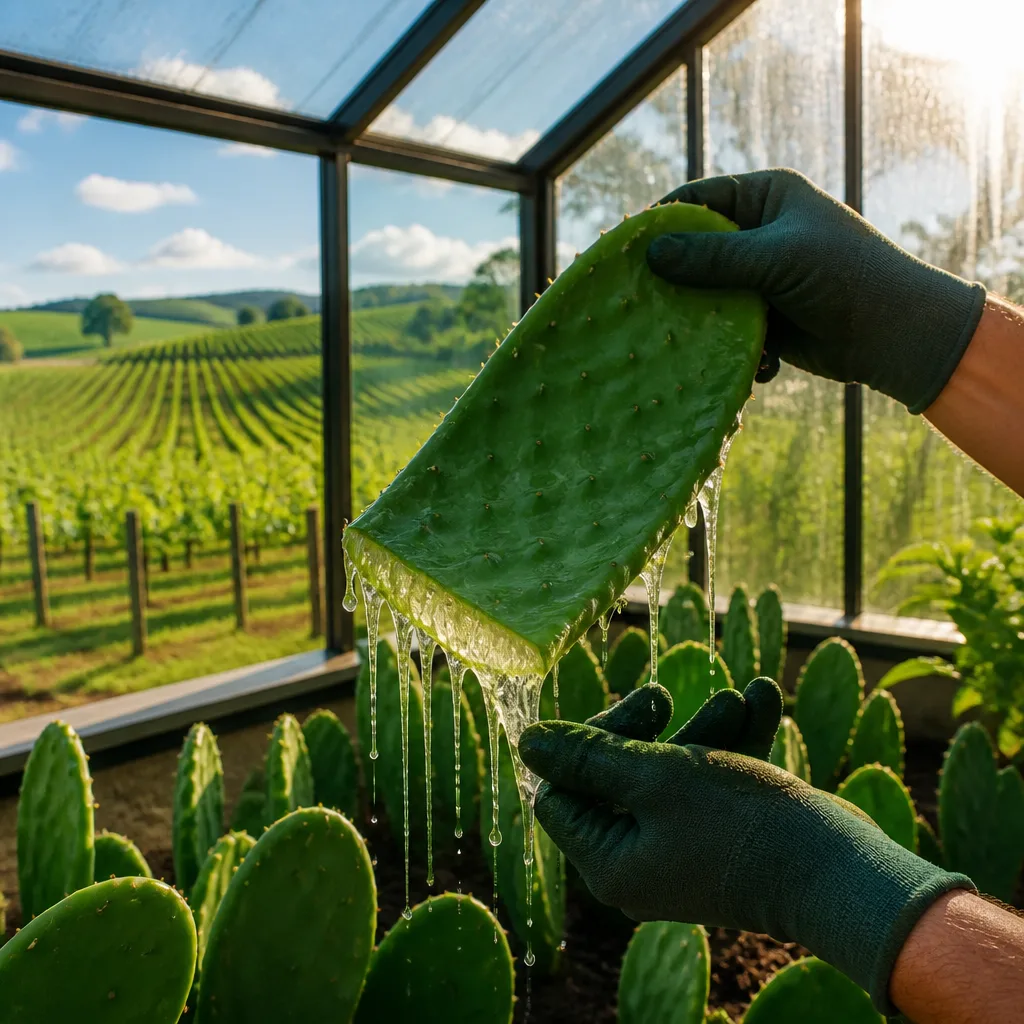
Under searing glasshouse heat, growers are turning to resilient plants and new enterprises. In one southeast London glasshouse, a nopal cactus is both food and a potential construction material, its growers say, while in Yorkshire a family vineyard has expanded from a small hobby to a business of 29,000 vines.
Water-rich cactus tested as food and material
On a recent Farm Watch assignment a nopal pad was cut and served raw inside a very hot glasshouse. The plant yielded sticky strands of complex sugars and, when tasted, offered a crisp texture and a hydrating mouthful: the pad is described as being about 90% water. The grower, Elki Guillen, removed the spines and explained that nopal is part of his heritage and culture. The piece was passed to colleagues, including Gordon, the cameraman, who also sampled it.
“It’s in my DNA, it’s in my culture, it’s in my blood.”
Beyond being eaten, the nopal is noted for other uses: its fibres and sticky sugars can act as a natural binder and have been suggested for bio‑construction applications. The reporting emphasises the plant’s dual role as a fibrous, water‑imbued food source and as an experimental material for sustainable building techniques.
From hobby to 29,000 vines: a Yorkshire success
A separate item focused on Yorkshire Heart, a family vineyard that has grown substantially since being planted as a hobby in 2000. What began as 35 vines has become a commercial operation of 29,000 vines. The reporter noted the scale of the transformation on a return visit after the Covid‑19 lockdown and described the atmosphere as welcoming but hard‑grafting — the family and staff were pictured and interviewed about the labour involved in making wine in northern England.
The vineyard’s founders set out to test whether quality wine could be produced in Yorkshire; the piece relays the ethos and lighthearted answer to that experiment.
“Can we make good wine in Yorkshire? The answer? If it’s from God’s Own County, of course it’s good.”
- Nopal cactus: harvested, spines removed, eaten raw; around 90% water; potential use in bio‑construction as a natural binder.
- Yorkshire Heart vineyard: expansion from 35 vines in 2000 to 29,000 vines today; family‑run operation with emphasis on careful, hands‑on work.
Practical takeaways for growers and consumers
These reports highlight two practical responses to warm, dry conditions in horticulture: cultivating drought‑tolerant plants that provide hydration and alternative uses, and diversifying into climate‑suitable enterprises such as viticulture where local conditions permit. The examples show how growers are adapting practices within existing glasshouses and on open land.
For consumers, the pieces offer a direct glimpse of how produce may change with shifting conditions: unfamiliar crops can enter local foodways, and small vineyards in cooler regions can expand substantially with careful husbandry.
| Item | Key figure |
|---|---|
| Original vines planted (Yorkshire Heart) | 35 |
| Vines today | 29,000 |
| Nopal water content | ~90% |
While these stories are grounded in specific visits and examples, they point to wider shifts in how growers respond to high temperatures and variable weather. Crops that combine resilience, culinary value and potential secondary uses — such as nopal — can find a place in the glasshouse economy, while careful investment and labour can turn small plantings into larger commercial ventures, as the Yorkshire vineyard demonstrates.
For horticulturists and people thinking about what to plant or buy this season, the evidence here is simple: consider species suited to the conditions you can provide, be prepared for hands‑on care, and look for multiple uses from a crop where possible.