India’s education system must be remade, not merely repaired, according to a recent opinion piece urging a move away from single-shot, high-stakes examinations that dominate admissions to higher education. The article contends that the current emphasis on marks and ranks has produced a harmful emotional climate for young people and calls for a multi-faceted system that better recognises pupils’ varied aptitudes and reduces avoidable distress.
Examinations seen as a cause of harm as well as selection
The writer argues that competitive tests have become intertwined with the idea that a single performance defines a pupil’s worth and future. That culture, they say, has contributed to anxiety and, in extreme cases, to tragedies among students. Rather than incremental fixes, the piece demands a fresh policy framework in which exams are perceived as fair, professionally conducted and something candidates take willingly.
The recommended alternative places pupils at the centre of selection. It calls for admissions systems that evaluate a broader set of attributes and achievements so that examinations do not remain the sole determinant of access to higher education.
What a fairer admissions model would assess
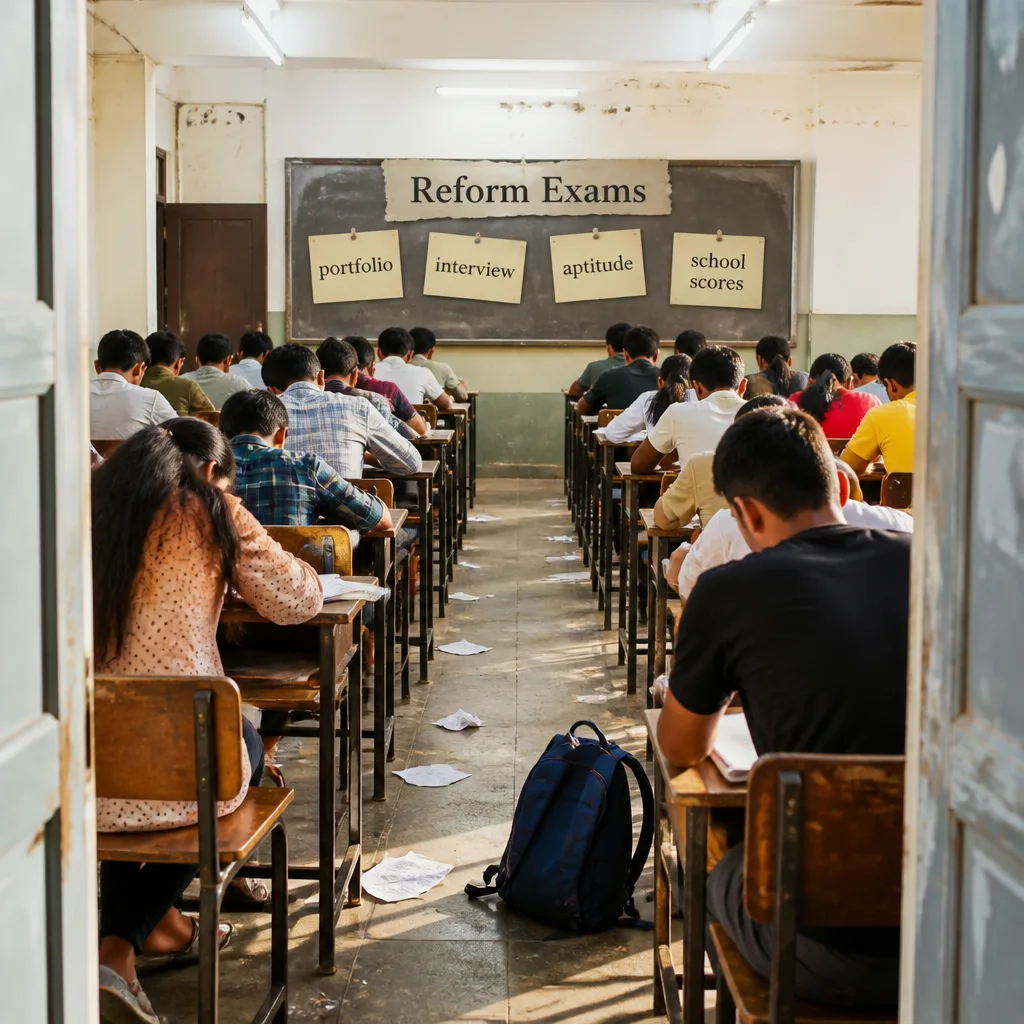
The article outlines a range of elements that should be combined to form a more comprehensive appraisal of applicants. These include:
- Moderated school performance rather than raw marks alone;
- Discipline-specific aptitude and practical tasks where relevant;
- Analytical writing and structured interviews;
- Portfolios, projects and internships as evidence of sustained work;
- Co-curricular and community engagement to show broader contribution.
Such a model, the writer says, would test reasoning, persistence, communication and judgement — capabilities that memory-and-speed examinations often fail to capture.
| Assessment component | What it shows |
|---|---|
| Moderated school performance | Consistency and sustained achievement |
| Discipline-specific tasks | Suitability for chosen field |
| Portfolios & internships | Applied skills and real-world experience |
Who should design and guard the new system?
The piece argues that entry-level institutions, working with experienced schoolteachers, ought to lead the design and administration of assessments. Transparency in criteria and robust safeguards are singled out as essential to prevent bias and gaming. The author stresses that the changes should be owned by those within the educational system rather than imposed externally.
Underlying the prescription is a belief that Generation Z is aware of the pressures it faces and is capable of making sensible choices about its future if given a fairer selection framework. The writer appeals to parents, teachers and policymakers to consult with young people and co-create reforms that are respected and resilient.
The conversation has particular urgency because it touches on mental health, social mobility and the kinds of skills a modern economy needs. Reformers who favour broader assessment argue it would not only reduce harmful competition but also encourage schools to focus on teaching for understanding, application and sustained endeavour rather than short-term test preparation.
Any shift will raise practical challenges — how to standardise diverse forms of evidence, how to scale interviews or portfolios for millions of applicants, and how to ensure fairness across different regions and socio-economic groups. Yet the piece insists such challenges should be addressed head-on rather than used to justify preserving the status quo.
For pupils and parents worried about the weight of a single exam day, the proposed approach promises a selection process that recognises multiple pathways to potential and rewards a wider range of talents.