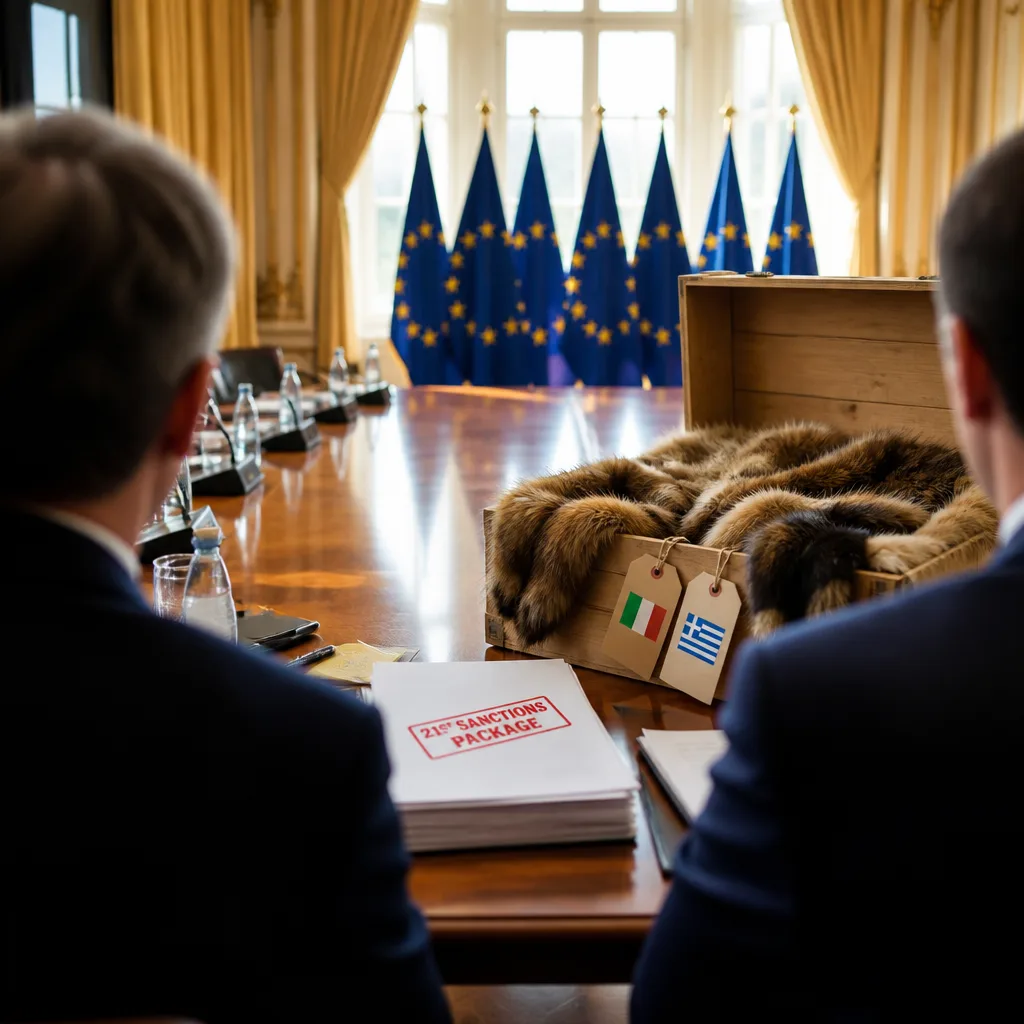
The European Union has reversed a recent blanket prohibition on imports of Russian sable pelts, allowing continued trade in what is widely regarded as the world’s most valuable fur following pressure from Italy and Greece during negotiations on the bloc’s 21st sanctions package.
Member states secure narrow exemptions
Three months after the EU imposed a comprehensive ban on Russian fur imports, negotiators agreed a last-minute exemption permitting imports of Russian sable pelts. The change was driven, according to reporting from Brussels, by requests from Italian and Greek representatives. The two governments are among the largest importers of the luxury pelts.
A senior EU official was untroubled by the reversal, saying:
"Apparently, it’s very difficult to get them anywhere else,"
The exemption formed part of a broader pattern of concessions extracted by Rome and Athens while shaping the 21st sanctions package. Sources indicate Italy resisted a proposed blanket ban preventing Russian soldiers from holidaying in Europe, and Greece secured an exemption relating to the shipment of Russian liquefied natural gas (LNG).
Politics of sanctions — concessions and consequences
The U-turn exposes tensions between the Commission’s attempt to maintain a united front against Russia and individual member states’ economic and political interests. Italian and Greek companies have significant commercial stakes in the sable trade, and both capitals apparently leveraged their negotiating positions to protect those interests.
Observers say the concessions may complicate the bloc’s messaging on sanctions and could prompt questions about consistency and enforcement. The exemptions also underline the reality that sanctions negotiations are often the product of intricate bargaining between the Commission and national governments.
- Reinstated exemption: imports of Russian sable pelts permitted.
- Italian and Greek influence: played decisive roles in reshaping the 21st package.
- Other concessions: reported resistance to a ban on Russian soldiers holidaying in Europe and an exemption for Russian LNG shipping.
Context within EU politics
The episode arrives amid other fractures within the European political landscape. In parallel developments, Conservative grouping ECR is due to appoint Senior Brothers of Italy MEP Carlo Fidanza as interim president after the expected departure of current leader and former Polish prime minister Mateusz Morawiecki. That shift follows a split within Poland’s Law and Justice (PiS) party after Morawiecki led roughly 40 allies out of the party — a move that deepened tensions with PiS leader Jarosław Kaczyński.
These shifts in party alignments and the bargaining evident in sanctions talks both point to a period of fluidity inside European institutions and among member states. The Commission’s willingness to accommodate national requests on sensitive items such as luxury pelts and energy shipments suggests a prioritisation of unanimity over uniformity.
Practical impact and reputational risk
Economically, the exemption safeguards trade channels for firms in Italy and Greece that deal in high-value furs. Politically, it risks feeding criticisms that sanctions are porous and subject to commercial lobbying. The Commission will need to manage both the practicalities of administering exemptions and the optics of a bloc that appears to modify penalties for strategic suppliers.
| Issue | Reported outcome |
|---|---|
| Russian sable pelts | Imports exempted after Italian and Greek requests |
| Russian soldiers holidaying in EU | Proposed blanket ban resisted by Italy |
| Russian LNG shipments | Last-minute exemption secured by Greece |
Commission spokespeople have so far signalled little public disquiet about the reversal. The development will be watched closely in capitals, not least in London, where questions about the coherence of Western sanctions policy and the leverage of member states in Brussels remain politically salient.
Reporting from Brussels for this item was contributed by Maria Simon Arboleas and Sofia Sanchez Manzanaro.