Zack Polanski, leader of the Green Party, told an Edinburgh Fringe audience that the UK should prioritise investment in climate adaptation over expanding conventional military expenditure to meet external pressure, arguing the climate emergency represents the gravest national security risk since the Second World War.
Climate framed as a security priority
Speaking on the Iain Dale All Talk programme, Mr Polanski set out a contention that security policy must be reframed to include preparation for climate-related hazards. He said that if defence budgets encompass measures for climate adaptation—for example to respond to floods and wildfires—then additional spending is warranted. By contrast, he warned against boosting military budgets simply to satisfy calls from the United States for European partners to increase their defence contributions.
“If we’re talking about spending 3.5% of our GDP on military spending to please Donald Trump, then I think there’s an absolute incoherency in that.”
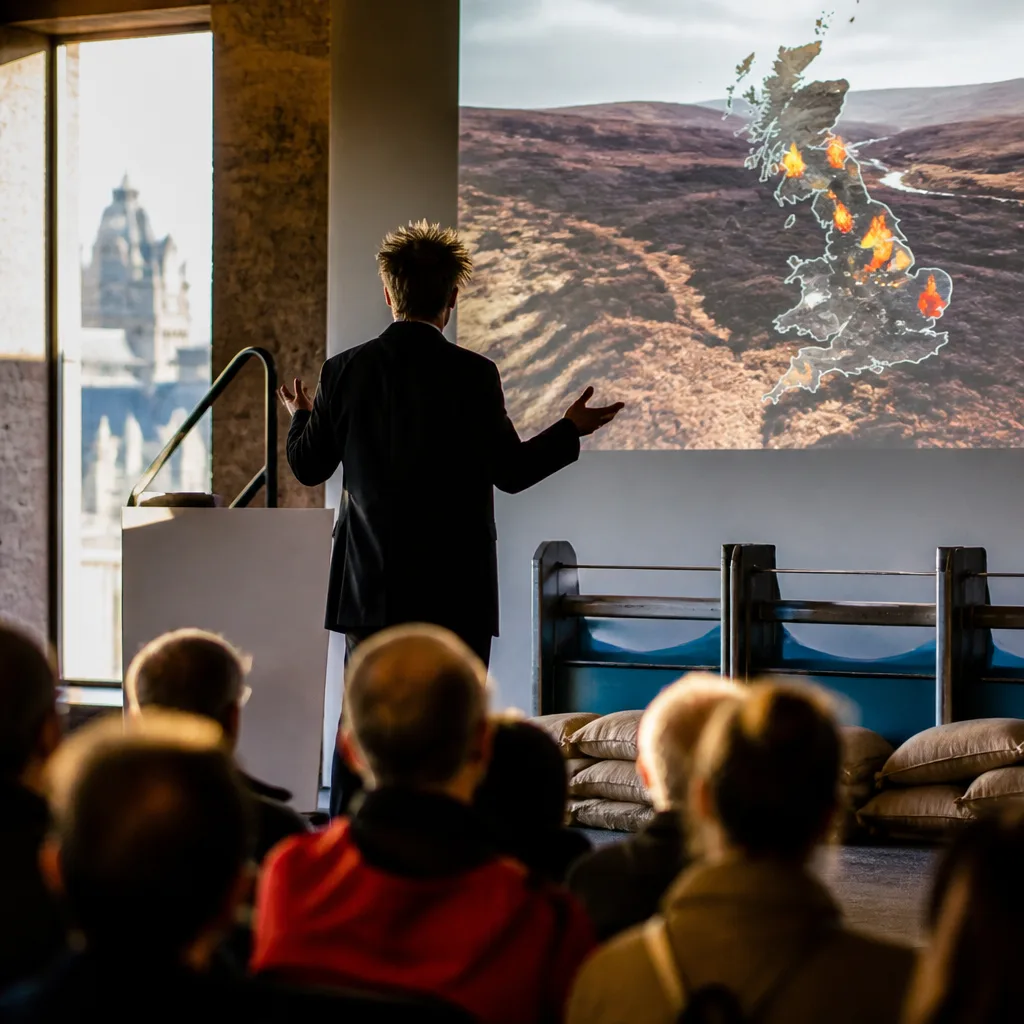
Mr Polanski reiterated his view that the climate crisis is “the biggest threat to our national security since the Second World War”, saying current extreme weather events, including wildfires in and around Edinburgh in recent months, demonstrate the immediacy of the danger. He warned that present conditions represent the beginning of increasingly severe temperatures and weather patterns and argued that investment should focus on preventing a total societal breakdown rather than meeting arbitrary GDP targets for defence.
Policy implications and the debate over military spending
Polanski was asked whether his party would support increasing defence spending to 3% of GDP in light of competing environmental demands. He responded that a holistic conception of defence — one that integrates climate resilience — should inform any decision to raise resources. He also stated that the UK is already a substantial military spender, describing it as “one of the fifth biggest spenders on military capacity.”
- Polanski argued climate adaptation measures should be counted within defence spending if they protect national security.
- He opposed increasing military expenditure solely to appease calls from US President Donald Trump for higher NATO contributions.
- He characterised the climate crisis as an immediate and escalating security threat, citing recent wildfires near Edinburgh.
The remarks sit against wider debates about NATO burden-sharing and domestic defence posture. While some policymakers advocate raising defence budgets to a specific share of national income, Polanski’s intervention reframes the conversation to prioritise resilience against environmental hazards as an integral component of national defence.
Facts and figures cited
Polanski referred to proposed defence targets and current events rather than announcing policy changes. The figures and points he mentioned in public remarks at the Fringe were:
| Topic | Detail |
|---|---|
| Defence spending target mentioned | 3% of GDP (question posed on party position) |
| Higher military spending example cited | 3.5% of GDP (used in a hypothetical to illustrate dissent) |
| UK military spending position | Described by Polanski as “one of the fifth biggest spenders on military capacity” |
He emphasised that spending directed at mitigating the effects of climate change — such as fire prevention, flood defences and emergency response — should be seen as defensive expenditure. That, he argued, would be a more coherent use of public funds than increasing traditional armaments solely for geopolitical signalling.
Polanski’s comments are likely to find a receptive audience among those who advocate for broader definitions of national security. They will, however, sit uneasily with voices insisting on bolstering conventional defence spending to meet collective NATO expectations. The exchange at the Fringe underlines a persistent fault line in UK politics: whether security is best served by military capacity alone or by a wider portfolio of resilience measures that addresses climate-driven threats.
The Green Party leader also reflected briefly on his time in office, describing his ongoing priorities, but concentrated the bulk of his remarks on the need to reorient spending towards climate adaptation rather than meeting what he called “arbitrary numbers” for defence outlay.