
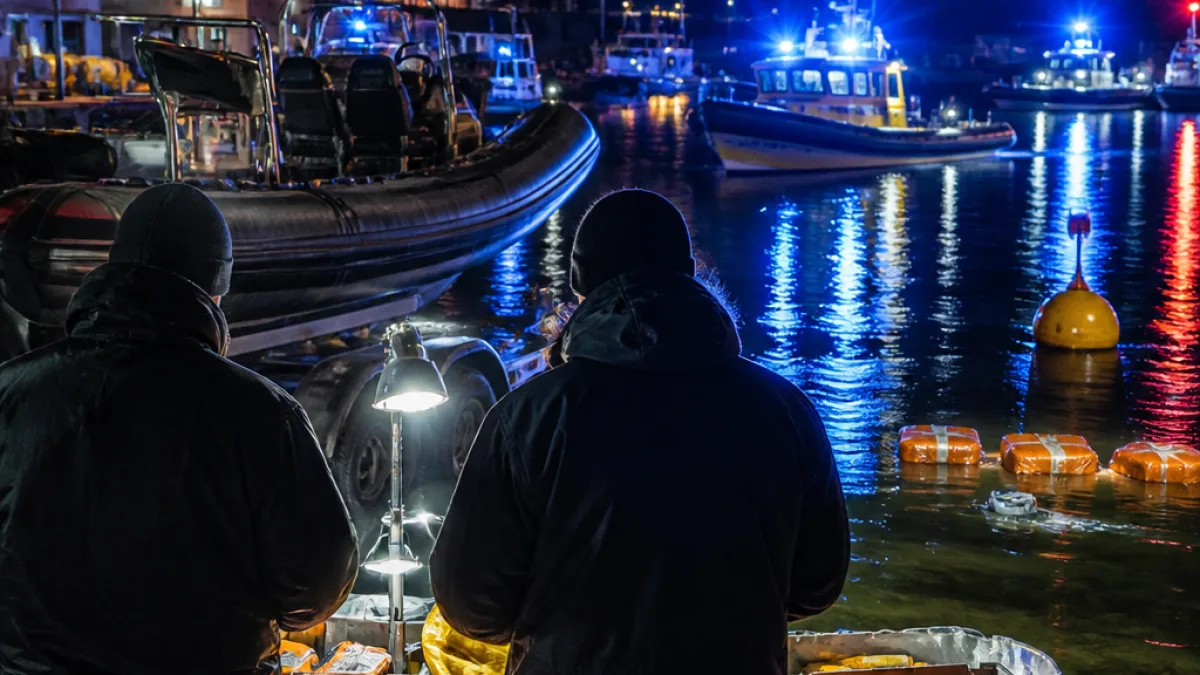
An Aberdeenshire man has been convicted over a brazen attempt to recover almost 500 kilograms of cocaine, an operation estimated to be worth about £40 million that unfolded in international waters off southern England.
From Peterhead to the Solent: the operation
David Paterson, an oil rig worker from Peterhead, was one of 11 people found guilty in a plot centred on a sea-drop of illicit drugs. The attempt took place in the early hours of 17 August 2024, when Paterson set out from Haslar Marina in Portsmouth to collect packages that had been dumped into the sea from a container vessel.
The drugs had been split into waterproof bundles, each fitted with a tracker. Investigators believe the packages were released roughly 40 nautical miles south of the Needles, off the west of the Isle of Wight. Paterson and two other men were expected to use the tracker signals to locate the bundles and lift them from the water using a rigid-hulled inflatable boat named the Amma Sigga.
"The plan was simple on paper."
But the prosecution found that things did not go to plan. The container ship sailed past while Paterson was taking part in the recovery, undermining the coordination on which the operation depended. One of the men who set out with Paterson was later acquitted at trial; another cannot be named for legal reasons.
How the scheme operated — and where it failed
The facts presented at trial depicted a carefully timed handover: an accomplice crew aboard the container ship would drop the waterproofed consignments into the sea, and Paterson’s team would recover them before authorities or other parties could intervene. Success depended on accurate tracker signals, calm sea conditions, precise navigation and radio silence.
Where the scheme unravelled was the simple and familiar intersection of human error and changing conditions at sea. A single inaccurate tracker reading or miscalculation in timing was enough to turn what organisers expected to be a quick retrieval into a pursuit in open water. The case underlines how modern organised crime groups blend low-tech maritime skills with contemporary technology, and how those combinations can still fail.
- Date: 17 August 2024
- Location of drop: ~40 nautical miles south of the Needles, west of the Isle of Wight
- Launch point: Haslar Marina, Portsmouth
- Boat used: Rigid-hulled inflatable, Amma Sigga
- Quantity: Nearly 500kg of cocaine
- Estimated value: About £40 million
| Aspect | Detail |
|---|---|
| Defendant from Aberdeenshire | David Paterson (Peterhead) |
| Number convicted | 11 people found guilty |
| Acquittals/Restrictions | One co-defendant acquitted; one cannot be named for legal reasons |
Local and wider implications
For Aberdeenshire readers the case has immediate resonance. One of the convicted men is drawn from the county’s workforce in the offshore energy sector, underlining how individuals with maritime skills — and access to boats and navigational expertise — can be targeted by organised crime networks. The matter also serves as a reminder of how criminal activity anchored far from Scotland can involve local people and have consequences that cross regional and national borders.
The episode casts light on shifting tradecraft in drug trafficking. GPS trackers, waterproof packaging and swift small boats are now standard tools in the smuggler’s kit, used to move large consignments from large container vessels to shore. Yet the failure of those same technologies and the unpredictability of sea conditions can bring operations to nothing and leave participants exposed to criminal prosecution.
Police and judicial outcomes from the trial will be watched closely by maritime and law-enforcement agencies keen to understand how organised crime exploits containerised shipping and secluded sea lanes. For local communities in Aberdeenshire the case is likely to prompt questions about recruitment into such activities and the wider harms caused by international drug markets that reach into local labour pools.
The conviction of Paterson and others closes one chapter in an operation that combined old-fashioned seamanship with new technology, but it also raises fresh challenges for authorities seeking to prevent similar sea-borne recoveries in future.