Southwark has a new ruling partnership after 16 years of Labour control, with the Green Party and Liberal Democrats combining to run the borough amid a public pledge to prioritise affordability — and a sizable financial challenge inherited from the previous administration.
New coalition, familiar promises
The joint administration says it will back developments that boost genuinely affordable homes, pointing to schemes such as Appleby Blue as examples the council wants to replicate. But the new leadership has not yet published detailed plans for how it will accelerate housebuilding or allocate funding.
Speaking about the direction of travel, the council’s new leadership framed its approach as both a continuation and a change. One senior figure who left Labour earlier this year said the administration would "build on a lot of what Labour were doing in the past, but we're also moving away from some of the things that Labour are doing" and stressed the coalition sees itself as “entirely accountable to the people of Southwark.”
Money matters: a notable shortfall
Shadowing policy pledges is a reported budget problem. The new leadership says it inherited a funding gap of £102m from the previous administration — a figure it cites as a constraint on immediate spending and service commitments. How the coalition plans to address that shortfall has not been set out in detail.
| Item | Figure |
|---|---|
| Reported funding gap | £102m |
| Social housing waiting list | 23,000 households |
| Labour councillors | 29 |
| Green Party councillors | 22 |
| Liberal Democrat councillors | 12 |
Waiting list pressure and residents’ expectations
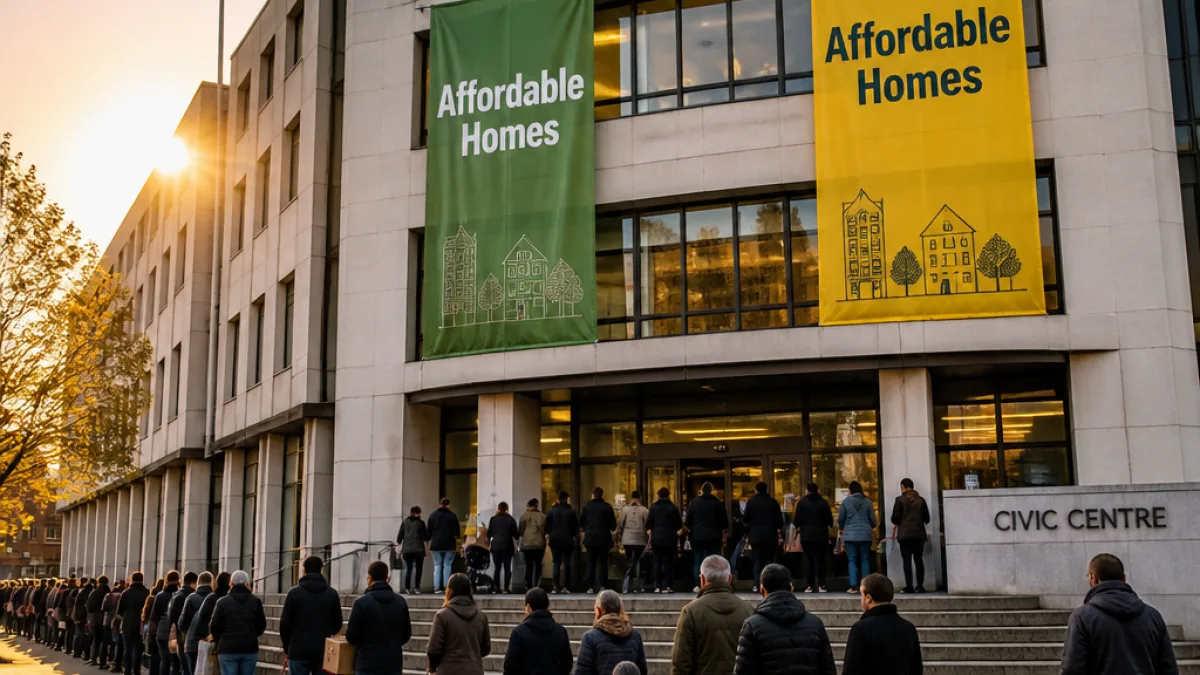
There are about 23,000 households on Southwark's social housing waiting list — a figure that underlines the scale of demand the new coalition faces if it wants to make the borough more affordable.
Residents living in recently completed developments are watching closely. One Appleby Blue tenant said moving into the new scheme had freed up a three‑bed council house for another family and urged the council to act quickly on further builds. She insisted the administration must "mean what they say and say what they mean, and stick to it," and called for developments to be delivered "sooner, rather than later. Don't drag it out."
"We're certainly building on a lot of what Labour were doing in the past, but we're also moving away from some of the things that Labour are doing."
Coalition dynamics and leadership roles
The Greens, having won 22 seats, and the Liberal Democrats, with 12, used their combined majority to form the administration. Labour remained the single largest party on the council with 29 councillors but was displaced from control after the May local election.
As part of the power‑sharing arrangement, the Liberal Democrats secured three executive posts, including the deputy council leadership, held by their group leader. He said that, through discussions between the two parties, they found shared values and a common purpose to build a borough that is “more affordable, that is safer and that is greener.”
Opposition and governance questions
Labour's deputy leader on the council has been critical of the new administration's early conduct, accusing the coalition of cancelling or postponing several council meetings. That criticism underscores tensions over transparency and scrutiny at a time when big decisions about spending and housing will be required.
- New cross‑party administration pledges to support affordable housing schemes like Appleby Blue.
- Coalition faces a reported £102m funding gap left by the previous administration.
- Around 23,000 households remain on the borough’s social housing waiting list.
What next for Southwark?
The coalition has set out broad priorities — affordability, safety and greener streets — but residents and opposition councillors will expect detailed policies and timelines, especially on housing delivery, where the need is acute. With a substantial financial deficit flagged and thousands on the waiting list, the new leadership must reconcile ambition with the immediate fiscal reality.
For now, the bar will be measured in two ways: whether the administration can produce concrete, funded plans for affordable homes at speed, and whether it maintains clear governance to reassure residents that promises will be translated into action.
Local observers will be watching for the publication of a spending plan and an early timetable for housing projects — signs that the new coalition intends to move beyond pledges to tangible delivery.