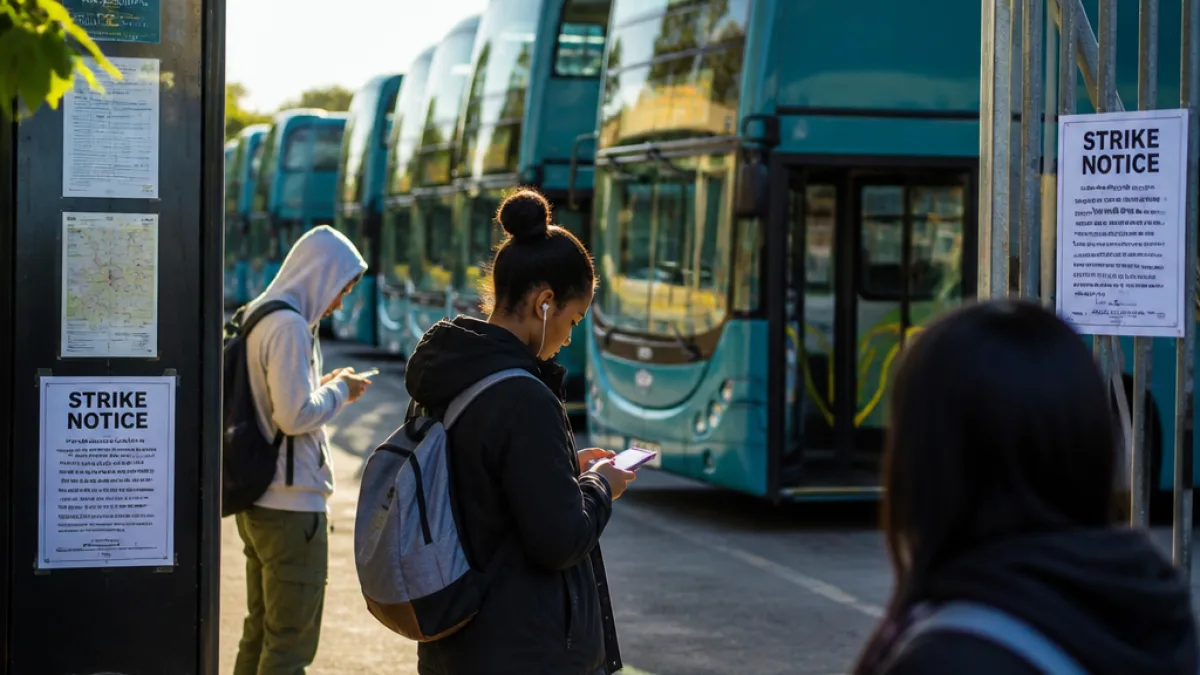
More than 1,500 bus drivers working for Arriva North London have been balloted for strikes that will take place on 26 dates between August and October, the union Unite has announced, raising the prospect of widespread disruption across north London and into Essex.
What’s behind the dispute
The dispute centres on long-standing grievances about the temperature and ventilation inside many London buses. Unite says drivers have endured unbearable heat this summer and that some vehicles only have systems that move outside air through the cab rather than proper air conditioning. That, the union argues, has left drivers and passengers exposed to cabin temperatures approaching 40C on some days.
“We would expect a lot of severe disruption, cancellations and delays as there’s so many drivers and garages involved.”
Unite says staff have experienced heat exhaustion, heat stroke and dehydration. Though drivers have been told they may take breaks when needed, many feel pressured not to in order to keep services running for passengers.
Operator response and uncertainty over knock‑on effects
An Arriva spokesperson told the Evening Standard the firm could not yet provide specific route-level impacts, blaming uncertainty over staffing on strike days. The company said it expects to know which routes will be affected only a day or two before each walkout, a timetable that will make it hard for passengers to plan ahead.
That last-minute uncertainty increases the risk of congestion and travel chaos as passengers scramble for alternatives on short notice. Unite insists the action is aimed at forcing Arriva to fit all buses with effective air conditioning rather than the less efficient systems currently installed on many vehicles.
What drivers say
Accounts gathered by the union describe cabs turning into “greenhouses” during heatwaves. Some drivers who reported symptoms of heat-related illness say their complaints went unaddressed. The union believes the measures being sought are necessary to protect health and safety at work, particularly during increasingly frequent periods of extreme heat.
Practical implications for passengers
Passengers travelling in north London and parts of Essex should expect the potential for:
- Partial or full cancellations on affected routes
- Extended waiting times at bus stops
- Overcrowding on alternative services including Tube and rail links
Commuters dependent on Arriva-operated routes are advised to check service updates on the day of travel and allow extra time. With operator confirmation likely to arrive only shortly before strike days, flexibility will be essential.
Key numbers at a glance
| Item | Detail |
|---|---|
| Drivers involved | 1,500+ |
| Garages affected | Eight |
| Strike dates | 26 dates from August to October |
| Geography | North London and parts of Essex |
Context and wider concerns
Bus drivers’ disputes over in‑cab temperatures are not unique to one operator. Temperatures on many London buses soared during recent heatwaves, exposing weaknesses in older fleets where cooling systems circulate outside air rather than providing true air conditioning. Health and safety campaigners, unions and staff have increasingly called for a review of vehicle standards and for operators to accelerate retrofitting or replacement of inadequate buses.
The ongoing dispute puts pressure on Arriva, and on transport planners who must manage network resilience and passenger safety during multiple, rolling industrial actions. For passengers, the immediate impact will be practical: uncertainty, delays and potentially more crowded alternatives on already busy services.
What happens next
Arriva and Unite are likely to enter further talks as the strike dates approach, though the union has signalled readiness to proceed unless operators commit to substantive improvements on air‑conditioning and driver welfare. Passengers should watch for announcements from Arriva, Unite and Transport for London on service changes and contingency arrangements as each planned strike day draws near.
The coming weeks could see commuters forced to reroute their journeys repeatedly. With several heatwaves already this year fresh in drivers’ minds, the row over cab conditions looks set to remain a pressing issue across London’s public transport network.