Mass march through central London highlights anger over single-sex guidance and health access
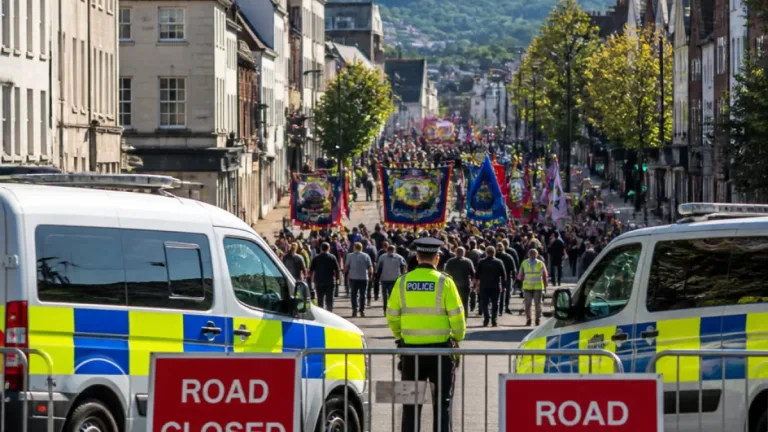
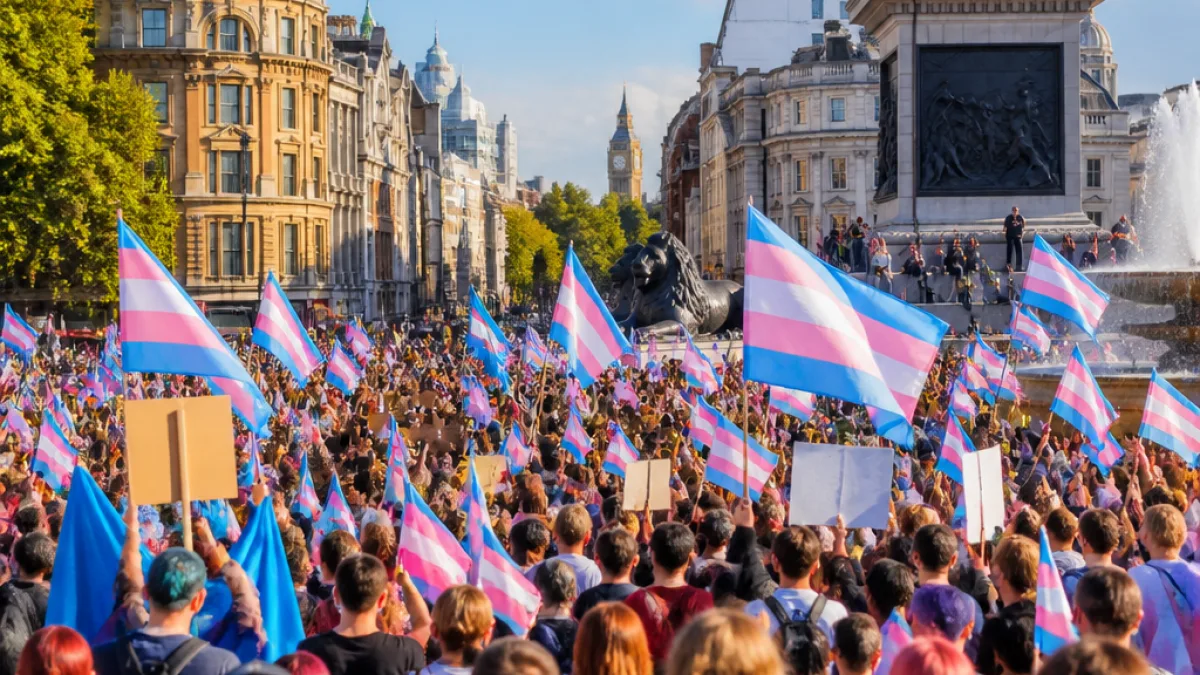
Thousands of demonstrators streamed through central London on Saturday in what organisers described as the world’s largest Trans Pride, an event they say drew about 150,000 people. The procession began near the BBC’s headquarters and concluded with crowds spilling onto the steps and around the fountains of Trafalgar Square, where speeches were delivered beneath Teresa Margolles’s sculpture made from face casts of 726 trans, non-binary and gender non-conforming people.
The demonstration combined celebration and protest: placards ranged from celebratory slogans to sharp political messages directed at national and regional leaders. Marchers condemned recent guidance on single-sex spaces and urged Prime Minister Andy Burnham to take action to improve protections and services for trans people.
- Attendance: Organisers estimate around 150,000 participants.
- Route: Started near the BBC in central London and finished at Trafalgar Square.
- Focus: Opposition to new single-sex space guidance and calls for better access to gender-affirming care.
Speakers at the rally framed the day as proof of resilience. A founding member of London Trans+ Pride, Lewis G Burton, told the crowd that the event showed the movement would “keep fighting, keep loving and keep growing until every trans person is safe, seen, and free,” language echoed by many present who said the march was both a show of community and a plea for urgent policy change.
“Every single person who marched today is proof that we are not going anywhere, that our joy is louder than their hate,” the founding member said.
Families make the case for change
The day also carried a sombre urgency. Caroline Litman, co‑founder of parent advocacy group Transparent Action and a former NHS psychiatrist, attended and addressed the press in memory of her daughter, Alice Litman, who died in May 2022. Caroline Litman said Alice had waited 1,023 days for gender‑affirming care before taking her own life.
She told the Press Association that the position for trans people had deteriorated since her daughter’s death and warned more children could die unless political leaders reversed policies she described as “anti‑trans”. The family went public with the inquest into Alice’s death and have been prominent in campaigning for improved services and safeguards.
What this means for London
For the capital, the size and visibility of the march underline how trans issues have moved from community spaces into mainstream civic debate. The use of central sites such as the BBC precinct and Trafalgar Square signalled a deliberate claim on public space, while the attendance figures — if accurate — make this one of the largest single demonstrations in the city this year.
Organisers and families called directly on politicians to act. While the march targeted guidance on single‑sex spaces, the presence of bereaved relatives and campaigners for healthcare access broadened the agenda: protesters sought not just symbolic recognition but concrete changes in services and statutory guidance affecting trans people's daily lives.
| Detail | Reported figure / fact |
|---|---|
| Attendees (organisers' estimate) | 150,000 |
| Alice Litman waiting time for care | 1,023 days |
| Sculpture at Trafalgar Square | Work by Teresa Margolles featuring casts of 726 people |
City authorities will now face pressure from campaigners to respond: organisers have demanded that London and national leaders, including the mayor and the prime minister, take steps to protect trans people and improve access to care. Police and council services managing large public gatherings will also review the security and logistical lessons from such a high‑profile event in the heart of the capital.
As the crowd dispersed from the square, organisers described the day as a mixture of grief, defiance and celebration — a reminder that for many Londoners the fight over rights and recognition is increasingly played out on the city's busiest streets and most symbolic public spaces.