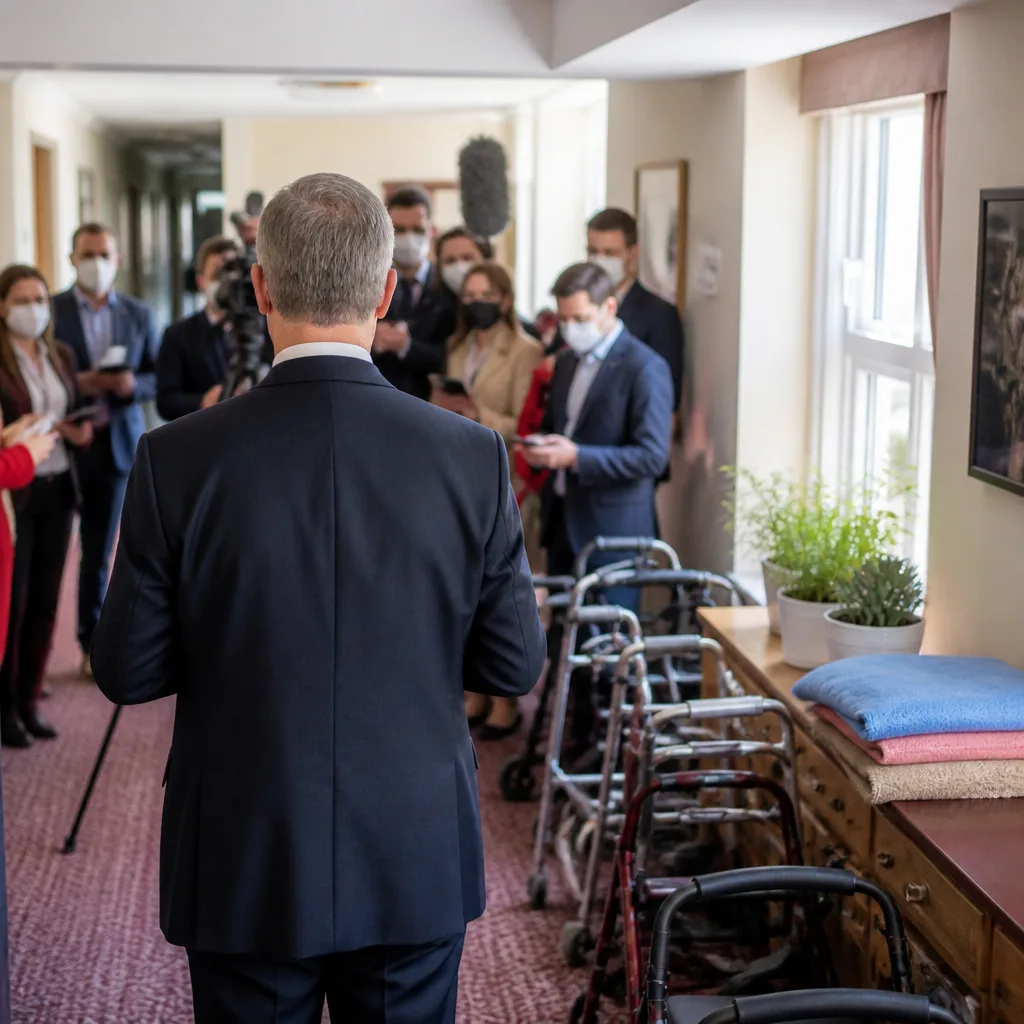
Prime Minister Andy Burnham has said the debate over legalising assisted dying in England and Wales should be postponed until the funding of palliative care and social care is fixed. His comments, made during a visit to a north London care home, set out a personal position that could influence how Labour MPs approach a private member's bill due to return to Parliament in September.
PM frames assisted dying as contingent on care provision
Burnham described himself as not opposed to a future discussion of assisted dying, but argued it would be “very challenging” to move on the matter while many people lack confidence in end‑of‑life care provision. He said the priority should be to ensure hospices and social care services are properly funded and operating effectively before Parliament takes up the specific legislative proposal again.
"I take the view that that debate - and I don't say that there shouldn't be a debate at some point about those issues - personally, I think there's something that needs to happen first,"
The prime minister said the item that needed addressing first was “the fixing of the funding of palliative care and social care,” adding that introducing a wider assisted‑dying debate while people are not receiving adequate care would be problematic.
Parliamentary context and prior votes
The remarks come ahead of a vote expected when Parliament returns in the autumn, on a bill promoted by Labour MP Lauren Edwards which mirrors earlier legislation. A previous attempt — the Terminally Ill Adults (End of Life) Bill — secured a Commons majority in 2025 but failed to become law after extensive amendment in the House of Lords delayed its progress until time ran out.
The 2025 bill would have allowed adults aged 18 and over who were expected to die within six months to receive help to end their own life, subject to specified safeguards. Opponents in the Lords argued the draft contained flaws that could expose vulnerable people to pressure.
Burnham’s personal stance marks a shift from the approach taken by his predecessor as Labour leader, Sir Keir Starmer, who had previously voted in favour of the 2025 bill and had permitted debates to proceed during his leadership. Government business is likely to remain officially neutral on a private member's bill, but the prime minister’s comments will be watched by MPs on both sides of the Commons as they weigh their positions.
Implications for MPs and campaigners
Campaigners for assisted dying, and backers of the Edwards bill who say they want to “finish the job” begun by Kim Leadbeater, have argued that reform and improvements to care are not mutually exclusive. After the prime minister spoke, Lauren Edwards said social‑care reform and assisted‑dying legislation could be pursued together.
- Key actors: Andy Burnham (Prime Minister), Lauren Edwards (MP and bill sponsor), Kim Leadbeater (sponsored earlier bill), Sir Keir Starmer (former Labour leader).
- Legislative background: Terminally Ill Adults (End of Life) Bill secured Commons backing in 2025 but did not complete its passage due to Lords amendments and time constraints.
- Policy focus: Burnham conditions further debate on the prior resolution of palliative and social care funding.
| Year | Event |
|---|---|
| 2025 | Commons voted in favour of the Terminally Ill Adults (End of Life) Bill; it failed to pass into law after Lords amendments delayed progress. |
| 2026 | Prime Minister Andy Burnham said assisted dying debate should wait until palliative and social care funding is fixed; Lauren Edwards plans to bring forward a similar bill. |
For MPs who previously backed the 2025 measure, the prime minister’s intervention may prompt reflection on whether to treat assisted dying and social‑care reform as sequential priorities or to press both simultaneously. The government’s neutrality on private members’ business means that the fate of any bill will depend on how MPs vote and on the course of debate in both Houses.
Burnham’s framing places the question of assisted dying within the wider context of end‑of‑life support, shifting the emphasis from the narrow legal mechanics of assisted dying to the adequacy of the services on which many of its prospective beneficiaries depend.
As Parliament prepares to resume in September, campaigners and parliamentarians will be watching whether the prime minister’s position alters the balance of support for a measure that has repeatedly cut across party lines.