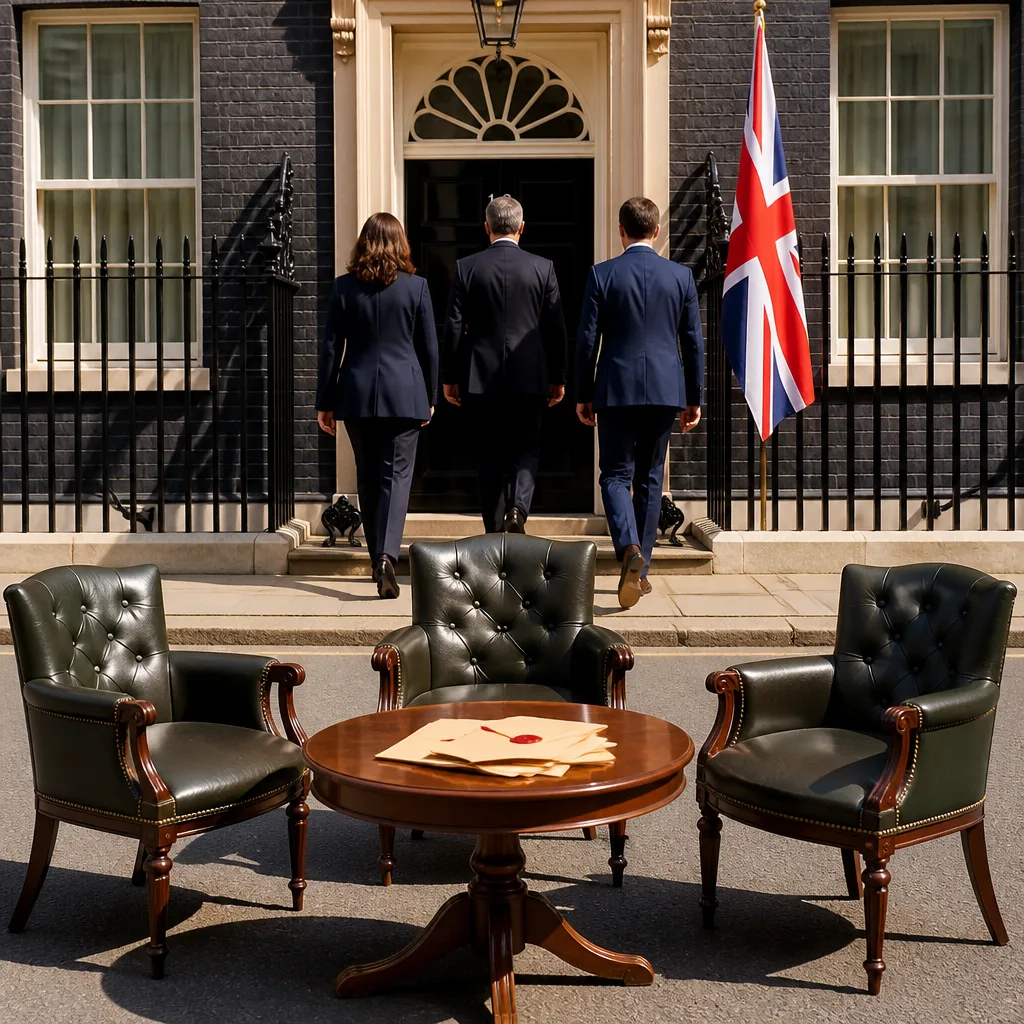
The new prime minister has summoned the leaders of the Conservative and Liberal Democrat parties to Downing Street for a summit aimed at securing a long-term solution to England’s social care crisis. Andy Burnham said he wanted rivals to put “political point‑scoring” to one side and help devise measures to stabilise care services before they further destabilise the NHS.
Prime minister seeks consensual approach
Mr Burnham is due to meet Conservative leader Kemi Badenoch and Liberal Democrat leader Sir Ed Davey as he begins what he described as a problem‑solving approach to one of the most entrenched challenges in public services. Ahead of a speech at a care home in north London, the prime minister emphasised the urgency of co‑operation to prevent carers, families and hospitals from bearing the human cost of political standoff.
“Last week I said we needed a different kind of politics: problem-solving, not point-scoring. Nowhere is that more urgent than social care.”
He said the issue had been deferred by successive governments because it was “too risky, too difficult, and too complicated”, and called on political opponents to listen and find common ground to tackle the pressures facing the sector.
Funding and fiscal constraints loom large
The initiative arrives amid mounting concern over the public finances and whether the government can deliver a range of early spending promises without adding to borrowing. Mr Burnham has already pledged a package of measures costing around £2 billion, including the removal of VAT on energy bills, a £2 cap on bus fares, and a 20% reduction in business rates for pubs and clubs.
Analysts and commentators anticipate difficult choices ahead. A major think tank is expected to warn that inflation could approach 4% next year, and that the government’s borrowing capacity has been stretched to its limits — a constraint that, according to reporting, would leave further initiatives to be financed by either tax rises or spending cuts.
Defence spending was flagged as an area likely to face pressure. Estimates cited in reporting suggest the government will need between £5 billion and £18 billion to meet existing commitments, and the prime minister has reportedly considered alternative borrowing mechanisms such as issuing war bonds to close gaps.
Political dynamics and parliamentary arithmetic
The meeting is significant politically as much as it is practically. Sir Ed Davey has signalled his party’s willingness to engage on the care crisis, while Conservative participation reflects an unwillingness by Mr Burnham to present the issue as purely partisan. How the talks translate into concrete policy will depend on agreement over both the shape of reform and the funding route.
- Summit attendees: Prime minister Andy Burnham; Conservative leader Kemi Badenoch; Liberal Democrat leader Sir Ed Davey.
- Immediate spending pledges: measures totalling approximately £2 billion.
- Macroeconomic context: forecasts of near‑4% inflation and constrained borrowing capacity.
| Item | Figure |
|---|---|
| Cost of early commitments | £2 billion |
| Forecast inflation next year | Almost 4% |
| Estimated defence funding gap | £5bn–£18bn |
The prime minister framed the talks as an attempt to end the cycle of deferral that has seen social care repeatedly emerge as a political headache with growing consequences for the NHS. Yet the practical problem remains: any durable solution is likely to require difficult fiscal choices that could touch other parts of government spending or require new revenue measures.
How quickly consensus can be reached — and whether that consensus will be sufficient to underpin lasting reform rather than short‑term tinkering — will be central to judging the success of the Downing Street summit.