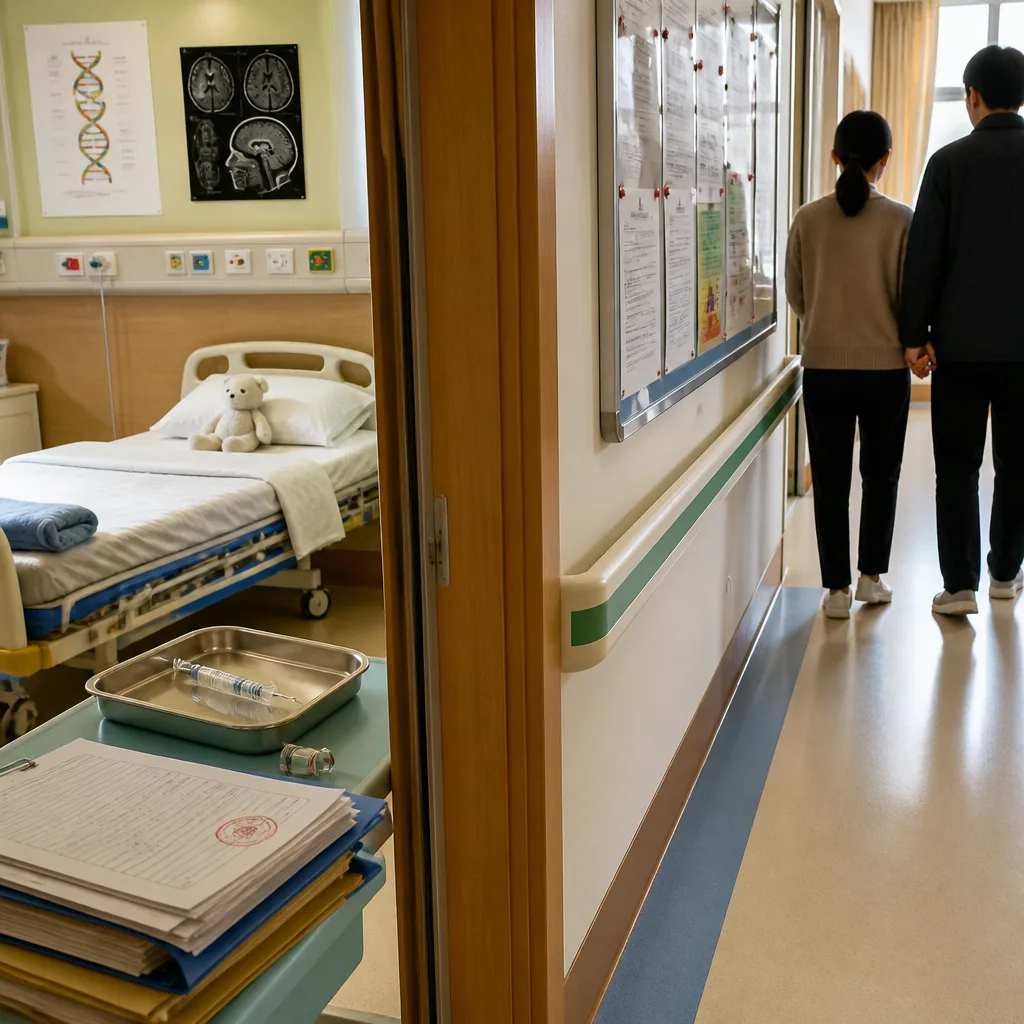
An investigation by Science and Retraction Watch has concluded that a six‑year‑old girl in China died in March 2025 after receiving what researchers have said was the world’s first base‑editing therapy aimed at the brain. The case has brought into sharp relief concerns about the oversight of high‑risk, experimental gene‑editing trials and the communication of decisions by researchers and institutions.
What happened and who was involved
The child had been diagnosed with Snijders Blok‑Campeau syndrome, a rare neurodevelopmental disorder caused by a mutation in the CHD3 gene. While the condition can affect intellectual development and varies in severity, many people with the syndrome live full lives. Her parents sought an experimental treatment after learning of research led by neuroscientist Zilong Qiu at Shanghai Jiao Tong University.
The technique used, base‑editing, is a later development than CRISPR‑Cas9. It was developed by American biochemist David Liu at the Broad Institute in 2016 and enables the direct conversion of one DNA letter to another — for example, a cytosine (C) to thymine (T) — without cutting both strands of the DNA double helix. Because it avoids double‑stranded cuts, base‑editing is considered in principle to be a less disruptive approach and has been promoted as a promising route towards correcting single‑gene defects.
Regulatory and ethical concerns
The case comes against a backdrop of anxiety in the scientific community about the speed at which gene‑editing technologies have moved from laboratory demonstration to clinical application. The memory of the 2018 announcement by Chinese researcher He Jiankui — who said he had edited embryos that resulted in the birth of twin girls — still hangs over the field. He was later sentenced to three years in prison for his actions, and that episode prompted China to tighten rules governing human gene‑editing research.
Yet the new investigation finds that legal changes have not fully closed the gap between what the law permits and how rules are enforced in practice. It raises questions about whether an unprecedented, high‑risk intervention targeting the brain should have been permitted, and how institutions communicated the rationale for proceeding.
Key issues highlighted by the investigation include:
- The suitability of a first‑in‑human brain‑directed base‑editing intervention for a condition that, while serious, can allow many patients to live full lives.
- How researchers and institutions assessed and documented risks, consent and oversight for a personalised experimental therapy.
- Whether regulatory controls and their enforcement are consistently applied across institutions and trials.
Context and consequences
The advent of base‑editing revitalised hopes that gene‑editing could move beyond proof‑of‑concept work towards therapies for rare single‑gene disorders. Its proponents emphasise the technique’s potential to make precise corrections with fewer unintended changes to the genome than approaches that introduce double‑strand breaks.
However, the circumstances of this child’s treatment underline a persistent ethical fault line: the tension between experimental hope for families of children with serious conditions and the duty of researchers and regulators to prevent premature use of risky interventions. The investigation does not eliminate the possibility of responsible, well‑regulated clinical development of base‑editing therapies, but it does suggest that current governance systems may not yet be robust enough to prevent harm in every case.
| Year | Event |
|---|---|
| 2016 | David Liu and colleagues develop base‑editing at the Broad Institute. |
| 2018 | He Jiankui announces germline editing of embryos; later sentenced for his actions. |
| March 2025 | A six‑year‑old girl dies after receiving an experimental brain‑directed base‑editing therapy. |
The immediate consequences are likely to be intensified scrutiny of clinical proposals involving gene‑editing in China and internationally, and calls for clearer standards on what constitutes permissible risk in experimental therapies, particularly when interventions target the brain.
For families of children with rare genetic conditions, the episode will reinforce difficult choices about whether to pursue unproven treatments, and it will test regulators and institutions to show they can balance innovation with patient safety and ethical clarity.
As gene‑editing tools evolve, so too must the frameworks that govern their clinical use. The case revealed by Science and Retraction Watch is a prompt for policymakers, funders, and researchers to examine not just the letter of regulation but the mechanisms by which it is applied and enforced.