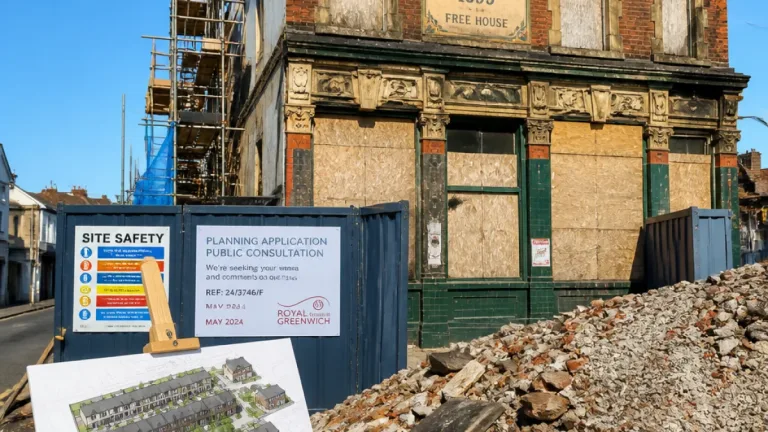
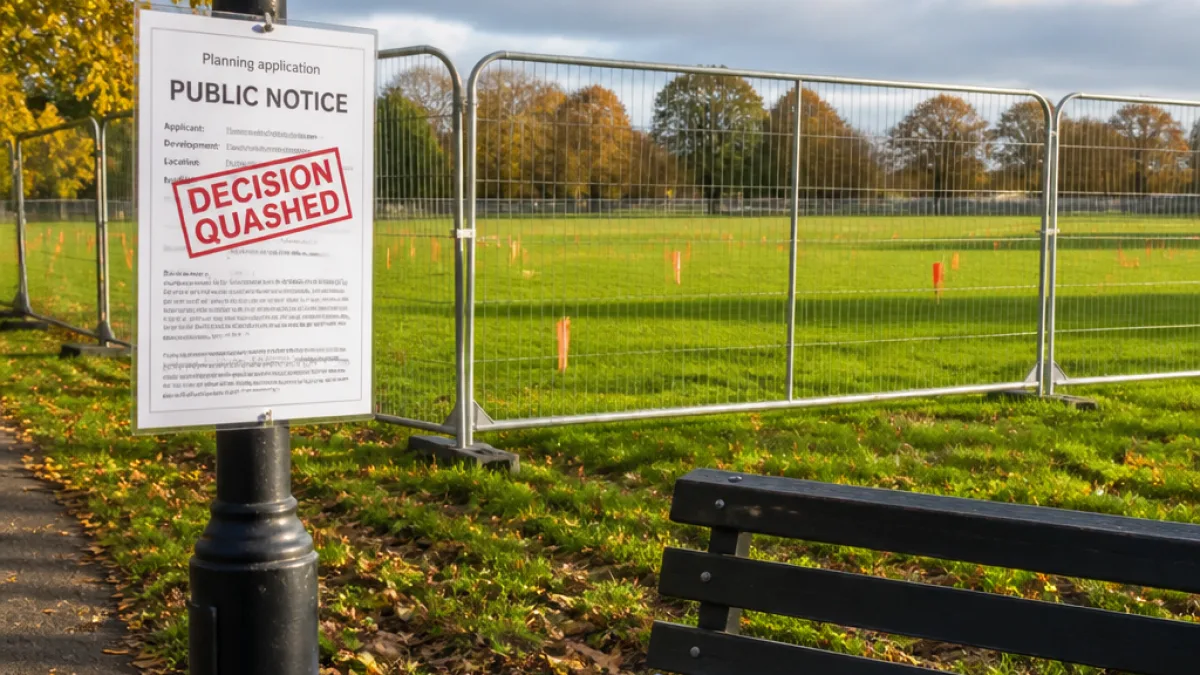
A legal blow to Tottenham Hotspur came on Monday when a High Court judge quashed Enfield Council’s planning permission for a proposed women and girls’ football academy on 16 acres of Whitewebbs Park. The ruling follows a judicial review brought by local campaigners who argued councillors were not given all the environmental information needed to decide on the scheme.
Judge finds council failed to disclose critical ecological evidence
Sir Tim Kerr, sitting as a High Court judge, concluded that the council’s decision-making process was unlawful because it excluded a key ecological report. The judge said the omission was serious and that councillors were “materially misled”, adding that the outcome of the planning decision “could well have been different” had the material been available to them.
“Could well have been different”
The legal challenge was mounted by campaign group Guardians of Whitewebbs. During a hearing in June, their lawyers told the court that Enfield Council had breached regulations by failing to supply members with all relevant information about the development’s environmental impact — a central plank in the successful challenge.
What the proposal involved
The planning application sought permission to build a women and girls’ football academy spread across about 16 acres of parkland, including the construction of up to 10 football pitches and associated works. The site sits close to Tottenham’s existing men’s training facilities. The club had already secured a 25‑year lease for the land in 2023.
- Location: Whitewebbs Park, Enfield
- Size: approximately 16 acres
- Facilities proposed: up to 10 football pitches and associated infrastructure
- Lease: 25 years, obtained by the club in 2023
Previous litigation and political context
This is not the first legal obstacle faced by the project. An earlier High Court challenge in 2024 had been dismissed. The council that approved the planning application in February last year was Labour-controlled at the time; the authority has since moved to a Conservative minority administration.
Centrally important to the latest judicial review was an ecological assessment prepared by ecologist Giles Sutton in November 2024. Guardians of Whitewebbs argued that the council did not properly present or consider Mr Sutton’s advice when councillors voted in favour of the application.
Immediate implications for the club and the park
With permission quashed, the legal basis for the approved development is void. The ruling leaves the site’s future uncertain: whether Enfield Council will take fresh steps to remedy the defects identified by the court, or whether Tottenham Hotspur will seek further legal remedies, is a question now for the parties involved. The judge rejected assertions that the council acted with bias towards the club, describing claims of “unparalleled access” as weak and characterising relations as “cordial” given overlapping interests.
| Year | Event |
|---|---|
| 2023 | Club secures a 25-year lease for Whitewebbs site |
| Nov 2024 | Ecological report by Giles Sutton produced |
| Feb 2025 | Enfield Council resolves to approve planning application |
| 2024 | Earlier High Court challenge dismissed |
| June 2026 | Court hearing for recent judicial review |
| Jul 2026 | High Court quashes planning permission |
The case highlights the tensions that frequently arise when major sports projects intersect with public open space and environmental protections. Local residents and campaigners long argued the parkland should remain protected; the Guardians of Whitewebbs persuaded the court that procedures laid down for planning transparency and the presentation of ecological evidence had not been followed.
For supporters of the project, the development promised expanded facilities for women’s and girls’ football in London. For opponents, the site’s greenbelt character and local ecology were a priority. The judge’s finding rests on process rather than a substantive rejection of the scheme’s merits, leaving the door open for revised applications or further legal action.
The coming weeks are likely to see exchanges between Enfield Council, the club and the Guardians of Whitewebbs as they consider next steps. For now, the court’s decision restores a pause to any physical progress on the ground and throws planning practice at the council under renewed scrutiny.
Chidi Balogun, NEXO RADAR, London.