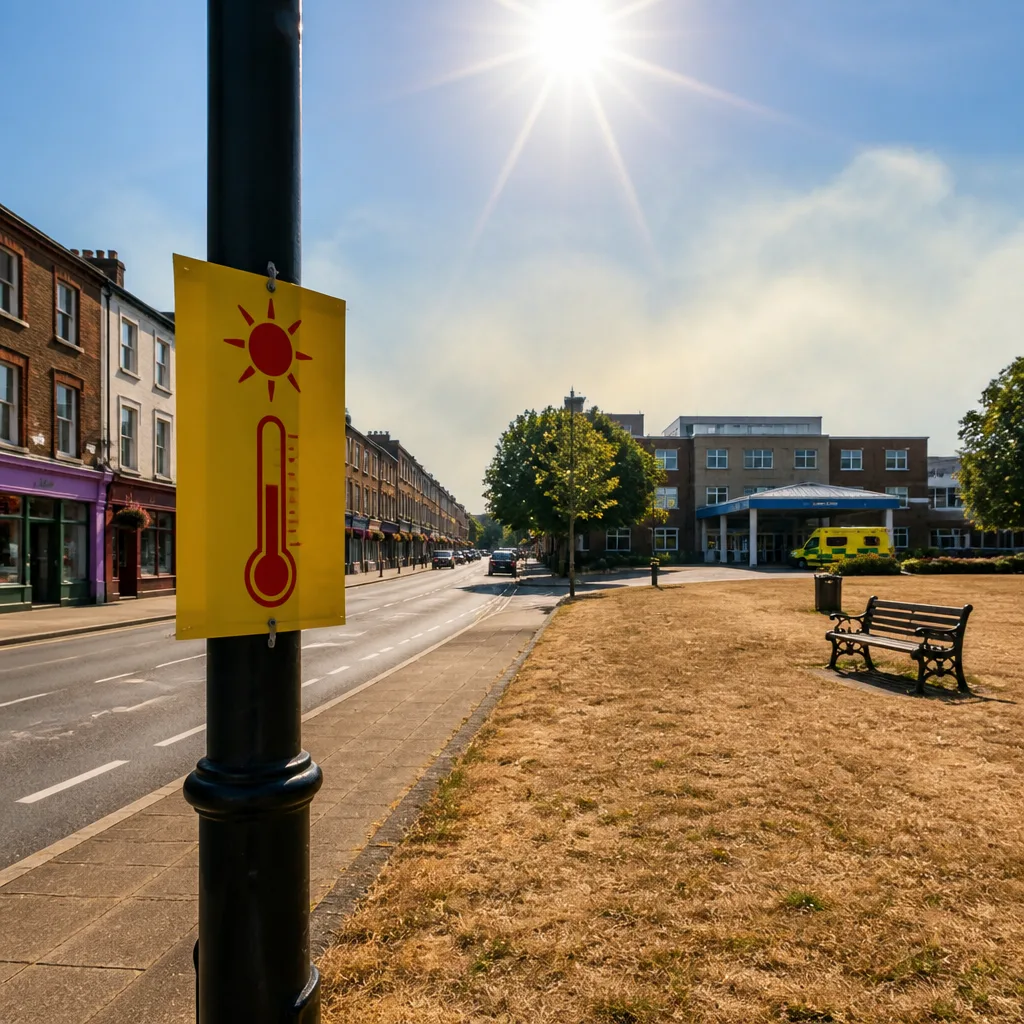
Yellow heat-health alerts were activated at 9am on Saturday as the UK prepares for a fifth named heatwave of 2026, with the Met Office forecasting highs of up to 36C in parts of East Anglia and south‑east England by next Thursday. The alerts run until 9pm on Tuesday and warn that hot conditions are likely to affect the wellbeing of the population and add extra pressure to healthcare services.
Temperatures climbing after largely settled weekend
Forecasters said temperatures will rise through the weekend, with a north–south split in conditions: Scotland and Northern Ireland are likely to see spells of heavy rain while England and Wales remain largely dry and sunny. The Met Office indicated parts of southern and south‑east England could reach the low to mid‑30s on Sunday and into the middle of next week.
| Day | Expected peak |
|---|---|
| Saturday | up to 30C in places |
| Sunday | low 30s in south/south‑east |
| Tuesday | up to 30C across parts of England & Wales |
| Wednesday | 32–34C in places |
| Thursday | possible peaks around 36C (East Anglia, south‑east) |
Health and environmental toll from an extreme summer
This summer’s extreme weather has already had severe consequences. Two record‑breaking heatwaves in May and June were linked to more than 2,800 excess deaths, while two further heatwaves in July have contributed to widening drought conditions and an increased risk of wildfires. The highest temperature recorded so far this year was 38C at Lingwood in Norfolk on 28 June.
The UK Health Security Agency (UKHSA) has issued yellow heat‑health alerts covering:
- East Midlands
- West Midlands
- South East
- South West
- East of England
- Yorkshire and the Humber
- Greater London
The alerts advise that heat can affect people in different ways, with older people, very young children, those with chronic health conditions and people working outdoors particularly vulnerable. Services such as hospitals and ambulance trusts may face additional demand.
Broad implications and lingering risks
So far this year there have been 33 days when temperatures have exceeded 30C somewhere in the UK; forecasters suggest the record of 34 days, set in 1995, is likely to be surpassed next week. Alongside health impacts, prolonged hot and dry weather continues to exacerbate drought across large areas, affecting water supplies, agriculture and increasing the risk of wildfires.
“More heat? Still no rain? Not exactly the news many people want to hear across a large part of England and Wales. But that's the forecast for the second week of August.” — Met Office tweet
Organisations including the National Trust have urged the public to take extra care when visiting the countryside, citing fire risk and strain on volunteer and professional responders. Local authorities and emergency services are again preparing for heightened demand.
Public messaging from health and emergency bodies typically includes practical measures to reduce risk during periods of high heat: keep hydrated, avoid strenuous activity in the hottest hours, check on elderly or vulnerable relatives and neighbours, and follow NHS guidance if feeling unwell. Employers and those responsible for outdoor workers are reminded of obligations to reduce heat exposure where possible.
With the heatwave forecast to build through next week, attention will remain on healthcare capacity, water resources and the potential for further disruptions. The Met Office will continue to refine temperature and rainfall forecasts, while UKHSA and local services monitor the public‑health impact of prolonged high temperatures.