The arrival of Andy Burnham in Downing Street as the United Kingdom’s first lifelong Roman Catholic prime minister has put the faith squarely in the national spotlight, but early signs suggest his religion will inform social priorities rather than spark the kind of culture wars seen in the United States.
Immediate acts and public gestures
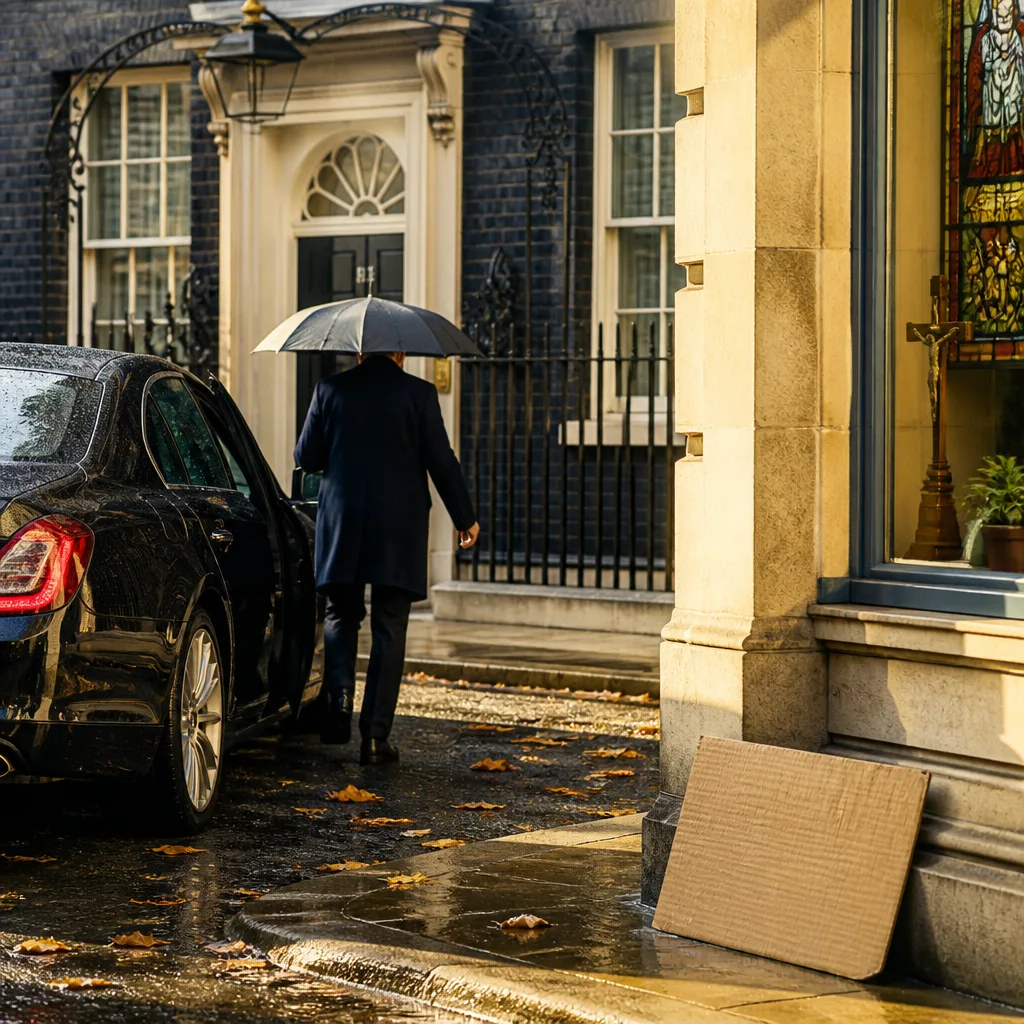
On the morning he took office, Burnham visited The Passage, a homelessness charity founded by Catholics in Westminster. He later made ending rough sleeping his first public pledge as prime minister, signalling a continuity with the Catholic social tradition of prioritising care for the vulnerable.
Those actions follow a pattern in Burnham’s public life. As mayor of Greater Manchester in 2023 he travelled to Rome and presented Pope Francis with a signed Manchester United shirt. After the death of the pontiff in 2025 Burnham publicly praised his commitment to themes of equality and compassion.
British Catholic tradition versus American model
Commentators have noted a clear distinction between the role of Catholicism in British politics and the approach observed in parts of the United States. In the US, certain political figures and movements have placed Catholic identity at the centre of cultural battles over social issues; that trend has been visible in some high-profile administrations and among political converts.
By contrast, British Catholic political engagement has historically emphasised social justice and anti-poverty campaigning. The point was illustrated by the example of Liverpool’s late archbishop, Derek Worlock, whose criticism of Margaret Thatcher and appeals for Catholics to confront poverty were influential during Burnham’s youth. Burnham himself has joked that three institutions shaped him: Everton football club, the Catholic church and the Labour party.
“The British church is not the American church, and British culture around Christianity isn’t the same as America,”
The comment, from Hannah Rich, director of Christians on the Left, emphasises that hot-button culture-war issues do not command the same unifying hold on British religious voters as they sometimes do across the Atlantic.
What this means for policy and political dynamics
Burnham’s early actions — a visit to a Catholic-founded homelessness charity and a pledge to tackle rough sleeping — suggest his faith may shape priorities rather than provoke ideological conflict. Those priorities dovetail with long-standing Labour concerns about inequality and social provision.
Observers should nevertheless be cautious about drawing definitive conclusions. Religious belief can inform a politician’s outlook in diverse ways, and British congregations hold a range of views on social questions. The source material notes that Christians in the UK have strong opinions in both directions on contentious issues, even if these are not as politically cohesive as some American movements.
Timeline of relevant events
| Year | Event |
|---|---|
| 1980s | Burnham serves as an altar boy as Derek Worlock is active in Liverpool |
| 2023 | Burnham travels to Rome as mayor and gifts Pope Francis a signed shirt |
| 2025 | After the pope's death Burnham praises his dedication to equality and compassion |
| 2026 | Becomes prime minister; visits The Passage and pledges to end rough sleeping |
Political and cultural consequences
- Domestic priorities: Early signals indicate a focus on homelessness and inequality rather than culture-war grievances.
- Party alignment: Burnham’s Catholicism appears consistent with Labour’s social justice agenda, reflecting historical intersections between church activism and party politics.
- Public perception: The prominence of his faith will invite scrutiny, but current evidence suggests moderation rather than polarisation.
In short, the elevation of a lifelong Catholic to the premiership is unprecedented in British political history, but the initial manifestations of that faith in office are rooted in British Catholicism’s longstanding emphasis on compassion and social welfare rather than the combative religious culture wars associated with some US politicians.