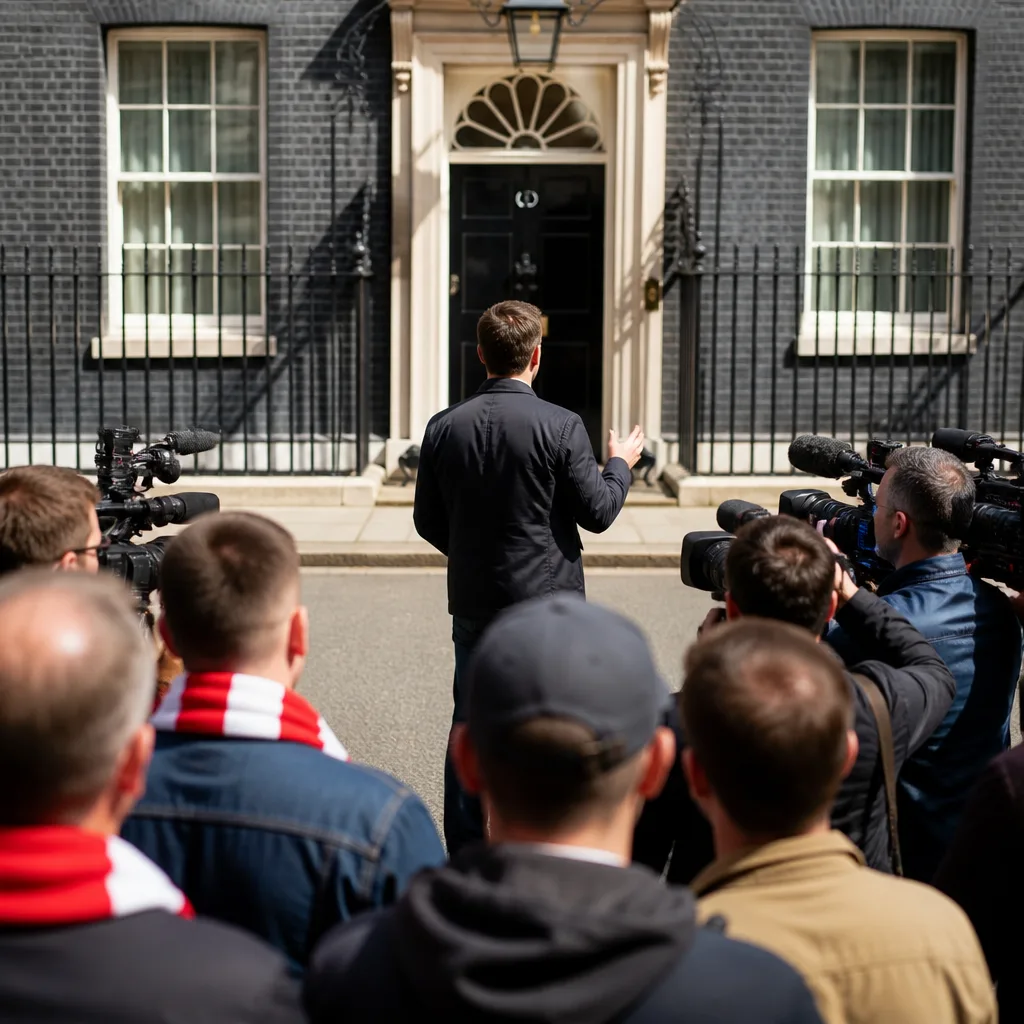
Andy Burnham made a conspicuous first public showing outside Downing Street on 19 July, using the occasion to cast himself as a different kind of politician and to signal a more informal, regional‑centred approach to politics.
Style as substance
In remarks delivered without notes or a lectern, Burnham emphasised an unscripted tone and an explicit rejection of traditional Westminster formality. He framed his arrival in Downing Street as a break from the perceived establishment, saying he wanted to put “people back into the heart of politics” and to do things “a little differently”.
"I gave my speech no notes, no lectern."
The gesture was performative as much as rhetorical. He invoked everyday cultural references and northern identity throughout the address, repeatedly contrasting his own personal and political biography with that of other senior figures in his party.
Background and positioning
Burnham positioned himself as rooted in Manchester and Makerfield — the constituency he represents and the city where he previously served as mayor — while acknowledging the Downing Street setting was more “posh” than he preferred. He stressed an affinity with ordinary voters and cultural touchstones, referencing items such as buying music at Piccadilly Records and holding an Everton season ticket.
He also contrasted his path with that of another senior figure, noting differences of education and upbringing. Burnham referred to having attended Cambridge and to his prior role as Chief Secretary to the Treasury (2007–2008), while describing the other figure as having gone to Oxford and worked as a barrister in North London.
Messaging and implications
The language and staging underline a deliberate effort to cultivate a popular, northern‑facing political persona. Burnham stressed regional concerns — saying the regions had been allowed to “crumble” under the hands of the establishment — and used light‑hearted, colloquial interventions to make the point that politics should feel more accessible.
That approach carries several practical implications:
- It signals an intent to centre regional identity and issues from outside the traditional Westminster register.
- It marks a stylistic break with formal political ceremonies and scripted speeches, favouring unscripted direct engagement.
- It makes Burnham’s personal background (Cambridge education, Everton fan, former mayor and MP for Makerfield, former Treasury minister) central to his public framing.
Comparative portrait
Burnham used biography as shorthand for political differentiation. The repeated contrasts with a senior party colleague serve to situate him as both a man of the regions and a figure who rejects establishment norms — even when the biographical distinctions are small.
| Attribute | Andy Burnham | Other senior figure (as described) |
|---|---|---|
| University | Cambridge | Oxford |
| Previous roles | Mayor of Manchester; MP for Makerfield; Chief Secretary to the Treasury (2007–2008) | North London barrister (as described) |
| Cultural signifier | Everton season ticket; Piccadilly Records | Not specified |
Those comparisons, delivered in a jocular register — he twice insisted the other individual was a “nice bloke” — are designed to be disarming while maintaining political distance.
What to watch next
How that style translates into policy priorities and governing practice will be the key test. Burnham’s emphasis on regional concerns and on breaking with Westminster formality could influence the presentation of any agenda he fronts, but the substance of policy — funding decisions, devolved powers and practical interventions in local services — will determine whether this rhetoric has lasting effect.
For now, the arrival and its choreography are notable for their explicit attempt to reframe political identity around accessibility, northern cultural markers and a rejection of establishment polish. Whether voters and colleagues interpret that as authenticity or theatre will shape the immediate political debate.