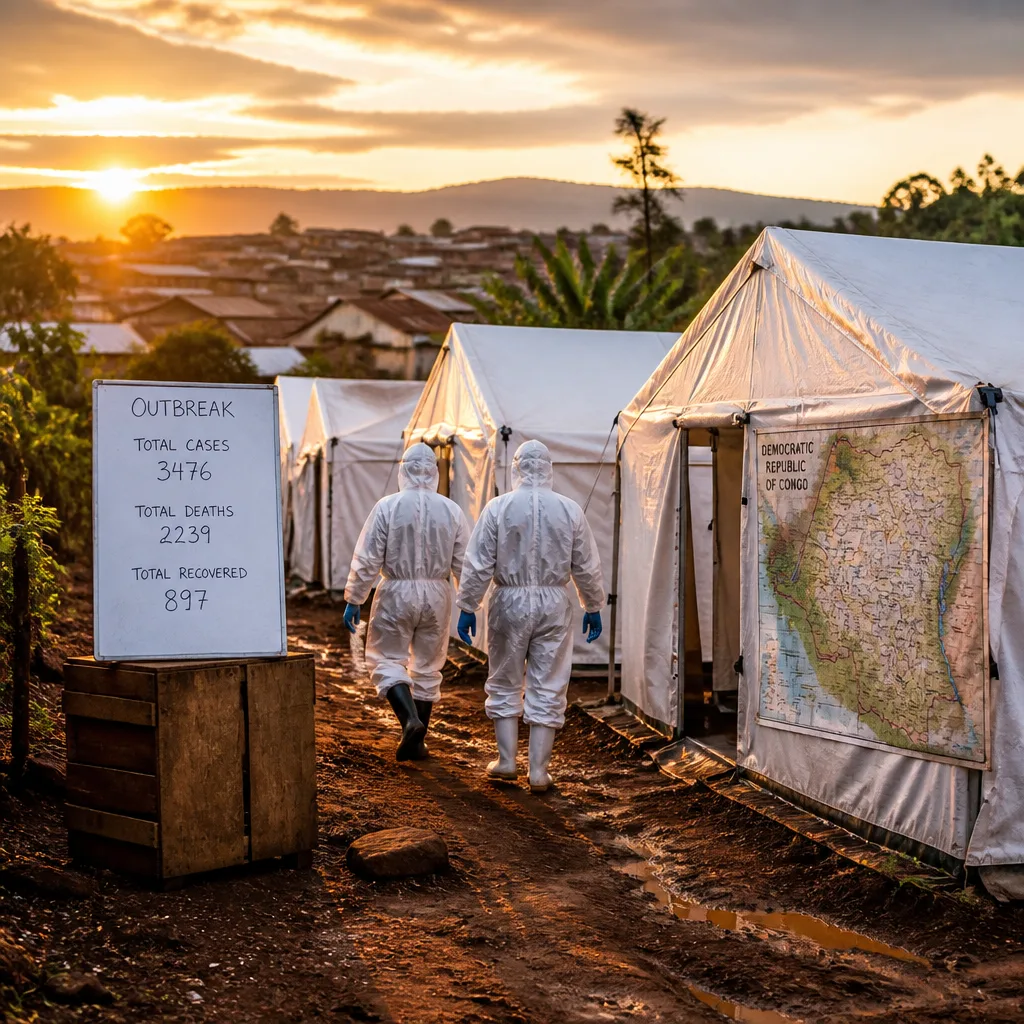
The World Health Organization has warned the Democratic Republic of Congo (DRC) is experiencing the largest Ebola outbreak in its history, driven by the Bundibugyo strain of the virus. As of 30 July there were 3,605 confirmed cases and 1,587 deaths, a case fatality rate of roughly 44%, the UN health agency said.
Escalating transmission and rising weekly totals
Declared on 15 May, the outbreak has now overtaken the 2018–2020 epidemic, which recorded nearly 3,500 cases and close to 2,300 deaths. The WHO said the current situation is "intensifying", with the most recent week producing the highest single-week totals since the outbreak began: 567 cases and 296 deaths.
"The outbreak was 'intensifying, with sustained transmission and continued increases in reported cases and deaths'," the WHO said.
The agency highlighted the exceptional speed of transmission. It warned that insecurity, population displacement and frequent cross-border movement were complicating response efforts and increasing the likelihood of further spread.
Geography, insecurity and the challenge of containment
The epicentre of the outbreak is Ituri province in the northeast of the DRC, which shares borders with South Sudan and Uganda. Cases have also been reported in North and South Kivu provinces, areas where parts are under the control of the M23 armed group. The WHO pointed to a convergence of factors that make containment difficult: insecurity; moving, displaced populations; and cross-border mobility.
- Strain: Bundibugyo (no approved vaccine or proven treatment currently available for this strain)
- Declared: 15 May 2026
- Confirmed cases (to 30 July): 3,605
- Confirmed deaths (to 30 July): 1,587
- Recent weekly totals: 567 cases and 296 deaths
The WHO noted that unlike some other Ebola strains for which vaccines exist, there is currently no approved vaccine or treatment specifically for the Bundibugyo virus. Research and vaccine development efforts are under way in the UK and Singapore, the agency said.
Historical context and wider impact
Over the past half-century Ebola viruses have been responsible for an estimated 15,000 deaths across Africa. The 2018–2020 DRC outbreak, previously the country's worst, recorded nearly 3,500 cases and almost 2,300 deaths; the current outbreak has now exceeded that caseload but so far has a lower recorded death toll.
| Outbreak | Confirmed cases | Confirmed deaths |
|---|---|---|
| 2026 Bundibugyo strain | 3,605 | 1,587 |
| 2018–2020 outbreak | Nearly 3,500 | Almost 2,300 |
Health authorities say the Bundibugyo strain spreads in the same way as other Ebola viruses — through contact with infected bodily fluids — and therefore the same public-health measures apply: rapid detection, isolation of cases, contact tracing, safe burials and community engagement. However, sustained insecurity and population movements are hampering these standard response activities, the WHO said.
UK-based researchers are among teams working on candidate vaccines and treatments, but as yet none has regulatory approval for this strain. The WHO’s latest assessment signals urgency for accelerating research and reinforcing on-the-ground response operations in the DRC and neighbouring countries at risk from cross-border transmission.
The escalation of cases and deaths will put further pressure on international partners and humanitarian agencies already operating in a challenging security environment. The WHO’s statement calls for strengthened coordination and resources to limit the risk of wider regional spread while efforts continue to develop medical countermeasures specific to the Bundibugyo virus.