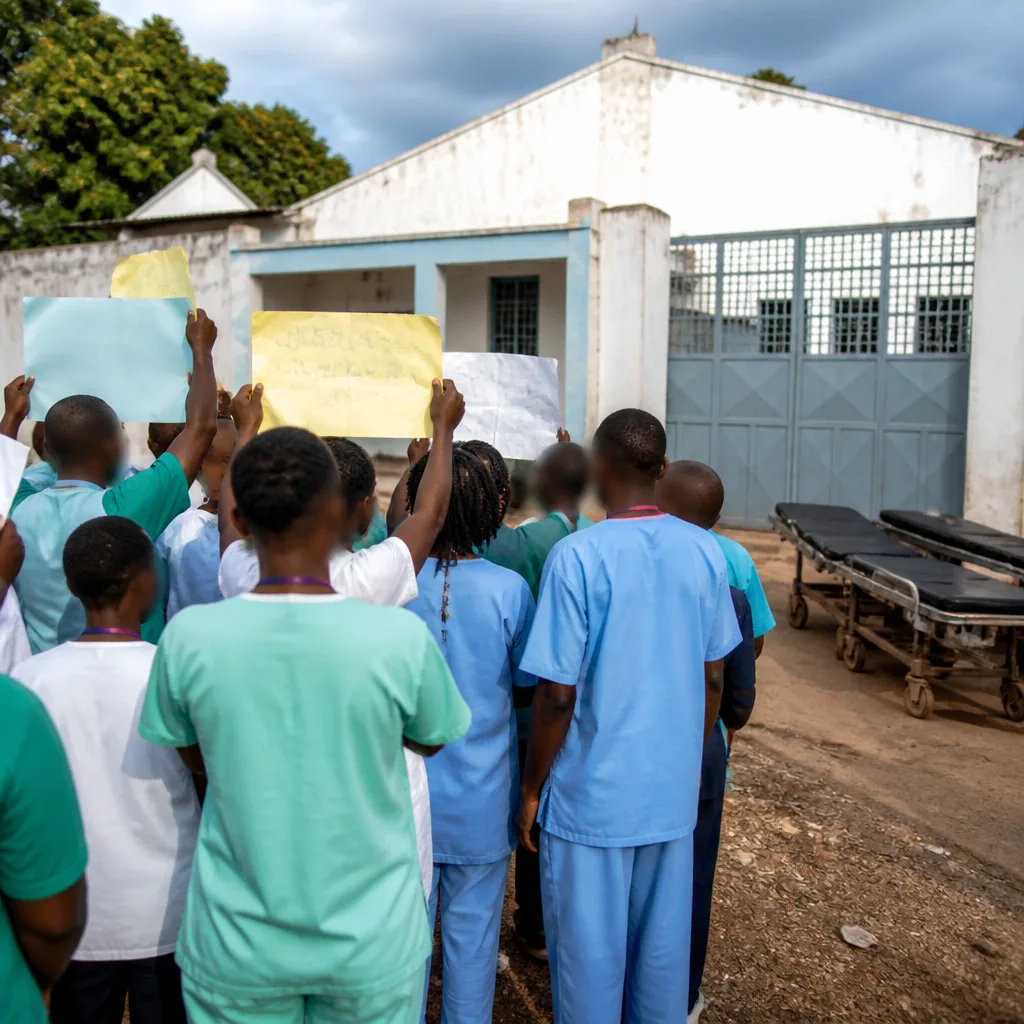
Health services at a key Ebola treatment centre in eastern Democratic Republic of Congo have been largely paralysed after doctors, nurses and support staff walked out in protest at unpaid bonuses, officials and staff said. The walkout comes as authorities report that the outbreak has reached 2,973 confirmed cases with 1,309 deaths, figures they describe as the fastest-growing on record for the country.
Strike affects care in outbreak epicentre
Staff at the Elikya Ebola Treatment Centre in Bunia, in Ituri province, halted activity after saying they had not received performance-related payments for two months. Around one hundred employees demonstrated outside the facility and declared a strike until "concrete solutions" were found to address arrears, according to a staff statement.
"[We] unanimously voted to strike from Saturday until 'concrete solutions' were found to resolve 'two months of unpaid performance bonuses.'"
The industrial action follows a separate stoppage at Bunia General Hospital, the region's largest medical facility, where some workers say they have not been paid since the outbreak began in mid-May. The walkouts are occurring while the majority of cases are concentrated in Ituri — the province accounts for nearly 90% of confirmed infections.
Outbreak scale and operational pressures
Ministry of Health data show that 766 patients remain in isolation or hospital care, while 540 people have recovered. The outbreak is being driven by the rare Bundibugyo strain of Ebola virus and was first detected on 15 May. The World Health Organization has reported that more than 100 healthcare workers have become infected since the start of the event.
Officials say the epidemic is expanding faster than teams can trace and isolate contacts. Several longstanding obstacles are cited as compounding the crisis:
- Population displacement and movement associated with armed conflict and mining activity, hindering contact tracing;
- A funding shortfall that limits the size and reach of the response;
- Targeted attacks on health facilities and staff, undermining safety and access;
- Mistrust among communities, which complicates surveillance, vaccination and care-seeking.
Consequences of unpaid pay and strained response
The strike highlights how financial and human resource issues can rapidly degrade an emergency response. Treatment centres rely on motivated, adequately compensated teams to triage, treat and isolate cases, and to maintain infection prevention measures. Interruptions in service raise the risk of nosocomial transmission, delay care for ill patients and erode community confidence in official efforts.
Health workers say their grievances are urgent: unpaid incentives are not merely a matter of remuneration but affect morale and operational continuity. The Ministry and partners face immediate pressure to settle arrears to restore services, while also addressing the longer-term needs of surge capacity, security and community engagement.
Data snapshot
| Indicator | Number |
|---|---|
| Confirmed cases | 2,973 |
| Deaths | 1,309 |
| Patients in isolation/hospital | 766 |
| Recovered | 540 |
| Health workers infected | 100+ |
Response leaders will be assessing both short-term fixes — including clearing unpaid allowances to coax staff back to work — and longer-term strategies such as scaling surveillance, accelerating vaccination and improving security for health teams. Donor funding and safe access to affected communities will remain central to whether the outbreak can be brought under control.
As the epidemic evolves, restoring functioning treatment centres in Bunia and across Ituri is likely to be a critical determinant of transmission dynamics in the coming weeks. The combination of rapid case growth, staff shortages and ongoing insecurity presents a complex challenge to health authorities and international partners engaged in the response.
This report is based on government data and statements from treatment centre staff and international health agencies.