Finance Minister Bezalel Smotrich, a prominent figure in Israel’s far‑right, is confronting an acute political challenge after losing backing among some West Bank settlers following his vote in favour of protections for ultra‑Orthodox Jews who refuse military service. The episode exposes the delicate task facing Prime Minister Benjamin Netanyahu in managing a fractious governing alliance ahead of the 27 October national election.
Settler support frays over draft exemption vote
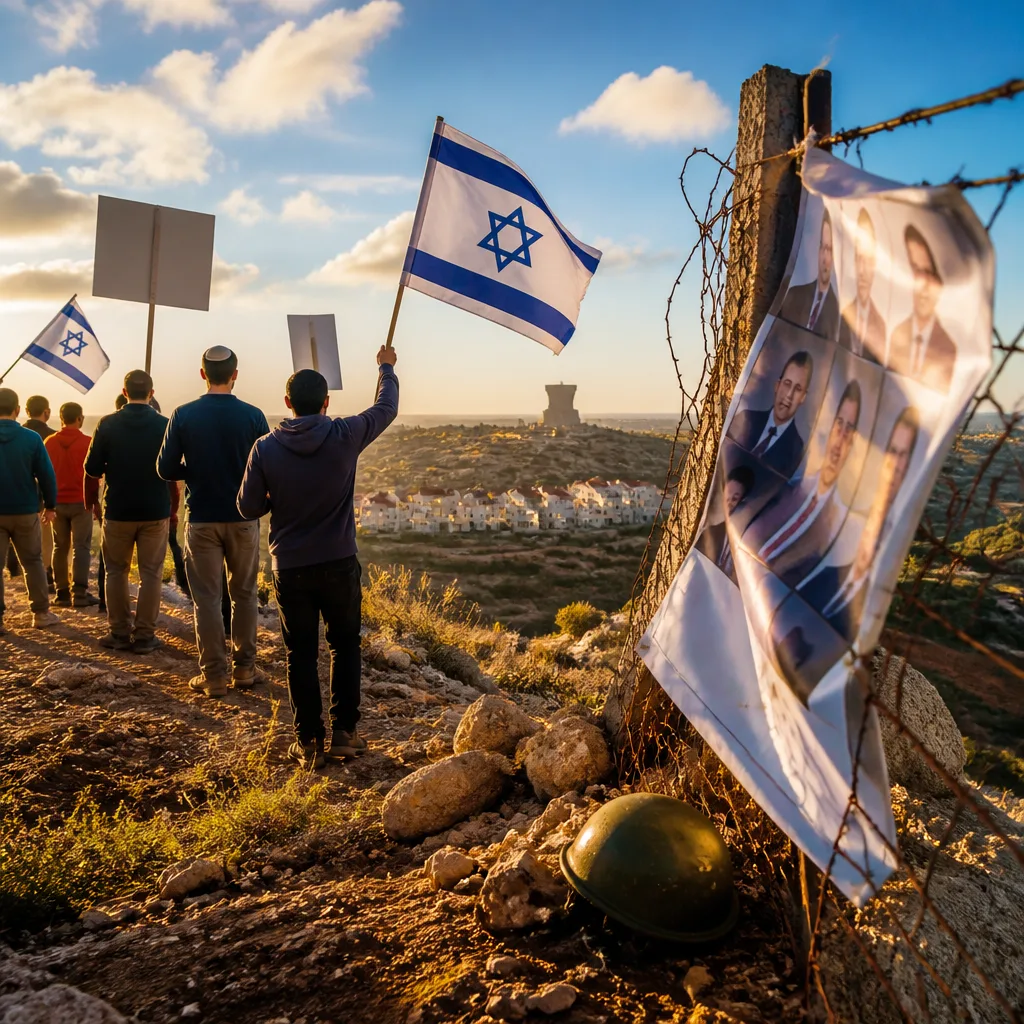
Smotrich, who leads the Religious Zionism party and is a lifelong settler, has long been associated with vigorous expansion of settlements in the occupied West Bank. His record in office on construction and other measures has won praise from many in the movement, but his recent backing of a law to shield ultra‑Orthodox draft‑evaders has provoked anger among former supporters who worry about the consequences for Israel’s armed forces.
"I don't have a political home today," said Sarel Halperin, 30, from the West Bank settlement of Alon Shvut, who voted for Religious Zionism in 2022.
Critics among settlers warn that continued exemption for large numbers of ultra‑Orthodox men could erode the pool of reservists and weaken military readiness. For some in the settler community, the imperative of national defence is non‑negotiable, even as they share Smotrich’s broader ideological aims on territory and sovereignty.
Profile and political consequence
At 46, Smotrich is regarded as a central architect of policies that have accelerated settlement construction. His party rejects a Palestinian state and grounds its claims to the land on religious principles, a stance that has fuelled controversy internationally; several Western countries have barred him entry amid allegations he supports settler violence, allegations he and the Israeli government deny.
The developments cast light on a broader problem for Mr Netanyahu: keeping a coalition of often combative partners aligned as Israel heads to its first election since the Gaza war began. The calendar and the stakes make intra‑coalition disputes more sensitive, with hardline ministers pursuing maximalist agendas even as concerns about security and international reputation mount.
Local reactions and political calculations
Many in Smotrich’s heartland still laud his achievements, pointing to new housing and the political weight he has given their cause. "I think his achievements have been off the charts," said Chaim Silberstein, a resident of Beit El, the settlement where Smotrich grew up.
Yet the move on draft exemptions appears to be a calculated decision that has alienated a subset of voters who prioritise military service and national cohesion. That split illustrates the tensions between religious‑nationalist imperatives and practical security concerns — a cleavage that could reshape support patterns in October.
- Political actor: Bezalel Smotrich — leader of Religious Zionism.
- Key issue: Vote to prevent arrest of ultra‑Orthodox draft‑evaders.
- Election: Israel's national vote scheduled for 27 October.
| Item | Detail |
|---|---|
| Minister | Bezalel Smotrich |
| Age | 46 |
| Election date | 27 October |
The outcome of Smotrich’s internal fight for credibility matters beyond his own seat: it will inform how Netanyahu manages partners such as Security Minister Itamar Ben‑Gvir and other hardline figures whose policies complicate relations with Western allies and Palestinian communities. The coalition’s ability to present a unified platform and to persuade voters it can safeguard security while governing responsibly is now in doubt.
With a polarised electorate and the shadow of ongoing conflict, the next few months will be a test of political discipline within the government. Smotrich’s predicament shows that even ministers who have delivered tangible measures for their base are vulnerable when policy moves clash with deeply held priorities among their supporters.
How the Religious Zionism leader responds — whether by attempting to repair ties with disaffected settlers or by doubling down on his legislative agenda — will be closely watched as campaigns gather pace ahead of October's ballot.