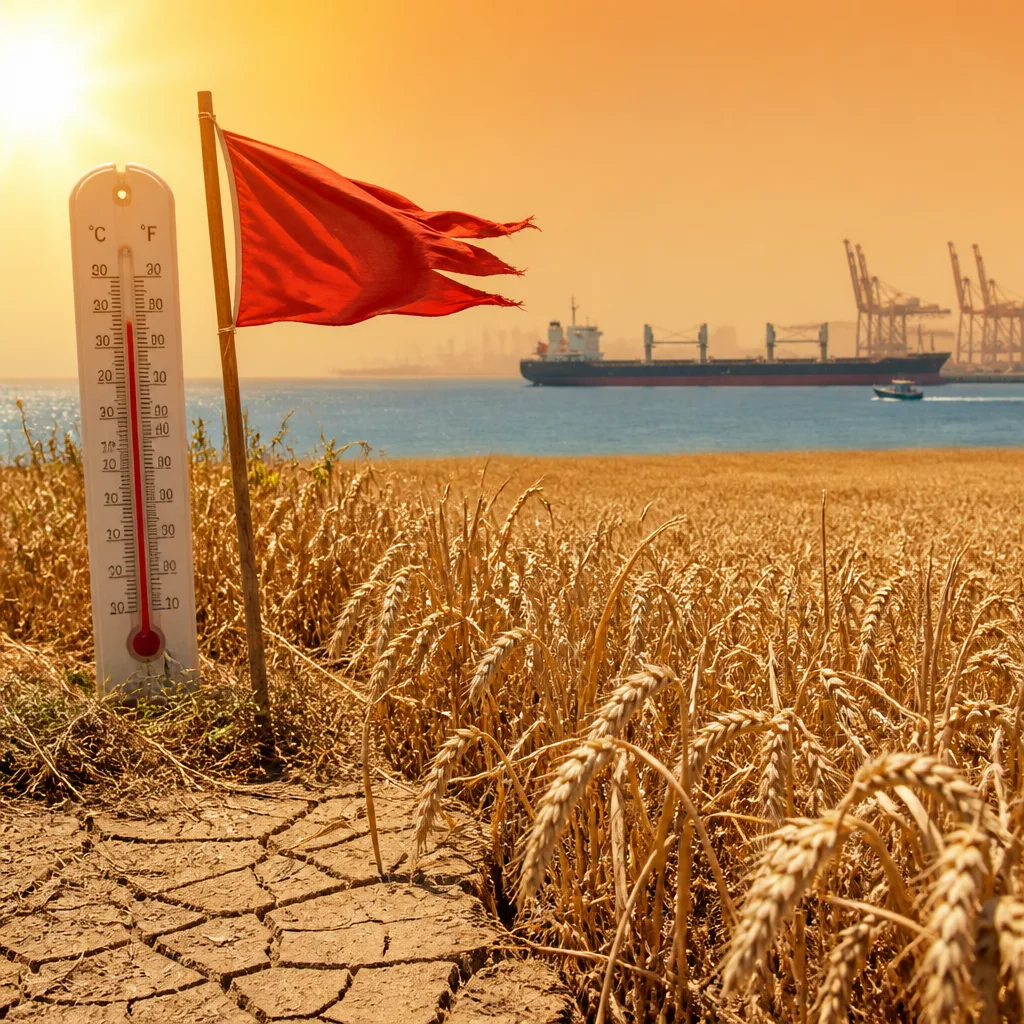
Global grain prices rose sharply in July as a convergence of weather-related production concerns and geopolitical disruption increased risk premiums across markets. Market participants pointed to intense heat in the Northern Hemisphere, an evolving El Niño pattern and renewed hostilities affecting Black Sea export routes as the principal drivers of the rally.
Weather amplified supply worries
Across North America and large parts of Europe, unusually high temperatures sped up harvests but also raised anxieties about reduced yields and increased crop stress. In major producing countries such as France and Germany, exceptionally warm and dry conditions weighed on output expectations. At the same time, ratings for US spring wheat showed deterioration as the season progressed.
Forecasters and traders are also watching the developing El Niño pattern. A stronger El Niño typically alters global precipitation and temperature distributions, creating heightened uncertainty for the Southern Hemisphere planting and production season. Markets noted that this could affect exporters in Australia and elsewhere, even as some regions — notably parts of Argentina and North Africa — have experienced beneficial rainfall that supported crops.
Geopolitical disruption around the Black Sea
Beyond weather, renewed confrontations in the Black Sea region added to supply concerns. Attacks on shipping and on logistics infrastructure in and around Ukraine and Russia disrupted routes used for grain exports, while strikes on energy facilities increased shipping and operational risk. Reports suggested significant disturbance to transit via the Sea of Azov and pressure on ports and transport corridors, prompting buyers and traders to price in additional risk.
| Factor | Observed effect |
|---|---|
| Northern Hemisphere heatwaves | Accelerated harvests; potential yield losses and crop stress |
| El Niño strengthening | Increased uncertainty for Southern Hemisphere production |
| Black Sea attacks and logistics disruption | Higher premiums on exports; shipping interruptions |
Despite rising futures prices, physical demand — the actual buying of grain cargoes — was comparatively muted in July. Major importers such as Egypt, Turkey and other North African purchasers showed little urgency to enter the market aggressively, appearing sufficiently supplied from domestic stocks or alternative sources.
Market outlook and what to watch next
Traders and analysts will be closely monitoring several factors that are likely to determine whether bullish momentum continues or eases:
- Black Sea export flows: Any restoration or further disruption to shipping and port operations will directly affect supply availability and price risk premiums.
- Northern Hemisphere harvest results: Final yields and crop condition updates from Europe and North America as combines move through fields will refine supply expectations.
- El Niño developments: Changes in the pattern’s strength and timing will alter prospects for Southern Hemisphere exporters later in the year.
In short, the July rally reflected an intersection of climatic stress and geopolitical uncertainty. The weather-driven elements — heat-related crop stress in key northern producers and the potential for disruptive El Niño impacts in the south — were central to the market narrative, with the Black Sea situation compounding concerns over the reliability of some export routes.
For end users and consumers, the near-term implication is a tighter price environment driven by perceived risk rather than firm, widespread shortages. If importers remain comfortable with existing supplies, the rally could be tempered; conversely, any escalation in shipping disruption or further deterioration in harvest outlooks would keep upward pressure on prices.
Monitoring grain ratings, harvest progress reports and maritime security updates will be essential in the coming weeks to assess whether the supply picture is worsening or stabilising.