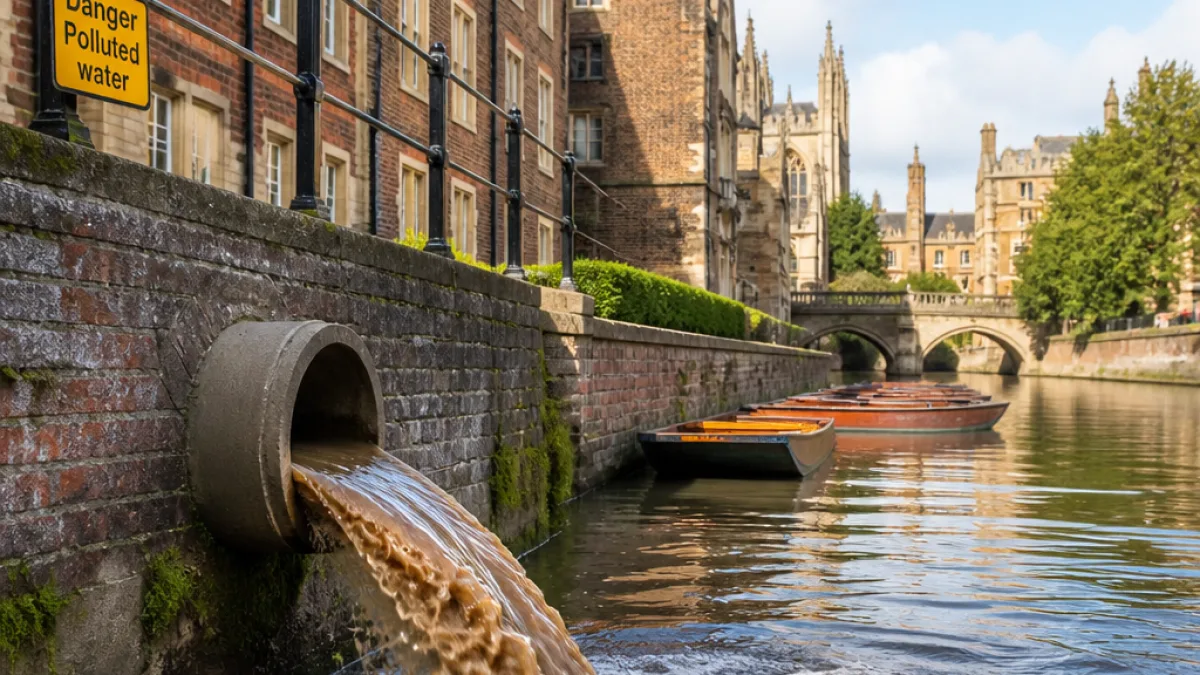
Local councillors have escalated calls for a robust response to what they describe as a “sewage scandal” after figures revealed widespread discharges into rivers across Greater Cambridge.
Numbers behind the concern
Anglian Water recorded 16,770 sewage discharges in 2025, amounting to a total of 101,598 hours when untreated effluent entered waterways. At a recent South Cambridgeshire District Council meeting councillors were told that more than 3,500 of those discharges affected waterways in the district.
| Measure | 2025 figure |
|---|---|
| Total recorded discharges (Anglian Water) | 16,770 |
| Total hours of discharge | 101,598 |
| Discharges affecting South Cambridgeshire | 3,500+ |
Councillors from different parties have framed the issue as both an environmental emergency and a failure of regulation. The Liberal Democrat administration at South Cambridgeshire put forward a motion condemning the pollution and committing the council to seek stronger national action.
“For years, water companies have put profits ahead of our rivers while communities have been left to live with the consequences,”
These words, delivered by Cllr William Scantlebury (Lib Dem, Bar Hill) at a council meeting, underline a wider frustration among local representatives that current penalties and oversight are inadequate to protect the district’s waterways.
Local measures and demands
The South Cambridgeshire motion resolves that the council will write to the Secretary of State for Environment, Food and Rural Affairs demanding:
- replacement of Ofwat with a stronger regulator;
- increased environmental enforcement; and
- greater powers for regulators to prosecute offenders.
Meanwhile, in Cambridge City Hall Green Party councillors Eleanor Toye-Scott (Newnham) and Sarah Nicmanis (Coleridge) have introduced a separate motion calling for the recognition of the Rights of the River Cam. Their motion seeks to secure commitments from the Environment Agency, Cambridge Water and Anglian Water to improve performance and safeguard the city’s chalk streams.
Cambridge and the surrounding district are home to internationally important chalk stream habitats; councillors argue these environments require urgent protection from pollution that can damage wildlife, recreation and the character of local waterways.
Consequences for residents and next steps
For residents, the political manoeuvring reflects growing concern about water quality and the resilience of local ecosystems. The steps councils are taking — formal letters to Ministers and motions recognising river rights — are designed to place pressure on both national regulators and water companies to deliver faster improvements and to ensure stronger sanctions where systems fail.
At present the measures are demands rather than enacted policy. The call to replace Ofwat would require national-level legislation or ministerial action, and the practical implications of recognising rights for the River Cam would depend on the scope of any protections agreed with statutory bodies.
As the debate continues, the councils’ moves will keep the condition of Cambridge’s waterways under scrutiny. For communities that use the rivers for leisure, farming and wildlife watching, the hope is that heightened political attention will translate into tangible improvements in the water flowing through their local landscape.
Authorities named in motions — the Environment Agency, Cambridge Water and Anglian Water — have been asked in previous reporting to respond to concerns; such responses will be pivotal if the demands from councillors are to change how sewage discharges are monitored, penalised and ultimately prevented.