The Port of Grays Harbor in Washington State has officially opened an expanded Terminal 4 export facility in partnership with US agricultural cooperative Ag Processing (AGP), creating a substantially larger Pacific North‑West gateway for soybean meal bound for Asia.
What has been built
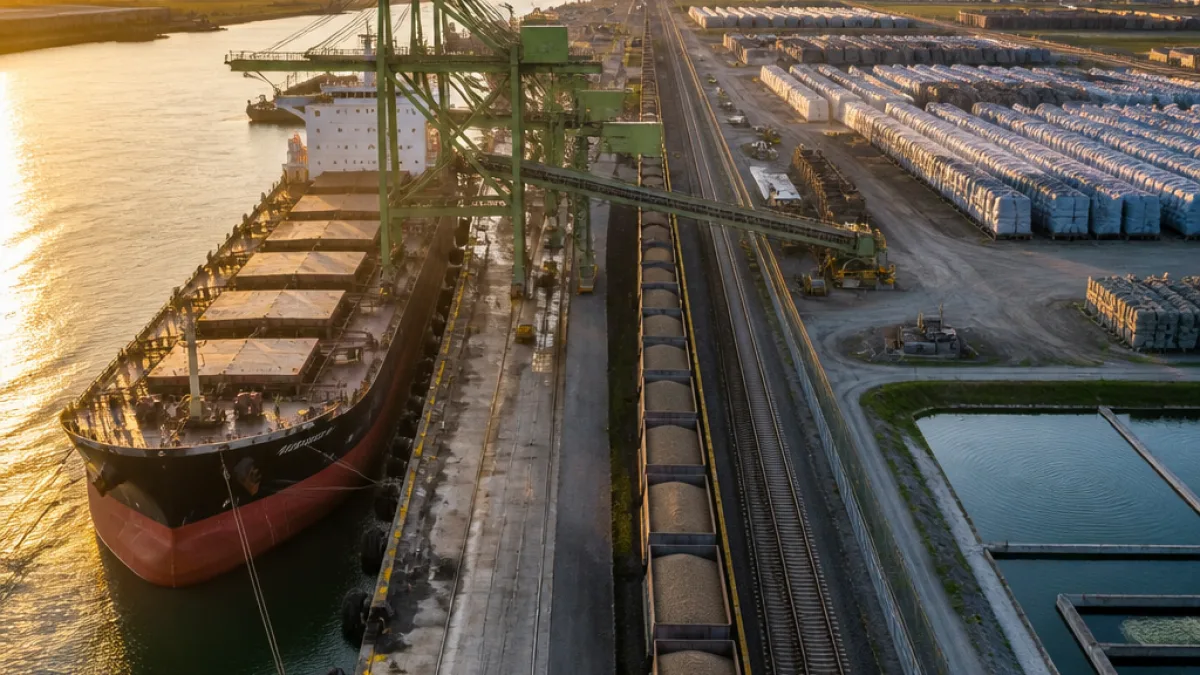
The project, inaugurated at the end of July, adds a second dedicated AGP export terminal at Grays Harbor and combines private and public investment to upgrade marine and landside infrastructure. Key upgrades at Terminal 4 include:
- Nearly 48,000 feet of new rail infrastructure within the port complex;
- installation of a new marine fendering system and upgraded stormwater treatment facilities;
- more than 30 acres of additional cargo laydown or storage space to support ship loading operations.
AGP said the new facility is designed to meet rising demand for US‑produced soybean meal across Southeast Asia and other Asia‑Pacific markets. The terminal is expected to handle about 60 vessel calls a year and to more than double AGP’s annual soybean meal export capability through Grays Harbor.
Employment and capacity implications
The expansion is expected to create around 80 full‑time jobs directly at the terminal, reflecting the relatively high labour intensity of bulk agricultural terminals at berth and in the storage yards. AGP has been the port’s largest marine terminal customer and already operates a large soybean meal export facility at Terminal 2; the new Terminal 4 provides a dedicated transload operation to move product from railcars into ships at berth.
“This expansion is a physical manifestation of AGP’s core cooperative mission: to connect member producers’ raw materials to global, value‑added markets, thereby maximising returns for the owners,”
The quotation above was made at the opening ceremony by AGP’s board leadership and reported by visiting trade correspondents.
Why this matters to local readers in Grays
Although the works are across the Atlantic, there are three clear reasons why developments at Grays Harbor are of interest to residents and businesses in Grays and the wider East of England:
- Global feed markets are interconnected. Changes to US export capacity can influence supply and freight patterns for commodities such as soybean meal, which is a key ingredient in animal feed worldwide.
- Infrastructure choices—rail access, laydown area and stormwater controls—reflect modern port planning priorities that are increasingly relevant to UK ports as they look to decarbonise and bolster resilience.
- Labour and skills. The creation of about 80 jobs at a modern export terminal underlines ongoing demand for skilled operators, logistics planners and environmental compliance staff in the bulk‑export sector.
| Item | Figure |
|---|---|
| New rail construction | ~48,000 feet |
| Additional cargo laydown | 30+ acres |
| Expected vessel calls | ~60 per year |
| Estimated new full‑time jobs | ~80 |
Ports on both sides of the Atlantic are watching shifts in commodity flows carefully. For Grays, which sits on the north bank of the Thames with its own long history of river and port‑related trade, the Grays Harbor expansion is a reminder of the scale of investment required to remain competitive and the type of operational, environmental and labour considerations that accompany new terminal developments.
Local businesses involved in animal feed, freight forwarding and rail‑to‑port logistics will find it instructive to note how the American project combines private terminal investment with public works to upgrade access and environmental protections on site. The combination of upgraded rail, extra laydown and improved stormwater systems is a template increasingly seen in modern bulk‑handling ports.
While this story concerns a facility some 5,000 miles away, the practical lessons for port managers, logistics operators and policy makers in and around Grays are immediate: capacity growth needs matched landside access, environmental mitigation and trained staff. Those are the same pillars that underpin successful port expansions here at home.