Clean-up under way as experts warn of mounting risks to Wensum wildlife
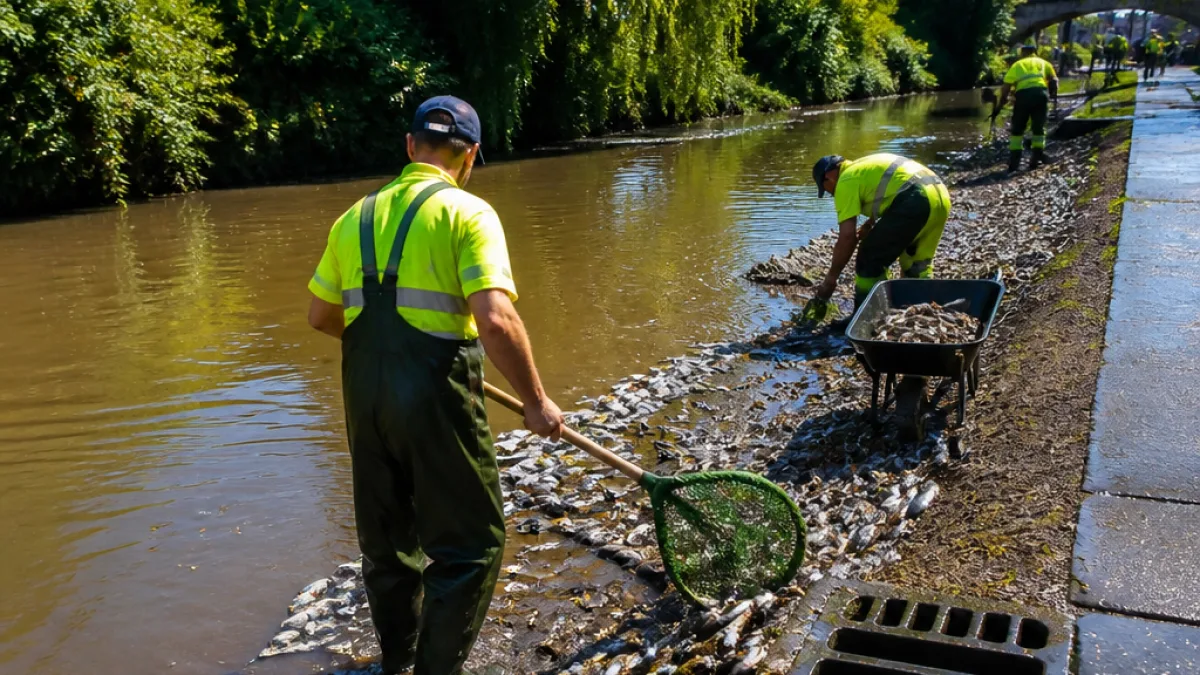
More than 3,000 fish have been recovered from a stretch of the River Wensum in Norwich and a clean-up operation continues after what conservationists have described as a river heatwave "disaster".
Staff from Anglian Water were seen collecting thousands of dead fish along the riverbank in Norwich on Thursday, following heavy rainfall that the Environment Agency said flushed contaminants from surface drainage into an already oxygen-depleted watercourse. The incident has prompted warnings from the Norfolk Wildlife Trust that similar events could become more frequent as the climate changes.
"In a summer characterised by shocking wildfires, this is yet another example of how our changing climate is having a devastating impact on our wildlife," said Helen Hebditch, director of nature recovery at the Norfolk Wildlife Trust.
Hebditch described the combination of low flows caused by prolonged dry, hot weather and sustained high temperatures that reduce dissolved oxygen as a "recipe for disaster". She emphasised the particular significance of the incident because the Wensum is a protected chalk river, a rare and ecologically valuable habitat.
Local scale and wider implications
The die-off came after a period in which summer droughts lowered water levels and heatwaves raised temperatures. Heavy rain then entered the system, sheeting off roads and other surfaces and carrying pollutants into the river. The Environment Agency's initial assessment pointed to contaminants washed in from the surface water drainage system as the immediate trigger at a time when the river's oxygen levels were already depleted.
There have also been reports of dead fish elsewhere in Norfolk this week, with incidents on the River Yare at Trowse and at Cantley east of Norwich. The spread of reports across the county suggests the problem is not isolated to one stretch of water.
- Cause: Heavy rain flushing pollutants into an oxygen-depleted river following prolonged hot, dry weather.
- Response: Clean-up by Anglian Water and monitoring by the Environment Agency and conservation groups.
- Concerns: Climate change increasing the frequency of such events, particularly in protected chalk rivers like the Wensum.
What this means for Norwich
For Norwich residents, the incident raises questions about river health and urban surface-water management. The Wensum weaves through the city and is cherished for both its ecological value and its contribution to local amenity and tourism. A substantial fish kill not only damages wildlife populations but can affect recreational use and public confidence in water quality.
Authorities will need to consider both immediate remediation and longer-term measures to reduce pollutant run-off into urban rivers, especially during periods of low flow. Conservationists warn that protecting chalk rivers requires attention to upstream land and drainage practices as well as addressing the wider drivers of warming and drought.
| Item | Detail |
|---|---|
| Location | River Wensum, Norwich |
| Approximate number of fish recovered | More than 3,000 |
| Organisations involved | Anglian Water, Environment Agency, Norfolk Wildlife Trust |
Norfolk Wildlife Trust's Helen Hebditch warned that, with drought and heatwaves becoming more common, river wildlife is "extremely vulnerable". She pointed to the combination of depleted water levels, reduced oxygen and pollutant inflows as a pattern likely to repeat without stepped-up action.
For now, the focus in Norwich is on the clean-up and on monitoring the health of the Wensum and neighbouring waterways. Residents and river users may see increased activity by environmental teams in the coming days as samples are taken and investigations continue.
The incident is a local manifestation of wider ecological pressures. In a county already reporting other fish deaths on the Yare and at Cantley, the Wensum event is a reminder of the interconnectedness of weather, urban drainage and river ecosystems – and of the practical and policy challenges for protecting waterways in a warming climate.