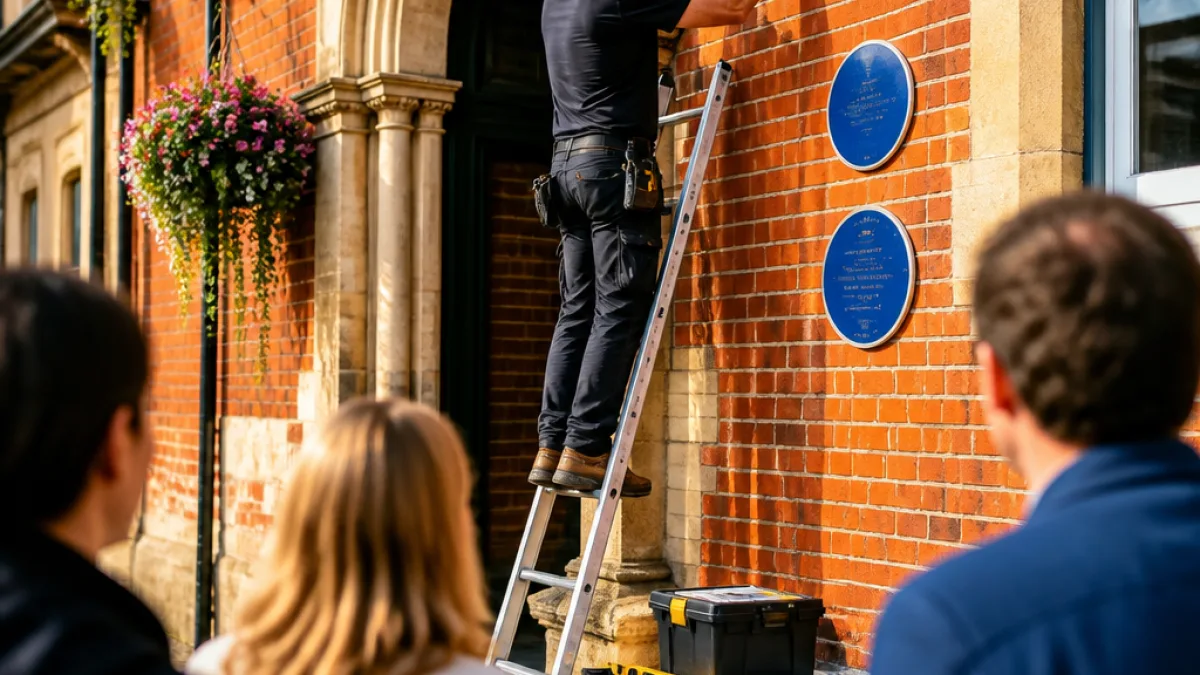
The Peterborough Civic Society (PCS) has revealed plans to install 13 new blue plaques across the city before the end of the year, extending a local commemorative scheme that began in 2017.
Expanding a local tradition
Since the project started as a partnership with the National Lottery and the Heritage Fund alongside Peterborough City Council, PCS has placed 36 plaques at sites that mark the city’s civic, industrial and cultural history. The scheme is modelled on the better-known national blue plaque programme, although Peterborough currently has no entries in the national scheme run by Historic England.
The Civic Society says the new round of plaques will add depth to the city’s visible history, marking people and places that have shaped Peterborough over the last two centuries. The full list of the 13 new plaques will be published in due course, but PCS has disclosed several confirmed subjects and locations that will feature in the next installation.
- The Bull Hotel – a long-standing town centre hostelry with connections to local civic life.
- Walter Cornelius – commemorated at The Lido; Cornelius is locally known for his colourful presence in the city’s past.
- North Station – recognising the transport and industrial heritage of the area.
- Reverend Richard Paten – founder of the Nene Valley Railway and Railworld, acknowledged for preserving local rail heritage.
| Item | Status disclosed |
|---|---|
| Number of existing PCS plaques | 36 |
| New plaques planned | 13 |
| Target manufacture date | By the end of the year |
Eligibility and notable omissions
PCS has confirmed it is keen to honour Peter Boizot, the Pizza Express founder who later became owner of Peterborough United, but the society says a strict eligibility test requires a candidate to have been deceased for at least ten years before a plaque can be issued. Mr Boizot died in 2018, which places him just short of the threshold at present.
“It is always a good idea to commemorate people and places…”
The project sits alongside a wider initiative from national charity Creative Lives, in partnership with Historic England, to identify people and events across the East of England that merit commemoration under the National Blue Plaque Scheme. Because Peterborough has no entries under the national scheme, PCS decided to develop and manage its own local programme to make the city’s history more visible.
Local consequences and context
For residents and visitors, an expanded plaque programme will mean more opportunities to encounter stories in the public realm, linking streets and buildings to local biographies and industrial histories. The confirmed subjects—public houses, railway pioneers and transport nodes—reflect Peterborough’s mixed civic and industrial identity.
There are practical implications for property owners and managers too: installation requires negotiation over siting and permissions, and plaques must be maintained. The Civic Society will be responsible for commissioning and manufacturing the new cast plaques, with delivery scheduled before the year’s end.
The move also underscores a continuing local interest in heritage as part of civic renewal. In recent years councils and community groups across the East of England have sought to make history more accessible outside museum walls, and Peterborough’s scheme is one of several local responses to that trend.
PCS has said the full list of the 13 sites and individuals will be released in due course. Until then the partial list already disclosed signals an emphasis on transport, civic life and individuals who contributed to the city’s cultural and industrial fabric.
Residents with suggestions for future plaques are encouraged to follow announcements from Peterborough Civic Society and the City Council as the programme develops.