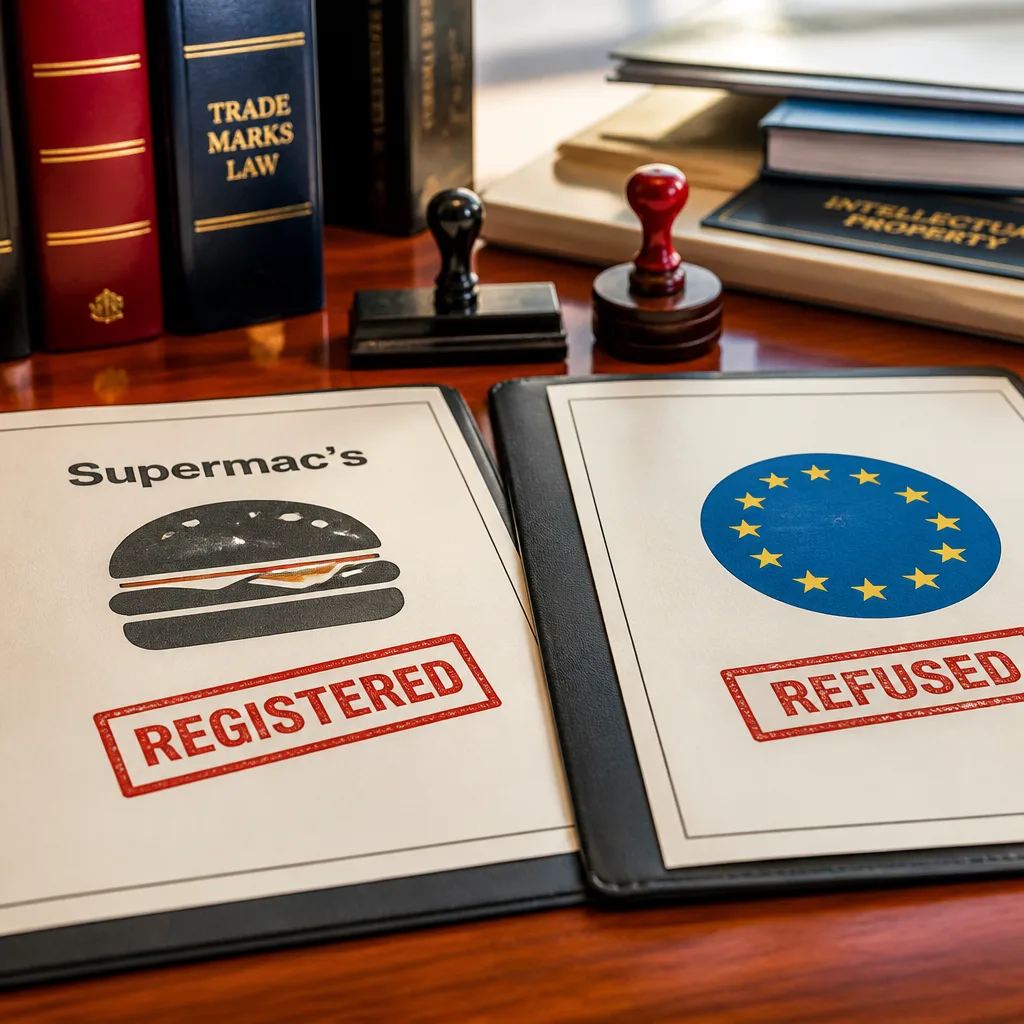
The UK’s Intellectual Property Office (UKIPO) has concluded that Irish fast food chain Supermac’s may register its name and logo in the United Kingdom, rejecting arguments from McDonald’s that the marks would cause confusion among consumers.
Ruling and reasoning
The UKIPO determined there were “significant visual, aural and conceptual differences” between the branding of Galway-founded Supermac’s and the marks used by McDonald’s, including the fast-food giant’s Big Mac and McCafé trademarks. The office said those differences were sufficient to prevent a direct confusion in the mind of the average consumer.
"We've never had their scale or resources, but we've always believed every business deserves the same protection under the law, regardless of its size."
The remark was made to Irish broadcaster RTÉ by Supermac’s founder Pat McDonagh after the UK decision. Supermac’s, established in the late 1970s, is Ireland’s largest indigenous fast food operator and has been engaged in protracted litigation with McDonald’s over the use of "Mac" and other brand elements.
Contrast with EU decision
The UKIPO ruling comes shortly after a different outcome at the European Union Intellectual Property Office (EUIPO), where Supermac’s was refused registration for the EU. EUIPO’s board of appeal concluded there was a likelihood of confusion with the Big Mac trademark for English- and German-speaking consumers, a decision that prevents Supermac’s from securing EU-wide trademark protection.
| Jurisdiction | Decision | Reason |
|---|---|---|
| United Kingdom (UKIPO) | Registration allowed | Found significant visual, aural and conceptual differences; no direct confusion |
| European Union (EUIPO) | Registration refused | Found likelihood of confusion with Big Mac for some language groups |
Implications and context
The split rulings mean Supermac’s can proceed with formal trademark protection within the UK while remaining unable to secure a unitary EU registration. That distinction does not prevent the chain from trading in the Republic of Ireland.
Legal observers say the decisions illustrate how trademark assessments can vary between jurisdictions, particularly where consumer perception and linguistic factors are central to the analysis. The UKIPO emphasised the overall differences between the respective marks when assessing the average UK consumer’s likely perception.
- Brand protection in the UK: Supermac’s can register its name and logo, improving legal security for use and potential expansion within Britain.
- EU limitation: The EUIPO refusal blocks a single EU-wide trademark right, meaning Supermac’s would need to seek protection country-by-country across the bloc if it wishes to expand.
- Precedent: The case underscores divergent outcomes between post‑Brexit UK practice and EU trademark jurisprudence.
Supermac’s has sought to protect its branding vigorously in recent years, pursuing a series of trademark applications in multiple jurisdictions while fending off challenges from McDonald’s. The dispute centres on whether the use of elements such as the syllable "Mac" could lead consumers to link the brands.
For McDonald’s, the case reflects the company’s broader approach to defending its intellectual property worldwide. For Supermac’s, the UKIPO decision offers a clear legal foothold in Britain even as the EU door remains closed.
Industry lawyers note that the practical effect of the UK registration depends on how both parties choose to act going forward; registration strengthens Supermac’s hand in enforcement within the UK but does not alter the EUIPO’s finding or its consequences for commerce across the European Union.
The divergence also highlights the role of language and consumer perception assessments in trademark law. EUIPO’s conclusion that confusion was possible among English- and German-speaking consumers contrasts with the UKIPO’s view of the average UK consumer, producing materially different outcomes from the same set of contested marks.
The dispute between Supermac’s and McDonald’s has run for several years and covered multiple applications and appeals. With the UK decision now published, attention will shift to whether either company seeks further legal steps, such as appeals or additional filings, in the respective jurisdictions.