Average UK house prices were unchanged in July as lenders pushed up mortgage rates in recent weeks, according to the latest Lloyds monthly index. The report shows property values broadly flat month‑on‑month and only marginally higher than a year ago, underscoring a sluggish market facing higher borrowing costs and uneven regional performance.
Small annual rise masks big local variation
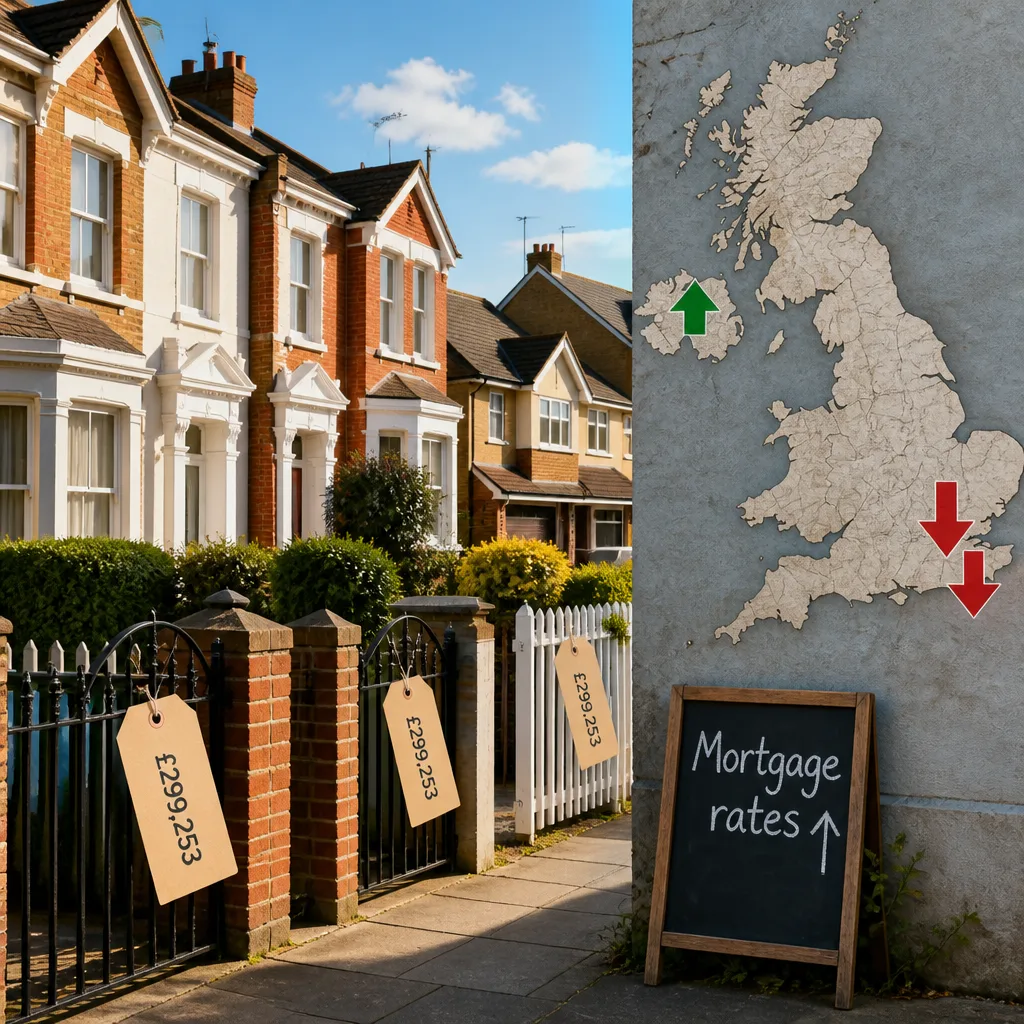
Across the UK, the mean property value in July was £299,253. That level was effectively unchanged from June and represented a year‑on‑year increase of just 0.1% — the weakest annual advance since November 2023. July’s flat monthly reading compares with a 0.2% rise in June.
Regional results diverged markedly. Northern Ireland recorded the strongest growth, with prices up 7.4% year‑on‑year to an average of £231,131. Scotland and Wales also posted positive annual moves of 3.6% and 1.6% respectively. By contrast, parts of southern England were weaker: the south east fell by 2% and Greater London saw prices decline by 1.3%.
| Area | Year‑on‑year change | Average price (where provided) |
|---|---|---|
| UK average | +0.1% | £299,253 |
| Northern Ireland | +7.4% | £231,131 |
| Scotland | +3.6% | — |
| Wales | +1.6% | — |
| South East | −2.0% | — |
| Greater London | −1.3% | — |
Mortgage costs and wider economic uncertainty
Lloyds’ head of mortgages highlighted that the market has been operating in a narrow range for almost two years, and that recent events overseas have contributed to renewed upward pressure on borrowing costs. The Bank of England has held the base rate at 3.75%, but warned that inflation could rise by the year‑end in part due to the Iran conflict, leaving the door open to further rate action if price pressures persist.
“Average house prices have remained relatively stable for almost two years, moving within a narrow range over that period and sitting just 0.5% higher than they were in November 2024,”
She added that affordability continues to be a barrier for many potential buyers and that mortgage rates had crept up again after easing earlier in the summer.
What this means for buyers, sellers and policy
The picture is one of a housing market in stasis rather than decline, driven by a mix of cautious buyer demand and higher financing costs. For prospective purchasers, rising mortgage rates reduce borrowing power and slow activity. For sellers, modest price moves and regional weakness, especially in London and the south east, may prolong time on market or force price adjustments.
- Mortgage rate increases by lenders are occurring despite the Bank of England’s unchanged policy rate.
- Regional imbalances show demand remains stronger outside the south, particularly in Northern Ireland and parts of Scotland.
- Future house‑price trends will be shaped by mortgage rate movements, inflation developments and household confidence.
Lloyds expects market activity and prices to remain broadly stable through the remainder of the year, but stressed outcomes will depend on how mortgage rates respond to inflation and on consumer sentiment. For policymakers at Threadneedle Street, the challenge remains balancing inflation control against the economic drag higher rates impose on housing and broader household spending.
The July snapshot therefore offers a reminder that while headline national figures appear static, local markets continue to diverge — a dynamic that will influence the decisions of lenders, buyers and policymakers as the year progresses.