Garden experts at the Royal Horticultural Society's Wisley in Surrey have set out practical steps for gardeners as a fourth heatwave takes hold in the South East and a UK Health Security Agency (UKHSA) amber heat-health alert is in place.
Prioritise scarce water and select drought-tolerant plants
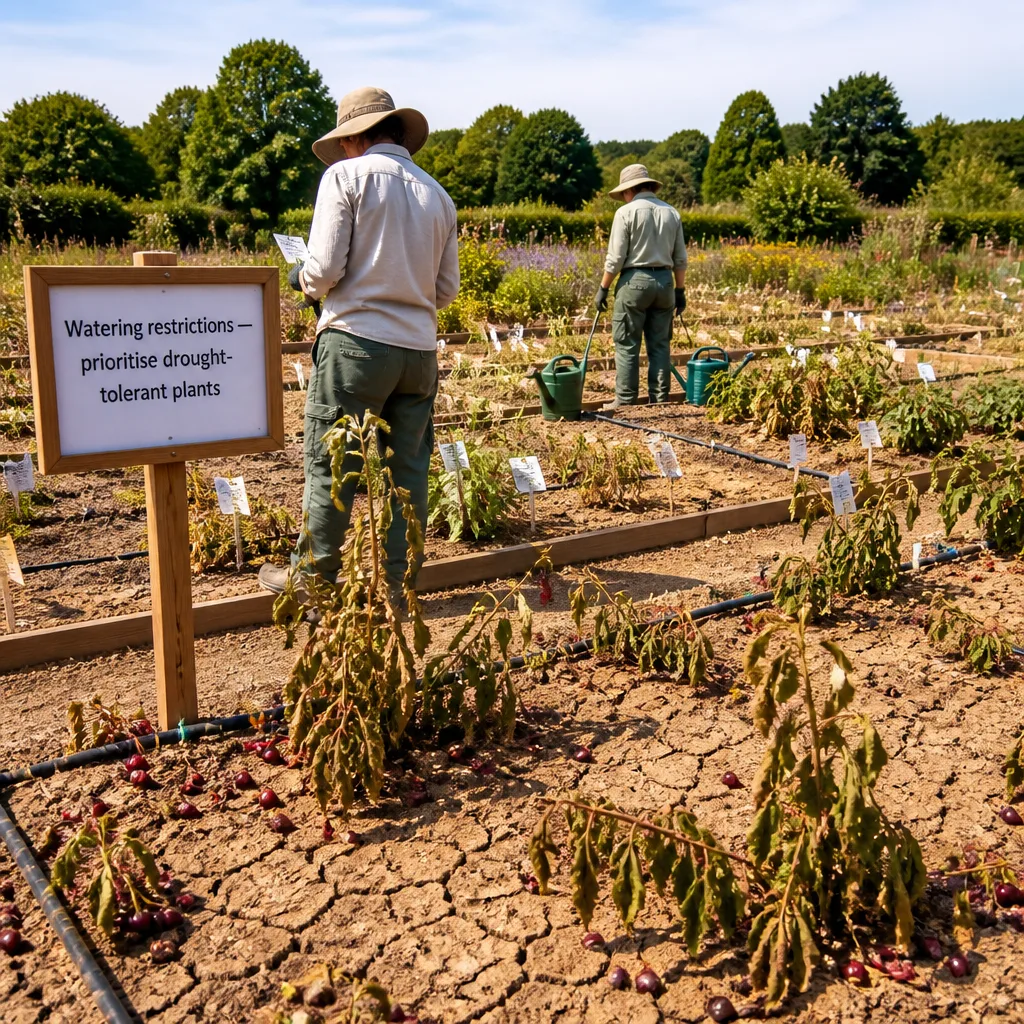
Staff at Wisley say the site has endured almost six weeks without rain and is conserving water by restricting irrigation in large areas of the garden so that crops and the most vulnerable specimens receive the available supply. The horticulture team said some trees and fruit were already showing stress, with leaves beginning to fall from cherries and other plants.
Wisley’s trials beds are being used to identify species that stand up to long hot spells. The garden’s horticulture director reported that some ornamentals have performed markedly better than others, providing a guide for gardeners looking to future-proof borders and allotments.
| Plants flagged at Wisley | Observed performance |
|---|---|
| Persian roses | Drought-tolerant |
| Baptisia | Drought-tolerant |
| Sweet peas | Poor performance |
| Wild carrot | Looking strong |
| Crape myrtle | Flowering well |
Practical advice for gardeners
RHS chiefs urged gardeners across Kent, Surrey and Sussex to be pragmatic in their approach to the heat and prolonged dry period. Key recommendations include concentrating water on plants that truly need it and cutting back or composting specimens beyond recovery.
- Prioritise watering for plants that cannot be replaced or are still actively producing food.
- Delay summer seed sowing until conditions improve to conserve water.
- Consider what to grow next year, favouring less thirsty crops and varieties that are scarce in shops.
"It is also worth delaying summer seed sowing to prioritise water where it's already needed and think about what you should grow in 2027 - perhaps prioritise those crops less readily available in the shops and less thirsty,"
Guy Barter, the RHS chief horticulturist, stressed the long-view element of planting decisions, saying the aim is to keep colour and production in gardens even during heat and drought by making suitable choices now.
Tim Upson, Wisley’s horticulture director, pointed to bench trials that demonstrated the variety in plant responses to drought, naming Persian roses and baptisia as winners while noting sweet peas did poorly. He also highlighted some success stories such as wild carrot and crape myrtle.
Health services and public messaging
The UKHSA amber alert escalates public-health concern for heat-related harm in the region. As a direct response, Ashford & St. Peter's Hospitals NHS Foundation Trust has asked visitors to bring cool water with them when attending hospital sites during the heatwave.
The dual pressures of stretched water resources and elevated health risks have prompted the RHS to combine horticultural guidance with messaging aimed at reducing demand on household supplies and protecting vulnerable people and plants until cooler, wetter conditions return and plants’ water needs fall with shorter daylight hours.
Wisley’s team says some water-saving measures are already being adopted in the garden, leaving many ornamental areas unwatered so irrigation can be concentrated where it is most needed. The approach reflects a broader move among gardeners and agricultural managers to adapt practice to a pattern of increasingly common hot, dry spells.
For those tending private plots or public green spaces, the message from Wisley is clear: focus resources where they matter most now, and plan for planting choices in 2027 that favour resilience to heat and drought.