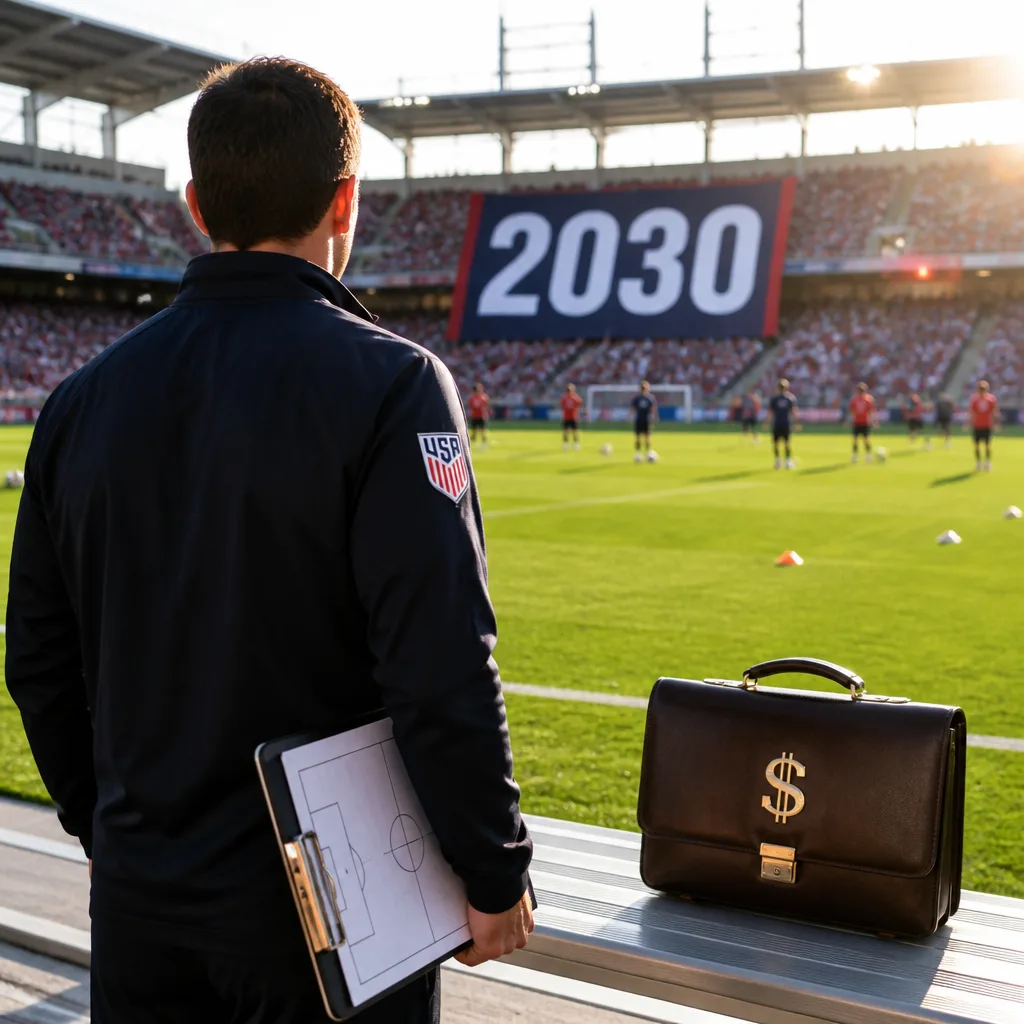
The United States men’s national team will retain Mauricio Pochettino as head coach through the 2030 World Cup after the coach and the U.S. Soccer Federation agreed a contract extension, the federation announced on Monday.
Longer tenure, broader brief
Negotiations had been under way for several months before the U.S. team’s last‑16 exit at this summer’s World Cup, with the federation making clear it wished to keep Pochettino in charge. Talks intensified in the weeks after the tournament and, according to media reports, reached their final stages last week.
The extension secures Pochettino’s position until at least 2030 and is reported to include a salary increase above the previous package, which was valued at approximately $6m per year — already the largest annual payment for a US men’s head coach. Financial specifics of the new deal were not disclosed by the federation.
Funding and scope
The Guardian has reported that billionaire hedge‑fund manager Ken Griffin, who underwrote Pochettino’s initial contract, is expected to be the primary funder for the extension. A source familiar with the agreement described Pochettino’s return as an “expanded role”.
The federation’s public statement said Pochettino and his coaching staff will continue to focus on the senior team while also being asked to “advise and support” the wider development of the national programme, including youth pathways, coaching education, collaboration with the professional leagues and other technical areas across the soccer community.
“The passion we experienced from the fans throughout the World Cup only strengthened our belief in what is possible here,” Pochettino said in U.S. Soccer’s announcement. “We are excited by the opportunity to bring all our experience and knowledge to even more areas of U.S. Soccer while helping strengthen the pathways for players, coaches and teams across the Federation.”
What this means for the game
The deal signals a clear intent by U.S. Soccer to stabilise leadership and to centralise technical influence under a single figure with high-profile international standing. For British observers — clubs, agents and coaches — there are immediate implications:
- Consolidation of coaching philosophy: an expanded technical role could shape youth development and coaching education with consequences for the export of young American talent to Europe.
- Commercial model scrutiny: reliance on a private benefactor to underwrite elite coaching demonstrates an evolving funding approach that could influence how federations and leagues negotiate sponsorship and investment.
- Fixture and player management: continuity at the top may affect selection patterns and relationships with European clubs during international windows.
How these changes will play out depends on the precise remit Pochettino and his staff are given and the resources allocated to implement any long‑term technical programmes. U.S. Soccer’s approach seeks to leverage high‑level coaching expertise to influence the whole pathway rather than confine it to senior team match preparation alone.
| Element | Known detail |
|---|---|
| Contract length | Through 2030 |
| Previous reported salary | $6m per year (expected to rise) |
| Primary reported funder | Ken Griffin (billionaire hedge‑fund manager) |
| Role | Senior team focus plus advisory responsibilities across national pathway |
For supporters and stakeholders in Britain, interest will be twofold: first, in how the United States cultivates talent that increasingly competes in the Premier League and other English competitions; second, whether this model — combining private finance with extended technical mandates for marquee coaches — will be emulated elsewhere. The retention of a high‑profile manager until 2030 ensures that Pochettino will be central to those developments.
U.S. Soccer’s announcement stressed ambition to strengthen the entire federation’s structures and pathways. Whether that ambition translates into measurable improvements in recruitment, coaching standards and international results will become clearer as Pochettino’s extended tenure unfolds ahead of the next World Cup cycle.