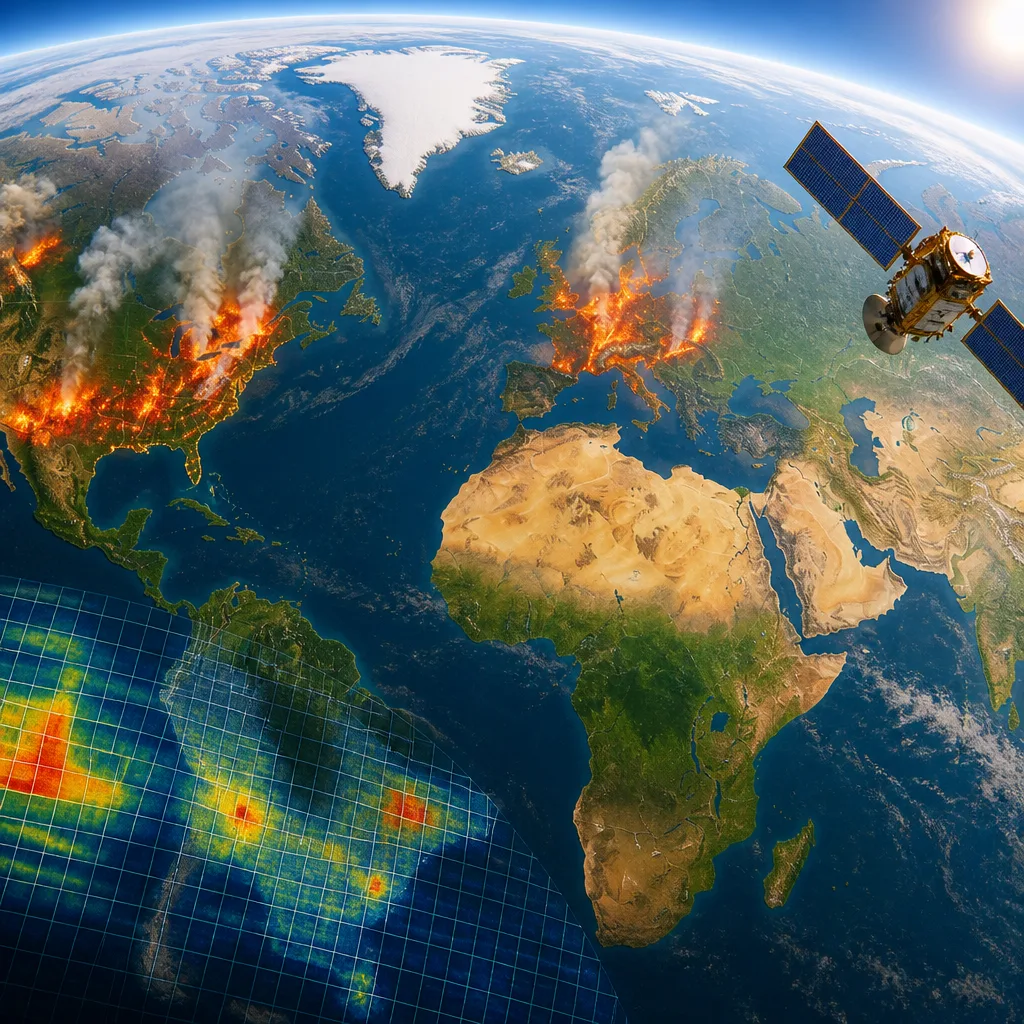
Satellite monitoring by the European climate service Copernicus shows that global carbon emissions from burning this year are the lowest recorded since those measurements began almost 25 years ago, roughly half the levels seen in the early 2000s. The result is striking because it coincides with a season of intensifying and record-setting wildfires in parts of Europe and North America.
Two opposing trends
Scientists say the apparent paradox — fewer emissions globally but more extreme fires in some regions — can be explained by divergent regional trajectories. In Europe and across parts of the United States and Canada, fires are growing in size, intensity and speed, producing devastating local impacts. Yet Africa and Asia, which historically accounted for the largest share of global fire emissions, have seen substantial reductions due to changes in agricultural practices, more effective fire management and population movements.
"It does seem like a paradox because we’re talking increases in fires, yet the global numbers have been going down and down. But they’re both true,"
The remark came from fire scientist Mike Flannigan of Thompson Rivers University in Canada, reflecting a consensus among researchers that both patterns are occurring simultaneously.
Where fires are worsening
European countries have endured some of the most intense blazes this season. Spain recorded its largest wildfire on record, covering more than 193 square miles (500 square kilometres). In North America, national wildfire centres report that the area burned this summer in Canada and the United States is at least 25% higher than the 10-year average and is “more than double” what it was several decades ago. Smoke from these fires has shrouded vast areas, degrading air quality and posing health risks.
"Extreme wildfires are on the rise globally in different parts of the world. And that’s the piece that you know has us shaking in our boots,"
That warning came from University of Colorado fire scientist Jennifer Balch, who emphasised that while global totals fall, the severity and frequency of extreme events are increasing in certain regions.
Why global numbers fall while regional extremes grow
Copernicus scientists attribute the fall in global burning emissions largely to declines in Africa and Asia. Senior Copernicus scientist Mark Parrington pointed to improved land management and shifts in where people live as key factors reducing the incidence of fires in those continents.
- Africa and Asia: Significant reductions in fire activity, driven by altered agricultural practice and management.
- Europe: Record and near-record wildfires in several countries, including Spain’s largest-ever blaze.
- North America: Burned area at least 25% above the 10-year average, with long-term increases compared with past decades.
The contrast underlines that aggregate global statistics can mask profound regional divergence. Lower overall emissions do not reduce the local human and environmental toll when fires intensify in populated, industrialised regions.
| Region | Trend this year |
|---|---|
| Africa & Asia | Large decrease in fire emissions |
| Europe | Record/near-record large fires (eg Spain >193 sq miles) |
| United States & Canada | Burned area ≥25% above 10-year average; long-term rises |
Implications for policy and public health
For policy-makers the message is nuanced. A falling global tally of fire emissions is welcome from a climate perspective, but it does not remove the need for urgent preparedness where fires are becoming more extreme. Local air quality emergencies, pressure on firefighting resources, and the displacement of communities are immediate consequences in affected regions. At the same time, continued investment in land management and agricultural practices in parts of Africa and Asia shows those interventions can reduce fire risk and associated emissions.
The twin realities of declining global fire emissions and rising regional extremes should prompt targeted responses: strengthening fire management and resilience where blazes are worsening, while sustaining successful prevention strategies where they have driven falls in burning.