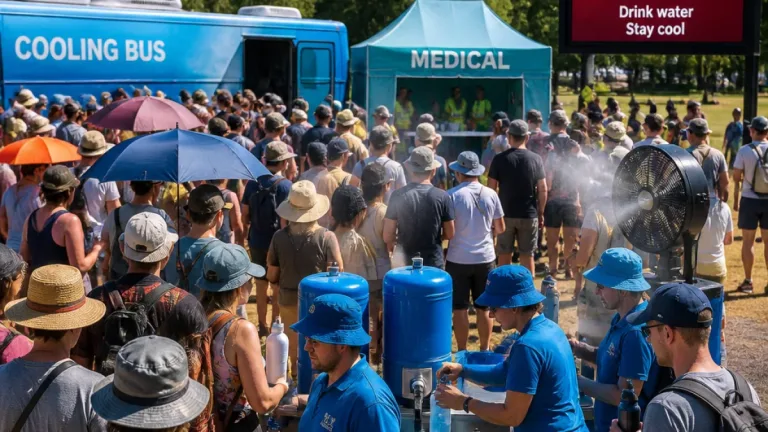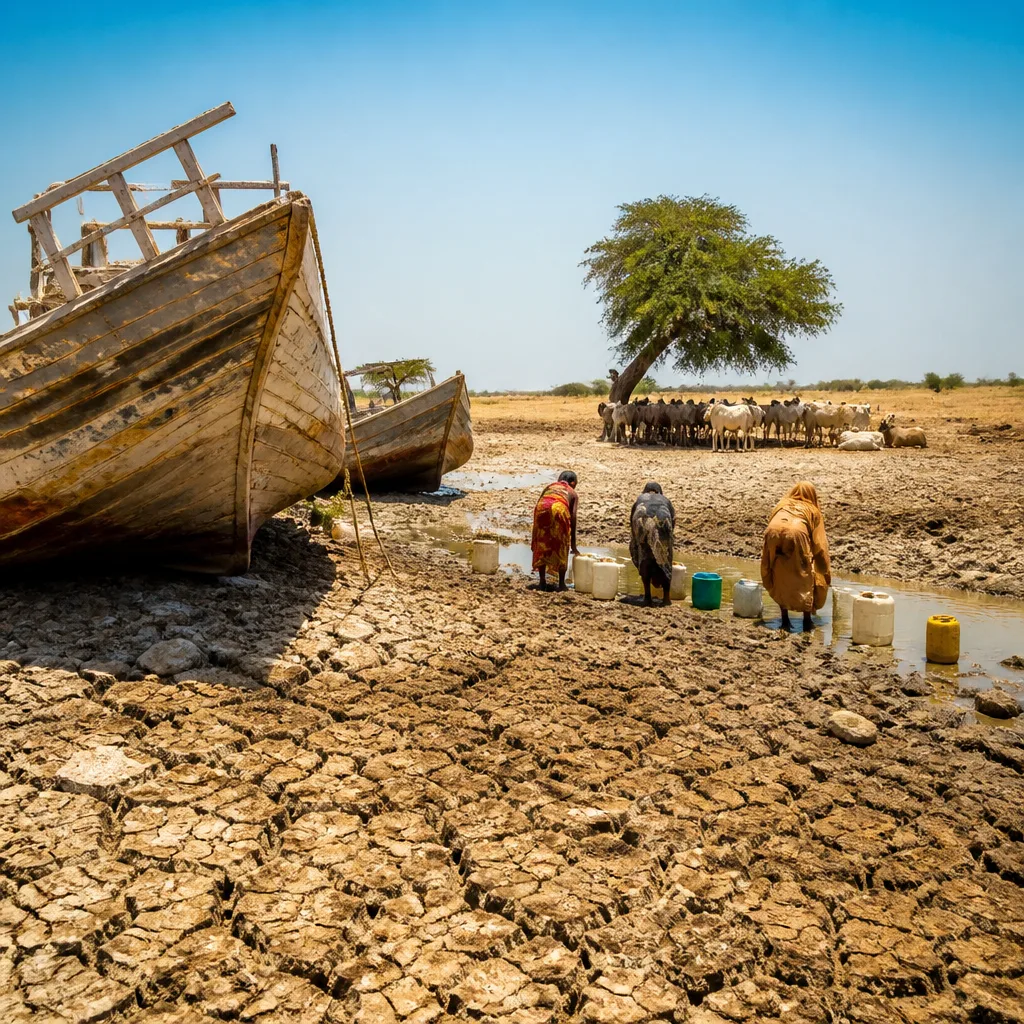
Extreme heat and drought are leaving visible marks on communities and environments worldwide, images circulated by international media show, with lower water levels, stressed agriculture and people and animals searching for relief from heat and water scarcity.
Widespread impacts visible in photographs
Photos accompanying recent coverage document a range of consequences as hot, dry weather reshapes landscapes and daily life. Rivers, lakes and reservoirs appear reduced in volume in many places, while human activity adjusts — from altered patterns of water use to people seeking shade or hydration. The depictions underline the human and ecological immediacy of high temperatures and prolonged dry spells.
While such images are not a substitute for systematic reporting, they offer a stark visual record of conditions that can contribute to crop stress, reduced drinking-water availability and heightened risks for vulnerable groups, including the elderly, young children and outdoor workers.
What the pictures suggest about wider risks
Photographs do not provide a comprehensive scientific analysis, but they point to a set of linked concerns often associated with sustained heat and drought:
- Water stress — lowered water levels in natural and managed sources, affecting supply and livelihoods;
- Human health — increased need for cooling, hydration and medical support as temperatures rise;
- Ecosystem strain — altered habitats and increased stress on wildlife and livestock; and
- Agricultural impact — potential for reduced yields where irrigation is limited and rain shortfalls persist.
The imagery conveys how these pressures can converge, amplifying social and economic vulnerability where coping capacity is limited.
Local scenes, global pattern
Although the photographs are drawn from disparate locations, they form part of a broader pattern recognised by climate and public-health authorities: episodes of extreme heat and extended dry periods are occurring with growing frequency in many regions. For policy-makers and service providers, the visual evidence is a reminder of the importance of preparedness — from ensuring reliable water supplies to targeted support for people most at risk.
For UK readers, the international scenes are a prompt to consider both direct and indirect effects. Directly, heatwaves have previously posed public-health challenges in Britain; indirectly, international droughts can influence global food prices, migration pressures and supply chains that reach British households and businesses.
| Observed effect | Potential consequence |
|---|---|
| Lowered water levels | Reduced availability for households, agriculture and industry |
| People seeking relief | Increased demand for cooling centres, water distribution and medical care |
| Altered landscapes | Stress on ecosystems, wildlife and livestock |
Photographs as evidence and prompt for action
Images of heat and drought perform two civic functions: they document conditions on the ground and they can catalyse policy and public response. They may spur urgent practical measures — from local restrictions on water use to emergency health advisories — and longer-term planning on water resilience and heat adaptation.
At the same time, visual coverage has limitations. Photographs capture acute moments and local severity but do not replace the need for verified data on temperatures, rainfall deficits, reservoir levels or crop losses. For decision-making, officials and communities require robust monitoring alongside the compelling, human-scale scenes that photos supply.
As extreme heat and drought continue to appear across the globe, the images serve as an accessible, immediate record of strain — and a reminder that such events carry consequences that ripple beyond national borders.